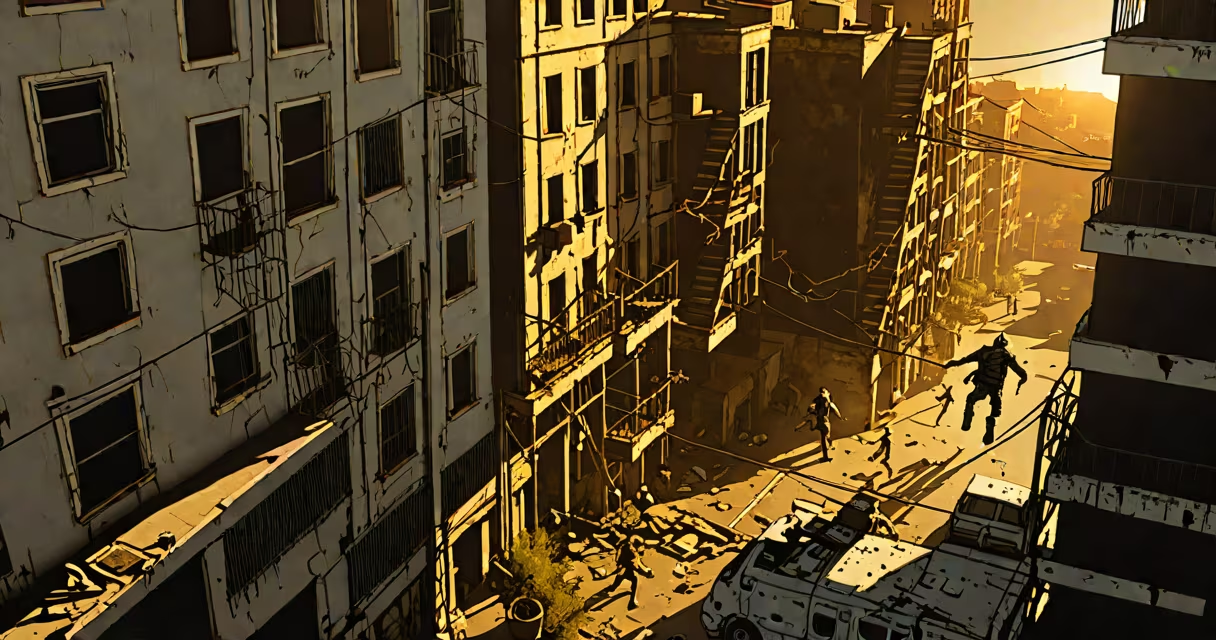
dying light gameplay combines high-speed parkour traversal, changing melee combat, and survival-based zombie encounters in an open-world city setting. Players go through vertical environments using acrobatic movement, fight hordes at night, and scavenge resources during the day to survive.
The core of dying light gameplay revolves around momentum and timing. Movement isn't just about jumping-it's about chaining vaults, wall-runs, and grapples into fluid sequences. You don't walk through the city-you fly through it. This isn't just aesthetic; it's functional. The game rewards speed and precision, turning every rooftop and alley into a potential escape route or ambush zone.
Combat is equally deliberate. Weapons degrade with use, and enemies react to your positioning. A well-timed swing can take down a runner in seconds, but a misstep leaves you vulnerable. The game tracks your stamina, weapon durability, and environmental hazards-each decision matters. You're not fighting zombies; you're outmaneuvering them.
Dying light gameplay operates on a dual-day/night cycle. During daylight, players explore the open city of Harran, complete missions, gather supplies, and upgrade gear. The streets are relatively safe-zombies move slowly, and most are easy to avoid or dispatch with minimal risk.
Nightfall changes everything. Zombies evolve-runners sprint, hordes form, and the environment becomes hostile. The game shifts from exploration to evasion. You must reach safety before the clock hits midnight, or face death. This mechanic forces players to plan routes, manage stamina, and prioritize objectives based on time.
Every action in dying light gameplay has a consequence. A failed vault sends you tumbling into a group of infected. A missed dodge leaves you open to a bite. Stamina depletion slows you down, making you a target. The game doesn't punish failure-it teaches it. You learn to read enemy patterns, anticipate spawn points, and use cover effectively.
The following systems define dying light gameplay:
| Mechanic | Description | Impact on Gameplay |
|---|---|---|
| Changing Parkour | Wall-running, vaulting, and grappling allow vertical traversal. | Enables quick escapes, shortcuts, and surprise attacks. |
| Day/Night Cycle | Day: safe zones and resource gathering. Night: survival mode. | Forces strategic planning and time management. |
| Weapon Degradation | Weapons lose durability after use. | Encourages resource conservation and scavenging. |
| Infected Types | Walkers, runners, and flyers each require different tactics. | Demands adaptive strategies and situational awareness. |
One non-obvious detail: the game tracks your "fear" state. When cornered or overwhelmed, your character begins to panic-movement slows, breaths become ragged, and vision blurs. This isn't just visual flair. It affects your ability to perform complex movements under stress. I experienced this firsthand during a late-night mission when I was chased onto a narrow ledge. My character froze-literally-before I managed to regain control. That moment taught me that mental fatigue is part of the challenge.
Many assume dying light gameplay is purely about running and jumping. It's not. While parkour is central, the game demands tactical thinking. You can't outrun every threat. Some encounters require stealth, some require distraction, and others demand precise combat timing.
Another misconception: that all weapons are equal. They're not. A machete deals heavy damage but wears out quickly. A pipe is durable but slower. A baseball bat offers balance-moderate damage, decent durability, and good reach. Choosing the right tool for the situation is critical. Using a hatchet against a horde? You'll die. Using a fire axe to break through a barricade? Effective.
Some players think they can ignore the day cycle. But ignoring daylight means missing out on key resources. You can't survive long-term without food, medicine, or ammo. Daytime missions offer access to supply drops, crafting stations, and faction quests. Skipping them limits progression.
Consider a typical night mission: reach the hospital before 11:50 PM. You start at the edge of the city, 2.3 kilometers from the objective. Your stamina is full, you have a steel pipe, and your flashlight is charged.
First, you run toward the nearest building cluster. You vault over a fence, wall-run up a brick wall, and leap to a balcony. You hear groans behind you-three walkers are approaching. You turn, swing the pipe, and break one's neck. The second collapses after a hit to the knee. The third is too close. You jump off the balcony, land on a car roof, and roll into a ditch.
You're low on stamina. You check your map. The hospital is 800 meters away, but the direct path is blocked by a horde. You reroute through a subway tunnel. The tunnel is dark-your flashlight flickers. You hear footsteps. You crouch, wait. A runner sprints past. You strike from behind. Two more follow. You retreat, then charge forward, swinging wildly.
At 11:45 PM, you reach the hospital entrance. You kick open the door, slam it shut, and lock it. The lights go out. You're safe. You've survived the night.
This sequence illustrates how dying light gameplay integrates movement, combat, and survival under pressure. It's not just about surviving-it's about adapting.
Dying light gameplay is not a traditional shooter. There are no infinite ammo pickups. No instant reloads. No health packs that restore full HP. Healing requires bandages, which are rare. You can't spam the attack button and expect to win.
It's also not a pure horror game. The fear comes from tension, not jump scares. The dread builds as the sun sets and the city empties. The silence between groans is louder than any scream.
And it's not just about speed. Some players focus only on parkour and ignore combat. That leads to early deaths. Others rely solely on weapons and forget to use the environment. The best players blend both-using rooftops to escape, then dropping down to fight.
According to IGN, dying light gameplay "redefines the zombie genre by making movement the primary survival tool." The game's design treats agility as a skill, not just a feature. This is rare in the genre.
GameSpot noted that "the day/night system isn't just a gimmick-it's the spine of the experience." The shift from exploration to survival isn't abrupt. It's gradual, forcing players to adapt their behavior as the environment changes.
These insights confirm that dying light gameplay is intentional, layered, and deeply integrated. It's not a collection of mechanics-it's a system where every element supports survival through motion and timing.
Understanding dying light gameplay means recognizing that survival isn't about strength-it's about strategy, reflexes, and spatial awareness. You don't just play the game-you live inside it.