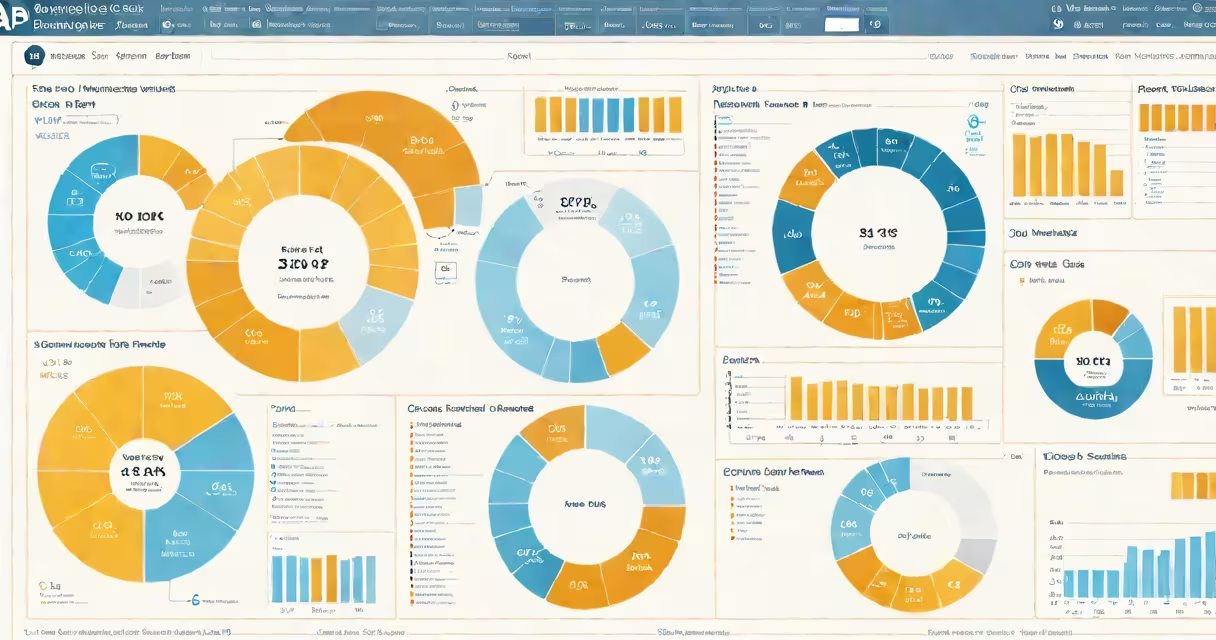
SAP BusinessObjects is a business intelligence (BI) platform that allows users to collect, analyze, and visualize enterprise data from multiple sources. It supports report creation, data querying, dashboard development, and executive decision-making through interactive visualizations.
The platform runs on SAP's broader enterprise software system and integrates with systems like SAP ERP, SAP S/4HANA, and external databases. It's designed for business analysts, IT teams, and executives who need timely access to accurate data.
Originally developed by Business Objects SA, the product was acquired by SAP in 2008. Since then, it has evolved into a modular set focused on data discovery, reporting, and performance management. The core components include Web Intelligence, Crystal Reports, Dashboard Builder, and Explorer.
SAP BusinessObjects connects to data sources such as relational databases, flat files, cloud services, and SAP systems. Users define queries using drag-and-drop interfaces or SQL, then apply filters, groupings, and calculations to extract meaningful insights.
Once data is processed, results appear in customizable reports or interactive dashboards. These can be shared via web portals, embedded in applications, or scheduled for automatic delivery. For example, a finance team might pull monthly revenue data from an SAP ECC system, filter by region, and publish a changing chart showing year-over-year growth.
Users interact with the platform through a browser-based interface or desktop clients. Access rights are managed through role-based permissions, ensuring sensitive data stays protected. Changes to reports can be version-controlled and audited for compliance.
The SAP BusinessObjects set includes several distinct modules, each serving a specific function in the BI workflow.
| Component | Purpose | Common Use Case |
|---|---|---|
| Web Intelligence | Interactive reporting and analysis | Creating ad-hoc reports from HR or sales data |
| Crystal Reports | Print-ready, formatted reports | Generating invoices, payroll statements, or audit logs |
| Dashboard Builder | Real-time visualization and KPI tracking | Monitoring customer service response times across regions |
| Explorer | Data discovery and self-service analysis | Marketing analysts exploring campaign performance trends |
Each module operates independently but shares a common underlying architecture. Data models are built using universes-metadata layers that simplify complex database schemas. A universe acts as a semantic layer, translating technical database fields into business-friendly terms like "Net Sales" or "Customer Lifetime Value."
For instance, a retail company might create a universe that maps raw transaction data from its POS system into categories like "Store Location," "Product Category," and "Monthly Revenue." Analysts can then build reports using these intuitive labels without needing to understand SQL or schema design.
Organizations use SAP BusinessObjects to improve operational visibility and strategic planning. Industries including manufacturing, healthcare, banking, and logistics rely on it to track performance, detect anomalies, and forecast outcomes.
A global pharmaceutical firm uses SAP BusinessObjects to monitor clinical trial progress across 12 countries. By pulling data from regional databases and consolidating it into a single dashboard, project managers identify delays in patient enrollment and adjust recruitment strategies in real time.
According to SAP's official documentation, the platform supports over 100 data source types, including Oracle, Microsoft SQL Server, MySQL, and cloud platforms like AWS Redshift and Google BigQuery. This broad connectivity makes it suitable for hybrid environments where data resides in multiple locations.
One common misconception is that SAP BusinessObjects is only for large enterprises. While it scales well for multinational corporations, smaller businesses with moderate data volumes also benefit. A regional distributor with 50 stores used Web Intelligence to compare quarterly sales performance across branches, identifying underperforming outlets and reallocating inventory accordingly.
SAP BusinessObjects is often mistaken for SAP Business Warehouse (BW), but they serve different purposes. BW is a data warehouse system designed for data integration, transformation, and storage. It loads and organizes data from various sources into a structured format for long-term analysis.
BusinessObjects sits on top of BW-or other data sources-and focuses on delivering actionable insights. You can think of BW as the foundation, storing and preparing data, while BusinessObjects is the roof, enabling users to view and interpret it. Using both together creates a complete analytics pipeline.
Another frequent mix-up is confusing BusinessObjects with SAP Business Process Management (BPM). BPM tools manage workflows, automate tasks, and enforce business rules. They're used to simplify processes like purchase approvals or employee onboarding. BusinessObjects handles data analysis-not process execution.
As a practical example: a supply chain manager might use SAP Business Process Management to route a supplier contract for approval. Once approved, they'd use SAP BusinessObjects to analyze delivery lead times, vendor performance scores, and cost variances across shipments.
One non-obvious fact: SAP BusinessObjects supports natural language querying through integration with SAP Analytics Cloud. Users can ask questions like "Show me Q3 sales for North America compared to last year" and receive instant visual results. This feature reduces reliance on technical staff and accelerates insight generation.
I once helped a mid-sized retailer migrate from Excel-based reporting to SAP BusinessObjects. Before the switch, department heads spent hours manually compiling spreadsheets from disparate systems. Errors were frequent, and updates took days.
We set up a central universe connecting their ERP, CRM, and e-commerce platforms. Within four weeks, store managers could generate daily sales summaries with just a few clicks. One manager reported saving 12 hours per week on report preparation. The shift improved accuracy and enabled faster responses to market changes.
SAP BusinessObjects is a useful business intelligence platform that turns raw data into clear, actionable insights. It enables users across departments to create reports, build dashboards, and track performance metrics without deep technical expertise. Its integration with SAP and third-party systems makes it a versatile tool for organizations of all sizes.