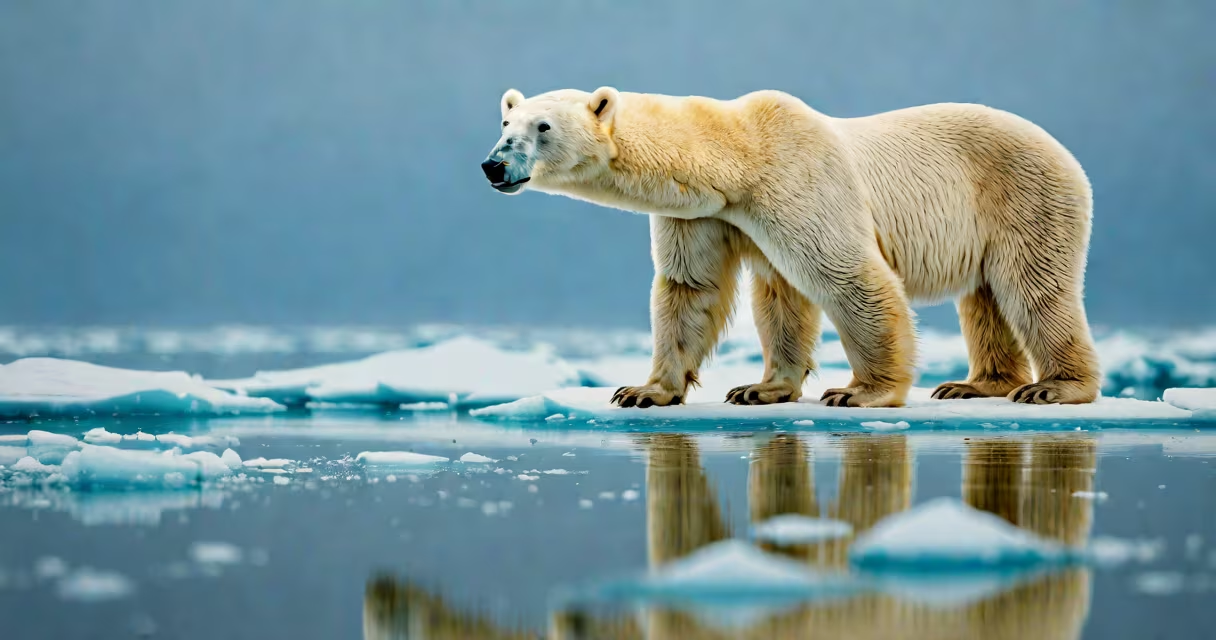
Endangered species in arctic tundra are animals native to the frozen northern regions whose populations have declined to the point of high risk of extinction, primarily due to climate change, habitat degradation, and human activity. These species survive in extreme cold, low vegetation zones above the tree line, where ecosystems are fragile and slow to recover.
The Arctic tundra spans parts of Alaska, Canada, Greenland, Russia, and Norway. Its defining features include permafrost, short growing seasons, and snow cover lasting up to nine months. Animals adapted to this environment include the polar bear, Arctic fox, caribou, and snowy owl. Many of these species are now classified as endangered or critically endangered by the International Union for Conservation of Nature (IUCN).
Climate change is the primary driver behind the decline of these species. Sea ice, essential for polar bears' hunting and breeding, is shrinking at a rate of 13% per decade, according to NASA's satellite observations. As ice retreats earlier each year, bears lose access to seals-their main food source-leading to malnutrition and lower cub survival rates. The IUCN lists polar bears as vulnerable, but recent modeling suggests they may soon be upgraded to endangered.
Arctic tundra ecosystems depend on tight ecological balances. When one species declines, ripple effects spread through food webs. For example, the Arctic fox relies on lemmings for 70% of its diet. Lemming populations fluctuate naturally, but warming winters cause inconsistent snowpacks. Snow acts as insulation; too little snow exposes lemmings to predators and cold stress. This reduces their numbers, which then starves Arctic foxes during breeding season.
Permafrost thaw also alters terrain. As ground ice melts, land collapses, destroying nesting sites for birds like the snowy owl. A 2022 study published in Nature Climate Change found that 60% of Arctic tundra regions experienced significant thaw between 2000 and 2020, accelerating habitat loss for burrowing species.
Human activity compounds these threats. Oil and gas exploration in the Arctic National Wildlife Refuge (ANWR) has disrupted caribou migration routes. Caribou travel hundreds of miles annually to reach calving grounds. Disruption leads to lower calf survival. The Porcupine caribou herd, studied by the U.S. Geological Survey, dropped from 130,000 individuals in 1980 to under 100,000 by 2020-a 23% decline over two decades.
Species in the Arctic tundra fall into distinct categories based on threat level and biological vulnerability. The IUCN Red List classifies them using criteria such as population size, geographic range, and rate of decline.
| Species | Conservation Status | Primary Threat | Population Trend |
|---|---|---|---|
| Polar bear | Vulnerable (IUCN) | Sea ice loss | Declining (−10% per decade) |
| Arctic fox | Least concern (IUCN) | Competition from red foxes | Stable in some areas, declining in others |
| Walrus | Endangered (IUCN) | Habitat loss, human disturbance | Decreasing in Bering Sea colonies |
| Ringed seal | Special Concern (Canada) | Ice-dependent breeding | Stable in some regions, declining in others |
The Arctic fox is not currently listed as endangered globally, but regional populations in Scandinavia and Siberia are declining due to warming allowing red foxes to move north. Red foxes outcompete Arctic foxes for food and space. In Finland, Arctic fox numbers fell from 100 in 2000 to fewer than 20 by 2023, according to the Finnish Environment Institute.
A lesser-known but critical species is the collared lemming. Though not formally listed by IUCN, its role as a keystone prey species makes its stability important. Research from the University of Alaska Fairbanks shows lemming cycles-once predictable-have broken down since 2010, disrupting predator reproduction across the tundra.
Many assume that "arctic" means "remote and untouched." That's incorrect. The Arctic is one of the fastest-warming regions on Earth, with average temperature increases exceeding 3°C since 1900-twice the global average. This rapid warming destabilizes ecosystems faster than species can adapt.
Another misconception is that all Arctic animals are equally affected. In reality, species with narrow dietary or habitat requirements suffer most. Polar bears, for instance, cannot switch to alternative prey easily. They rely on ringed seals, which breed on stable sea ice. Without that ice, cubs are born in unsafe conditions. A 2021 study in Science Advances documented a 40% drop in cub survival in areas with early ice breakup.
Some believe conservation efforts are ineffective. But targeted actions show results. In Svalbard, Norway, strict regulations on tourism and research have helped stabilize polar bear populations near protected zones. The Norwegian Polar Institute reports a 15% increase in sightings between 2015 and 2022 in monitored areas-proof that reduced human interference supports recovery.
In 2018, a female polar bear was tracked via GPS collar in the Beaufort Sea. She traveled 1,000 kilometers over 100 days searching for sea ice. Her movements were abnormal-typical foraging ranges are under 200 km. She lost 25% of her body weight and failed to produce cubs. Satellite data confirmed that the ice had melted 45 days earlier than normal that year.
This individual's process reflects a broader trend. According to the World Wildlife Fund (WWF), the Southern Beaufort Sea subpopulation of polar bears declined by 40% between 2001 and 2018. The U.S. Fish and Wildlife Service designated the species as threatened under the Endangered Species Act in 2008, citing climate-driven habitat loss.
Conservation strategies include reducing greenhouse gas emissions, protecting critical denning areas, and regulating industrial activity. The Arctic Council's Circumpolar Protected Areas Network includes 18 designated zones covering 1.2 million square kilometers-home to key breeding and feeding habitats.
Current projections suggest that if global temperatures rise by 2°C above pre-industrial levels, nearly all summer sea ice in the Arctic will vanish by 2050. This would eliminate the primary hunting platform for polar bears and force them into conflict with humans. The IUCN warns that without aggressive climate action, several Arctic species could face local extinctions within decades.
One effective model is community-led monitoring. Indigenous groups in Nunavut, Canada, track animal movements using traditional knowledge and modern sensors. Their data informed the creation of the Thelon Wildlife Sanctuary, which protects migratory routes for barren-ground caribou. Since 2016, caribou numbers in the region have stabilized.
Endangered species in arctic tundra are not just symbols of climate change-they are indicators of systemic failure. Their survival depends on coordinated global policy, scientific monitoring, and respect for indigenous stewardship. The window to act is narrowing fast.