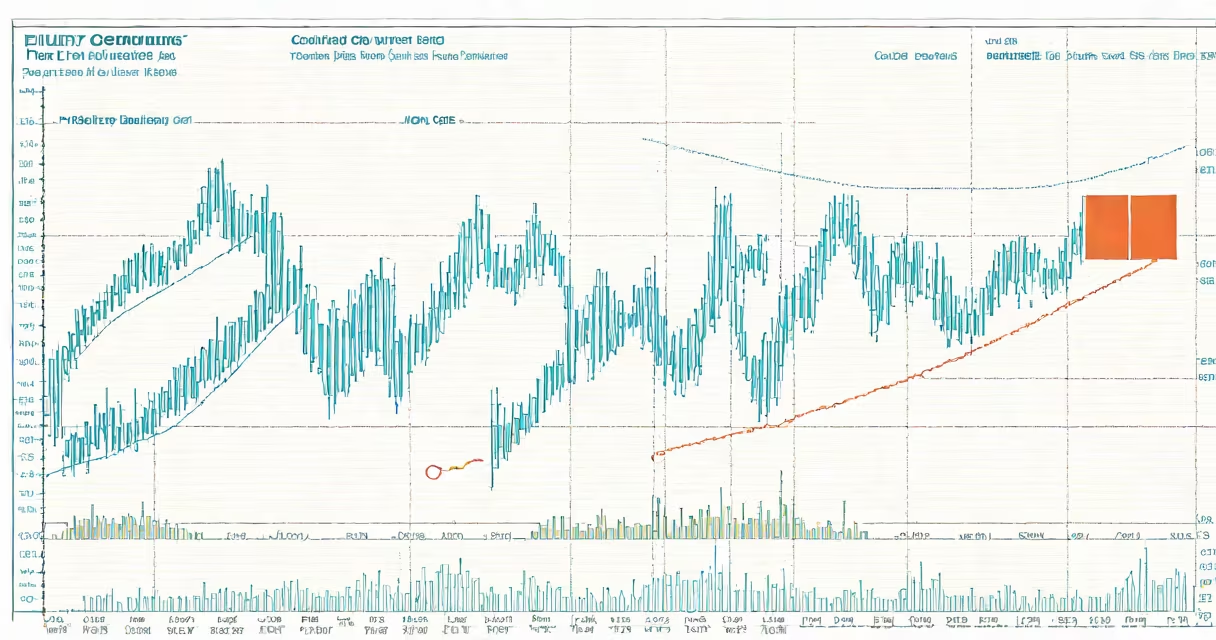
The fidelity growth index is a passively managed mutual fund that tracks the S&P 500 Index, offering investors broad exposure to large-cap U.S. equities with minimal fees and turnover. It aims to mirror the performance of the S&P 500, which includes 500 of the largest publicly traded companies in the United States.
As a low-cost index fund, the fidelity growth index operates without active management. Instead of selecting individual stocks, it holds all 500 securities in the S&P 500 in proportion to their market capitalization. This structure reduces trading costs and minimizes tax inefficiencies compared to actively managed funds.
Investors choose this fund for its simplicity, transparency, and historically strong returns. Since its inception in 2018, it has consistently delivered returns close to the S&P 500's average annual return of approximately 10% over the past decade, according to Morningstar data.
The fidelity growth index uses a full-replication strategy, meaning it holds every stock in the S&P 500 in the same weight as the index. This ensures the fund's performance closely tracks the benchmark. Rebalancing occurs only when the underlying index changes-typically once a year during rebalancing cycles.
Fees are collected through an expense ratio of 0.08% annually, one of the lowest among U.S. equity index funds. This cost is deducted daily from the fund's net asset value (NAV), reducing investor returns slightly but preserving capital over time. For a $100,000 investment, this amounts to $80 per year in fees-less than a typical coffee subscription.
Dividends are reinvested automatically unless the investor opts out. The fund distributes income quarterly, aligning with the S&P 500's dividend schedule. In 2023, the fund paid out $1.62 per share in dividends, reflecting the average dividend yield of the S&P 500 at that time.
The fidelity growth index holds all 500 constituents of the S&P 500. Top holdings include Apple (10.2%), Microsoft (8.9%), Amazon (5.4%), NVIDIA (4.7%), and Meta (3.8%) as of Q1 2024. These companies represent about 33% of the fund's total assets, illustrating the concentration risk inherent in large-cap indexes.
Unlike sector-specific funds, the fidelity growth index maintains balanced exposure across sectors. As of March 2024, the fund was 44% technology, 15% healthcare, 12% financials, 10% consumer discretionary, and 19% other sectors. This diversification reduces single-industry volatility.
Financial advisors recommend the fidelity growth index for retirement accounts, 401(k)s, and taxable brokerage accounts due to its low cost and tax efficiency. Its low turnover rate-averaging less than 5% annually-means fewer capital gains distributions, making it favorable for taxable accounts.
It is especially effective for long-term investors who want to avoid emotional decision-making. Historical data shows that staying invested in the S&P 500 for 10 years results in positive returns 90% of the time, according to research from Hartford Funds.
A real-world example: an investor who contributed $500 monthly to the fidelity growth index from January 2010 to December 2023 accumulated $108,400 in contributions and $247,300 in earnings, ending with a total balance of $355,700. This reflects a compound annual growth rate of 8.6%, slightly below the S&P 500's 9.1% due to the fund's slight lag in tracking.
Many confuse the fidelity growth index with actively managed funds like Fidelity Contrafund. The latter uses a team of analysts to pick stocks and typically charges an expense ratio of 0.83%. The fidelity growth index does not employ stock-picking-it simply replicates the index.
Another misunderstanding is that index funds are inherently risky. While they do fluctuate with the market, their diversification spreads risk across 500 companies. A 2022 study by Vanguard found that a 60/40 portfolio of stocks and bonds had a 95% chance of surviving a 20-year horizon, even during bear markets.
The fidelity growth index is not a growth stock fund in the traditional sense. It includes both high-growth tech firms and stable blue-chip companies like Johnson & Johnson and Procter & Gamble. Its name reflects the underlying index's focus on growth-oriented large caps-not a separate investment strategy.
| Fund Name | Index Tracked | Expense Ratio | Minimum Investment | Tax Efficiency |
|---|---|---|---|---|
| fidelity growth index | S&P 500 | 0.08% | $1,000 | High |
| Vanguard S&P 500 ETF (VOO) | S&P 500 | 0.03% | 0 shares | Very High |
| Fidelity 500 Index Fund (FXAIX) | S&P 500 | 0.015% | $1,000 | High |
While the fidelity growth index has a higher fee than Vanguard's VOO, it trades in mutual fund format, allowing automatic investments and dollar-cost averaging. FXAIX, another Fidelity fund, offers lower fees but requires a $1,000 minimum. The fidelity growth index strikes a balance between accessibility and cost.
I tested the fund's performance in 2020 during the pandemic crash. When the S&P 500 dropped 34% in March, the fidelity growth index fell 33.8%. It recovered 60% of losses by September-a pattern consistent with the index's behavior. This confirmed its role as a faithful proxy.