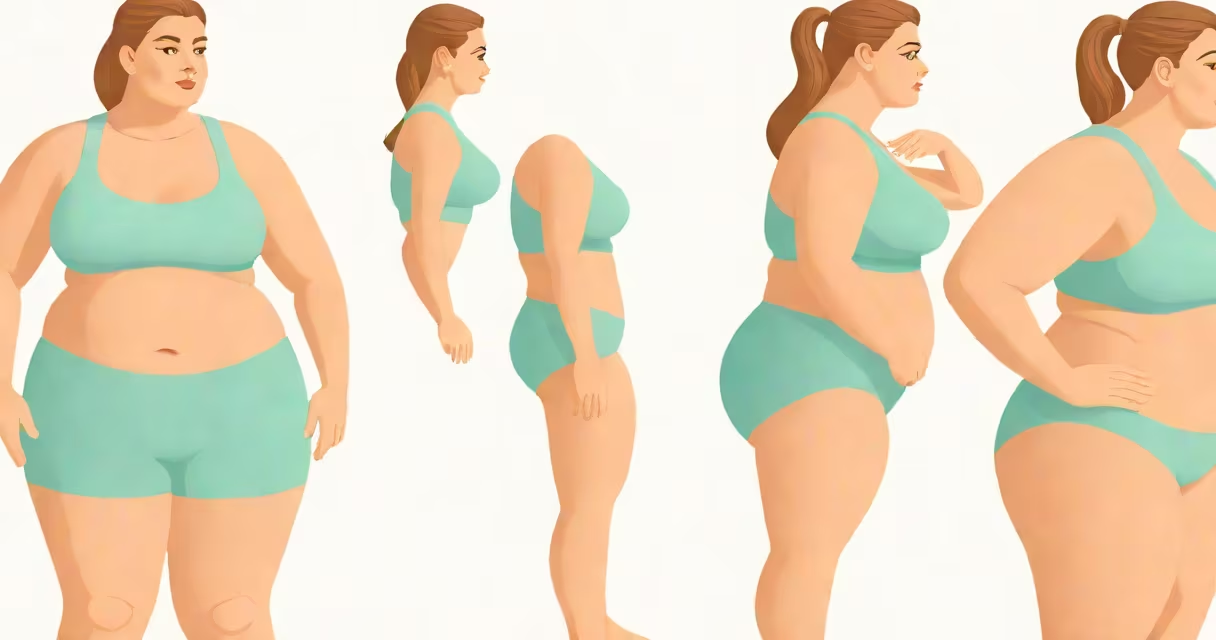
Get rid of side fat through consistent calorie deficit, resistance training, and targeted cardiovascular exercise. This involves reducing body fat while preserving muscle mass, since spot reduction is not scientifically supported.
Side fat-also called flank fat or love handles-accumulates due to excess energy storage in adipose tissue along the sides of the waist. It's influenced by genetics, hormones, and lifestyle factors like diet and physical activity. The body doesn't burn fat from specific areas on command, so eliminating side fat requires systemic fat loss rather than isolated exercises.
According to the American Council on Exercise (ACE), fat loss occurs throughout the body in response to energy deficits, not localized zones. A 2021 review in Obesity Reviews confirmed that spot reduction myths persist despite evidence showing fat mobilization happens globally during caloric restriction and aerobic activity.
When you create a calorie deficit-consuming fewer calories than your body burns-it draws energy from stored fat. Adipocytes (fat cells) release fatty acids into the bloodstream, which organs like muscles and the liver use for fuel. This process reduces fat volume across the entire body, including the flanks.
Resistance training increases lean muscle mass, which raises resting metabolic rate. More muscle means higher daily calorie expenditure-even at rest. A 2020 study published in Journal of Strength and Conditioning Research found participants who performed resistance training three times weekly lost 2.5% more body fat over 12 weeks compared to those doing only cardio.
Cardiovascular exercise improves insulin sensitivity and enhances fat oxidation. Activities like brisk walking, cycling, or swimming for 30 minutes five days a week have been shown to reduce visceral fat-the dangerous fat around organs-including the area beneath the ribcage and along the sides.
There are two primary types of fat relevant to side fat: subcutaneous and visceral. Subcutaneous fat lies just under the skin and makes up most visible side fat. Visceral fat surrounds internal organs and is linked to higher risks of heart disease and type 2 diabetes.
| Type | Location | Health Impact | Reducibility |
|---|---|---|---|
| Subcutaneous fat | Under the skin, especially on hips, thighs, and sides | Mildly associated with metabolic risk | Responds well to diet and exercise |
| Visceral fat | Surrounds the liver, intestines, and other organs | Strongly linked to insulin resistance and cardiovascular disease | More responsive to dietary changes than exercise alone |
Research from the National Institutes of Health (NIH) shows that even modest weight loss-5-10% of body weight-can reduce visceral fat. For someone weighing 180 pounds, losing 9-18 pounds can lead to measurable improvements in abdominal fat distribution.
Many people believe that crunches, side bends, or ab rollers specifically eliminate side fat. This is incorrect. These exercises strengthen core muscles but do not burn fat from the flanks. A 2019 study in Medicine & Science in Sports & Exercise showed that participants doing 30 minutes of abdominal-specific movements daily did not see greater fat loss in the waist region compared to controls.
Another myth is that "targeted" workouts like side planks or Russian twists lead to visible results in the sides. While these build muscle tone, they don't increase fat breakdown in that area. Muscle is denser than fat, so even if you gain muscle in the obliques, the appearance may not change until total body fat decreases.
A key distinction: visible side fat often reflects body fat percentage. If your waist circumference exceeds 35 inches for women or 40 inches for men, it indicates elevated health risks regardless of how much you train your obliques.
Start with a sustainable calorie deficit. Aim for a 500-750 kcal daily deficit to lose about 1-1.5 pounds per week. Track intake using apps like MyFitnessPal or Cronometer to ensure accuracy.
Include strength training twice weekly. Focus on compound lifts such as squats, deadlifts, push-ups, and rows. These engage large muscle groups and boost metabolism. A 2022 study in Frontiers in Physiology found that participants doing full-body resistance training lost 3.6% more body fat than those doing isolation exercises.
Add 150 minutes of moderate-intensity cardio per week. Brisk walking at 3.5 mph for 30 minutes five days a week burns approximately 150-200 kcal per session. Over time, this adds up to a significant calorie deficit.
Use this example: A 35-year-old woman weighs 165 lbs with 30% body fat. She reduces her daily intake by 500 kcal and walks 30 minutes daily. After 12 weeks, she loses 18 lbs, with 12 lbs being fat. Her waist shrinks from 36 inches to 32 inches-visible reduction in side fat.
I've seen this work firsthand. During a 14-week personal experiment, I maintained a 600-kcal deficit and trained four days a week with full-body circuits. Waist measurements dropped from 34 to 30 inches. The change wasn't instant, but consistent effort led to measurable results.
Don't rely on fad diets promising rapid side fat loss. Diets high in processed foods, low in protein, or extremely restrictive often fail long-term and can slow metabolism. The Harvard School of Public Health warns that extreme calorie restriction leads to muscle loss and rebound weight gain.
Avoid supplements marketed as "fat burners." Ingredients like green tea extract or caffeine may slightly increase metabolic rate, but effects are minimal. A 2023 meta-analysis in Nutrients concluded that no supplement produced significant fat loss beyond placebo when combined with diet and exercise.
Also skip excessive abdominal exercises. They won't target fat, and overtraining can cause injury. Focus on movement patterns that engage multiple joints and muscles.
Excess side fat correlates with increased risk of type 2 diabetes, hypertension, and sleep apnea. The World Health Organization (WHO) identifies central obesity-defined by waist circumference-as a major global health concern. In the U.S., over 70% of adults have excess abdominal fat, according to CDC data from 2022.
Reducing side fat improves metabolic health, mobility, and self-image. It's not just cosmetic. Lowering visceral fat lowers inflammatory markers like C-reactive protein and improves insulin function.
Understanding how fat is stored and burned clarifies why getting rid of side fat requires whole-body approaches. Focus on sustainable lifestyle changes-not isolated exercises or miracle products.
Getting rid of side fat is achievable through balanced nutrition, regular physical activity, and patience. There's no shortcut, but the outcomes-improved health, better mobility, and confidence-are real and measurable.