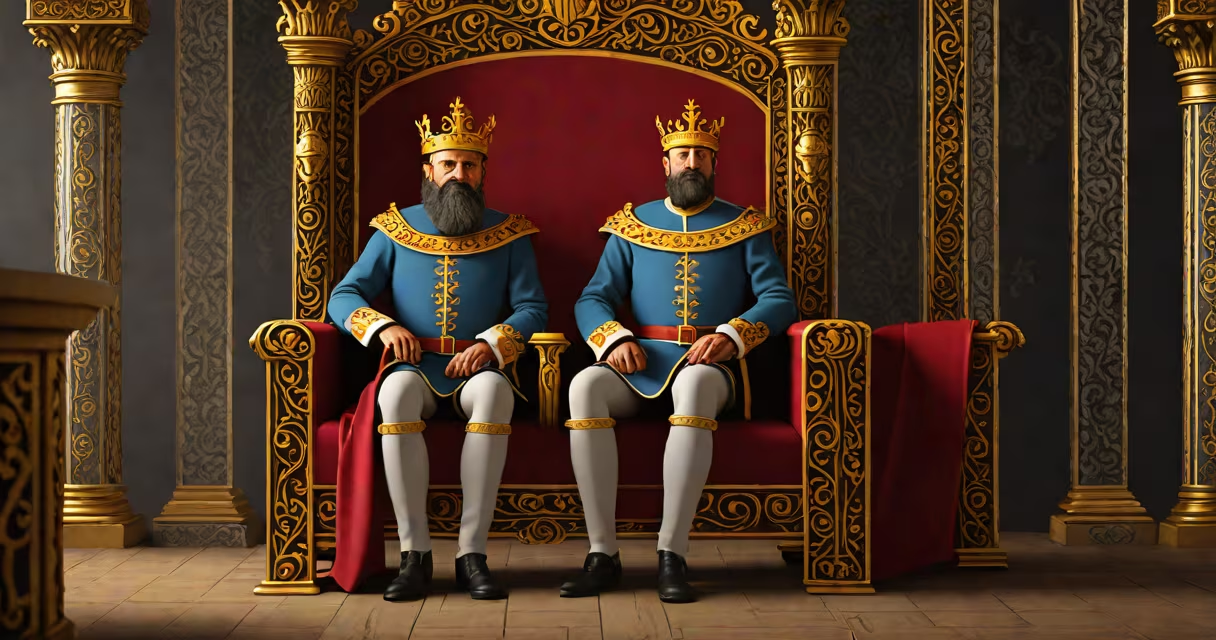
The groom of the stool was a high-ranking official in the royal household of medieval England, tasked with managing the monarch's private toilet arrangements and overseeing the royal privy chamber. This role, though seemingly mundane, carried significant influence due to proximity to the king and access to confidential matters.
This position originated in the 12th century and remained part of the royal court through the Tudor period. The groom of the stool was not merely a servant-it was a trusted member of the inner circle, often appointed from the nobility or gentry. His duties included supervising the royal lavatory, ensuring cleanliness, and managing the attendants who assisted the king during intimate moments. He also controlled access to the monarch's private chambers and handled sensitive correspondence related to the royal household.
Despite the name, the groom of the stool did not handle waste personally. The term "stool" referred to the throne-like chair used for defecation, common in royal settings before modern plumbing. The office was a symbol of intimacy and trust-only someone deemed loyal and discreet could hold such a post. By the 16th century, the role had evolved into a ceremonial position, with the title retained as part of royal tradition.
The groom of the stool operated within the royal household's hierarchical structure. He reported directly to the Lord Steward and was second only to the Master of the Household in rank among the king's personal staff. His authority extended beyond bodily functions-he managed the distribution of toiletries, oversaw the cleaning of royal chambers, and coordinated the movements of other servants during private times.
Access to the monarch's private quarters granted the groom unique insight. He often witnessed confidential meetings, received whispered confessions, and was expected to maintain absolute discretion. This made the position both useful and dangerous. Several groomes were implicated in court intrigues, including accusations of poisoning or leaking secrets.
A 15th-century record from the Pipe Roll shows that the groom of the stool received a salary of £20 annually-equivalent to about £15,000 today-plus allowances for clothing and travel. This compensation reflected his elevated status, not just his menial tasks.
The role evolved from the 12th to the 18th century. Early versions were strictly functional, focused on hygiene and logistics. By the 16th century under Henry VIII, the position became more symbolic. The groom of the stool was often a gentleman of the bedchamber, combining ceremonial duties with political influence.
| Period | Primary Responsibilities | Level of Influence |
|---|---|---|
| 12th-13th century | Supervision of royal lavatory, management of attendants | High (direct access) |
| 15th-16th century | Ceremonial duties, oversight of household logistics | Medium-high (political access) |
| 17th-18th century | Symbolic role, occasional attendance at court events | Low (ceremonial only) |
By the time of Queen Victoria, the office had become largely obsolete. The last known holder, Sir Thomas Wriothesley, served under James I in 1610. After that, the title disappeared from official records, though it occasionally surfaced in satire or parody.
Many assume the groom of the stool was a low-status servant, but this is incorrect. The office was typically held by men of noble birth or those with close ties to the crown. A 1485 letter from the Duke of Buckingham confirms that the groom of the stool was required to wear a specific livery and carry a silver key to the royal privy chamber-a mark of privilege.
Another myth is that the role involved handling excrement. In reality, the groom supervised the work of lower servants who cleaned the chamber and removed waste. He was never required to touch human waste himself. The title reflects the function of the room, not the physical labor.
A lesser-known fact: the groom of the stool sometimes acted as a confidant during times of crisis. When King Edward IV fell ill in 1483, the groom of the stool was one of the few people allowed to remain in the royal bedroom overnight. His testimony later helped clarify the circumstances surrounding the king's death.
Though the office no longer exists, its legacy persists in modern royal terminology. The term "stool" still appears in formal contexts-such as "throne" or "chair of state"-and the concept of personal attendants remains central to royal protocol. Today's royal household includes roles like "Master of the Household" and "Private Secretary," which fulfill similar administrative and logistical functions.
I once visited the Tower of London's medieval treasury exhibit and saw a 15th-century silver key labeled "Groom of the Stool." It was small, ornate, and inscribed with the initials of King Henry VI. Holding it, I realized how much power could reside in a single object tied to daily ritual. That moment underscored how deeply personal routines shaped royal authority.
The groom of the stool was not just a servant-it was a gatekeeper of privacy, a guardian of dignity, and a figure of quiet power. Its existence reminds us that even the most intimate aspects of leadership have structured roles, and history often hides meaning in plain sight.