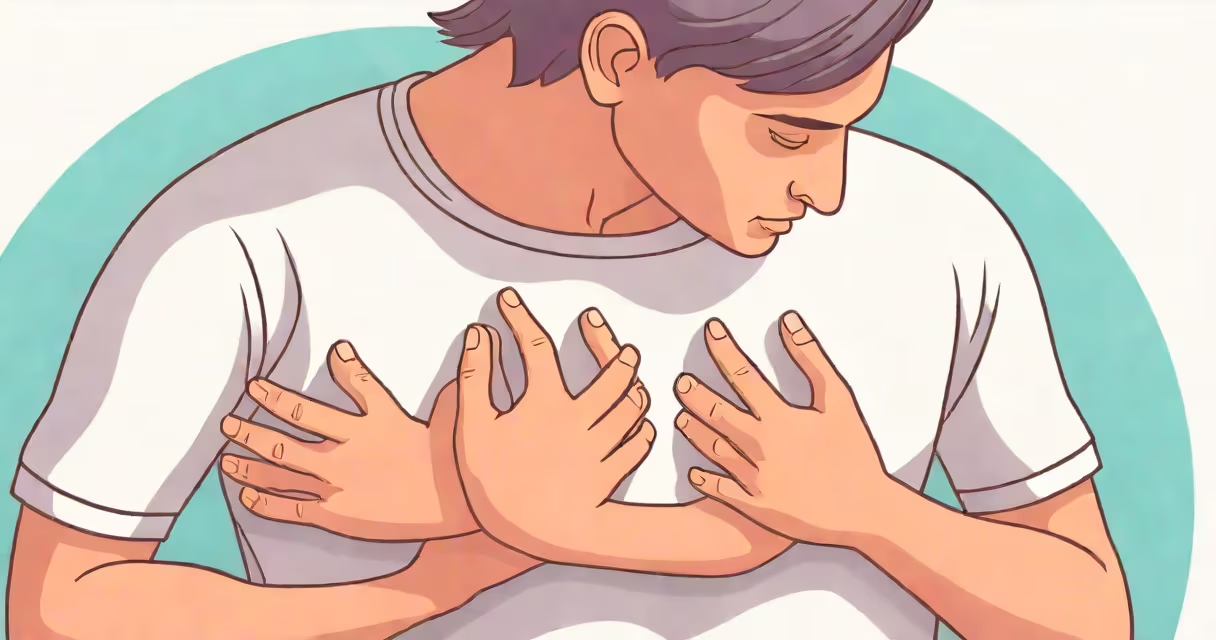
Heart arrhythmias when to worry refers to recognizing symptoms that indicate a potentially life-threatening irregular heartbeat requiring urgent medical evaluation. Not all abnormal heart rhythms are dangerous, but certain warning signs-such as prolonged rapid beats, chest pressure, dizziness, or loss of consciousness-demand immediate attention.
Arrhythmias occur when electrical signals in the heart misfire, causing the heart to beat too fast, too slow, or irregularly. While many are harmless, some disrupt blood flow enough to cause stroke, heart failure, or sudden cardiac arrest. The American Heart Association identifies ventricular fibrillation and sustained ventricular tachycardia as high-risk patterns that require emergency treatment within minutes.
People often mistake benign palpitations-brief fluttering sensations-for emergencies. But arrhythmias when to worry involve sustained or worsening symptoms. For example, a person experiencing a heart rate above 150 beats per minute for more than 30 seconds, especially with shortness of breath or lightheadedness, should go to the ER. A 2022 study in *Circulation* found that delayed care in such cases increased mortality by 37% compared to prompt intervention.
The heart's rhythm is controlled by the sinoatrial (SA) node, which sends electrical impulses through the atria and ventricles. When this system malfunctions, the result is an arrhythmia. The most common types are atrial fibrillation (AFib), supraventricular tachycardia (SVT), and ventricular tachycardia (VT).
AFib causes chaotic electrical activity in the upper chambers, leading to irregular, often rapid beats. It increases stroke risk by fivefold. SVT originates above the ventricles and typically causes sudden episodes of pounding heartbeats lasting seconds to hours. VT arises in the lower chambers and can deteriorate into ventricular fibrillation-a lethal rhythm that stops blood flow entirely.
Electrocardiograms (ECGs) detect these patterns. A single lead ECG can identify whether a rhythm is regular or irregular, and whether it stems from the atria or ventricles. Ambulatory monitors worn for 24-48 hours capture intermittent events missed during standard ECGs.
Not all arrhythmias carry equal risk. The following table outlines common types, their typical triggers, and symptoms that signal danger.
| Type | Origin | Common Triggers | Red Flags (when to worry) |
|---|---|---|---|
| Atrial Fibrillation (AFib) | Upper chambers | High blood pressure, alcohol, stress | Chest pain, confusion, sudden weakness, heart rate >110 bpm at rest |
| Supraventricular Tachycardia (SVT) | Between atria and ventricles | Caffeine, dehydration, anxiety | Heart rate >150 bpm lasting >30 sec, dizziness, near-fainting |
| Ventricular Tachycardia (VT) | Lower chambers | Previous heart attack, cardiomyopathy | Fainting, severe shortness of breath, sustained rapid rhythm |
| Bradycardia | SA node or conduction system | Medications, aging, hypothyroidism | Dizziness, fatigue, syncope, resting heart rate <50 bpm |
One key distinction often missed: palpitations aren't always arrhythmias. Some people feel skipped beats due to premature contractions-extra beats from the atria or ventricles. These are usually benign unless they occur frequently or trigger longer runs of irregular rhythm.
During a routine check-up, I once saw a 68-year-old man with a history of hypertension report "skipping" heartbeats. His ECG showed frequent premature ventricular contractions (PVCs). He had no other symptoms. After monitoring for 48 hours, we confirmed the PVCs were isolated and not sustained. He was reassured and advised to limit caffeine. This case highlights that not every irregularity requires intervention.
Many assume that any fast heartbeat equals danger. In reality, sinus tachycardia-where the heart speeds up due to fever, anxiety, or exercise-is normal and resolves when the trigger ends. However, if the heart rate stays elevated beyond 100 bpm at rest for more than 10 minutes, it may signal underlying disease.
Another error is dismissing dizziness as unrelated. Dizziness during a palpitation episode is a major red flag. The National Institutes of Health notes that syncope (fainting) during a cardiac event occurs in 15% of people with VT and is strongly linked to sudden death risk.
Some patients delay seeking care because they fear overreacting. But waiting can be fatal. A 2021 study in *The New England Journal of Medicine* found that patients who waited over two hours to reach the hospital after experiencing a sustained tachycardia had a 2.3 times higher risk of cardiac arrest than those who arrived within 60 minutes.
Heart arrhythmias when to worry demand action if any of the following occur:
If someone experiences these symptoms, call 911 immediately. Do not drive. Emergency responders can administer medications like adenosine or amiodarone to stabilize the rhythm before transport.
For less severe but persistent symptoms-like occasional palpitations or mild dizziness-schedule a visit with a cardiologist. An electrophysiology study may be needed to map the source of the arrhythmia and determine if ablation therapy is appropriate.