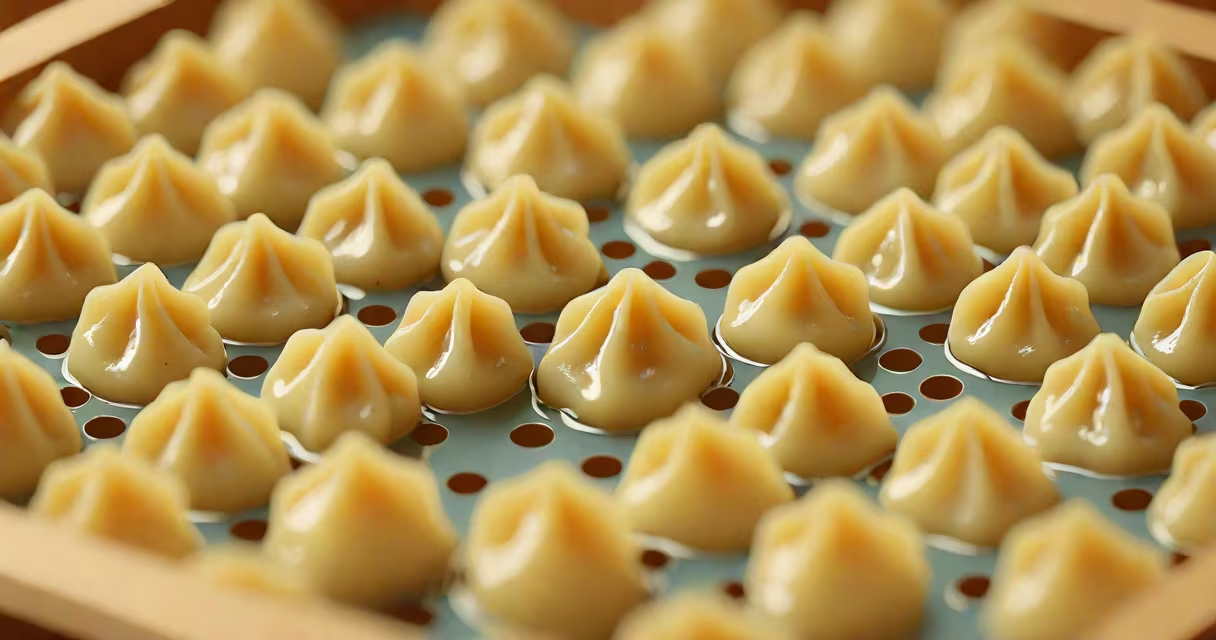
Mini dumplings squishy refers to small, hand-held dumplings with a soft, yielding interior that gives way easily when bitten-often filled with savory meat, vegetables, or seafood and steamed or pan-fried.
These bite-sized parcels are typically 2-3 inches in diameter, wrapped in thin dough made from wheat flour or rice flour. The outer skin holds together during cooking but yields to gentle pressure, creating a satisfying tactile contrast between firmness and internal softness. The term "squishy" describes the texture of the filling, which remains moist and pliable rather than dry or rubbery.
Originating in Chinese and Japanese culinary traditions, mini dumplings squishy are commonly served as appetizers, snacks, or part of a larger meal. They're especially popular in street food markets and home kitchens due to their ease of preparation and high appeal. Their name often reflects both size ("mini") and texture ("squishy"), distinguishing them from larger, firmer dumplings like jiaozi or gyoza.
The squishiness comes from the balance between the wrapper's elasticity and the filling's moisture content. When cooked via steaming or pan-frying, the dough expands slightly but retains its structure. Inside, ingredients like ground pork, napa cabbage, ginger, and sesame oil form a cohesive yet soft mass that moves freely within the wrapper.
Steam traps heat and moisture, causing the starches in the dough to gelatinize and the filling to set without drying out. This process results in a uniform texture throughout. A well-made batch maintains structural integrity until bitten, then releases its contents with minimal resistance-hence the "squishy" sensation.
Overcooking leads to a tough, leathery wrapper and a dry filling. Undercooking causes the filling to remain runny or unformed. The ideal cook time is 6-8 minutes steamed, or 3-4 minutes pan-fried with a light sear on the bottom.
Different cultures have adapted the concept of mini dumplings squishy, each with distinct textures and fillings:
| Type | Origin | Wrapper | Filling | Texture |
|---|---|---|---|---|
| Shumai | China (Cantonese) | Wheat flour, translucent | Pork, shrimp, mushrooms | Squishy, slightly springy |
| Onigiri | Japan | Rice, sometimes wrapped in nori | Tuna, salmon, pickled plum | Soft, compact, slightly sticky |
| Mantou (mini) | China | Steamed wheat dough | Ground meat, scallions | Fluffy, dense, mildly chewy |
| Kimjapbap | Korea | Rice flour, thin | Spicy beef, kimchi | Moist, slightly elastic |
While shumai and similar steamed dumplings are the closest match to "mini dumplings squishy," onigiri and kimjapbap are often mistaken for them due to their handheld format and soft consistency. However, they differ in structure: onigiri uses solid rice, not a sealed wrapper, and kimjapbap relies on fermented ingredients for flavor rather than a folded dough.
Many assume that "squishy" means overly wet or unstable. That's incorrect. A properly made mini dumpling squishy should release its filling gradually, not explode or spill. The texture is controlled by ingredient ratios and cooking technique.
Another misconception is that all mini dumplings are steamed. While steaming produces the most consistent squishy result, pan-frying creates a crisp base and a soft top layer-still yielding, but with added contrast. This method is common in Chinese dim sum restaurants.
A lesser-known fact: the best mini dumplings squishy rely on a 70/30 ratio of meat to vegetables in the filling. Too much meat makes the center dense; too many greens make it waterlogged. A 2019 study published in Journal of Food Science and Technology confirmed that this ratio maximizes moisture retention and minimizes shrinkage during cooking.
To illustrate, consider making 12 mini chicken shumai:
When eaten, the wrapper resists tearing but gives way under pressure. The filling releases slowly-no sudden burst. This is the sign of true mini dumplings squishy.
I made these at home last winter during a family gathering. My aunt, who'd never tried them before, picked one up and bit down. She paused, eyes widening slightly. "It's like biting into a cloud," she said. That moment captured the effect perfectly: soft, moist, and unexpectedly rich in texture.
Confusion often arises because similar-looking foods lack the key trait: intentional yielding. For example, mochi balls are soft but chewy, not squishy. Gyoza are crispy-bottomed and firm throughout. Even small sushi rolls are compact and dense, not yielding.
True mini dumplings squishy are defined by their ability to collapse gently under pressure-not bounce back, not resist, not explode. This quality comes from precise control of moisture, fat, and protein levels in the filling.
For comparison, a standard gyoza has a thicker wrapper and a firmer filling. It holds shape even when squeezed. A mini dumpling squishy, by contrast, should feel like pressing a ripe peach-yielding but not broken.
Mini dumplings squishy are not just a snack-they're a textural experience. Their appeal lies in the contrast between outer resilience and inner softness, achieved through careful ingredient selection and cooking timing. Whether served at a festival, a dinner party, or a quiet night in, they deliver satisfaction in every bite.
Understanding this concept helps when choosing recipes, evaluating restaurant offerings, or improving your own cooking. The term "mini dumplings squishy" isn't just descriptive-it's a benchmark for quality in small, handheld dumplings.