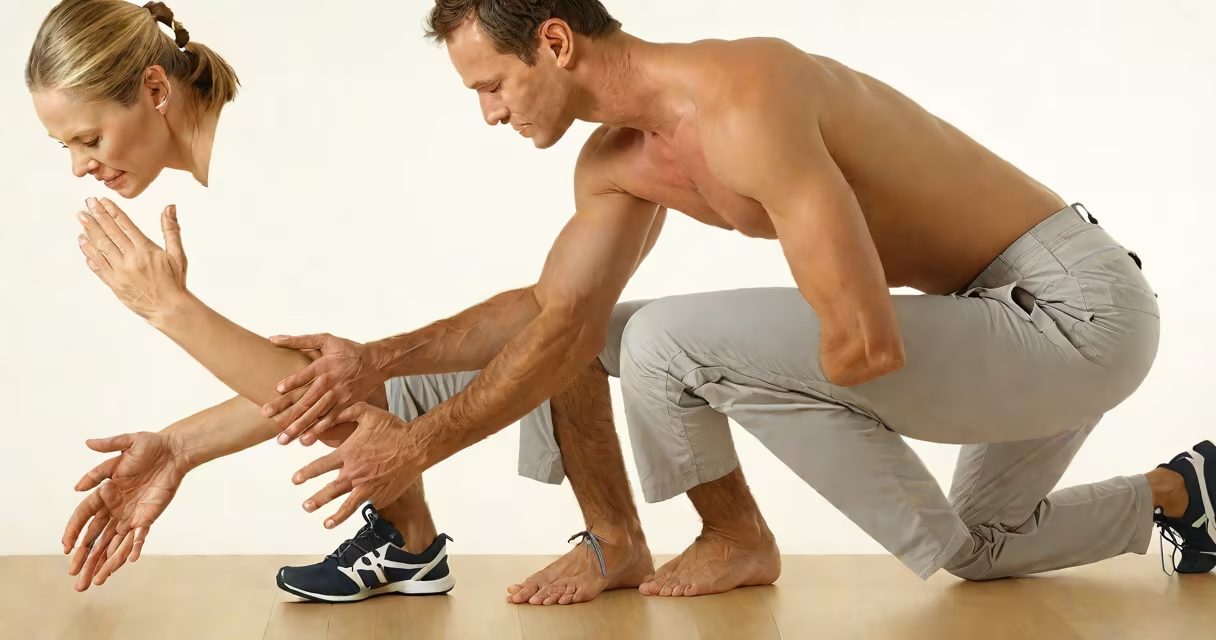
Hip mobility stretches are targeted movements designed to increase the range of motion in the hip joint, improve flexibility in surrounding muscles, and improve functional movement patterns. These exercises focus on the hip's ability to move through full extension, flexion, internal and external rotation, and abduction. They're essential for anyone who sits for long periods, runs regularly, or performs strength training.
These stretches work by lengthening tight muscles around the hip-especially the hip flexors, glutes, piriformis, and hamstrings-while also improving neuromuscular control. When these muscles are shortened or tense, they restrict hip motion, leading to compensatory movement patterns that strain the lower back, knees, and ankles. Regular practice restores balance and reduces injury risk.
A 2021 study published in the Journal of Sports Science & Medicine found that participants who performed daily hip mobility routines showed a 28% improvement in hip flexion range of motion after four weeks. This translates to better squat depth, improved running form, and reduced low back pain during prolonged sitting.
Each stretch targets specific muscle groups and joint actions. For example, the pigeon pose activates the piriformis and external rotators, while the kneeling hip flexor stretch lengthens the rectus femoris and iliopsoas. The movement is not just passive stretching-it includes controlled loading and joint articulation.
When you hold a stretch for 30 seconds, you trigger the Golgi tendon organ, which signals the nervous system to relax the muscle. This allows deeper elongation without triggering protective resistance. Over time, this leads to lasting increases in flexibility and joint resilience.
Changing versions-like leg swings or walking lunges-are used before activity to prepare the hip for movement. Static holds are better post-workout or during cooldowns to release tension and restore tissue elasticity.
The most effective routines combine changing warm-ups, static holds, and active recovery techniques. Here's a breakdown of common categories:
| Type | Best For | Examples | Duration |
|---|---|---|---|
| Changing | Pre-exercise activation | Leg swings, inchworms, walking hip circles | 30 sec per side |
| Static | Post-workout recovery | Pigeon pose, seated butterfly, figure-four stretch | 30-60 sec per side |
| Active | Neuromuscular control | Standing hip circles, single-leg deadlifts | 10-12 reps per side |
Many people confuse hip mobility with general flexibility. Flexibility focuses on muscle length; mobility emphasizes joint function, stability, and coordination. A person can have long hamstrings but still lack hip mobility due to poor motor control or joint stiffness.
For example, someone with tight hip flexors may struggle to touch their toes even if their hamstrings are flexible. That's because the hip joint itself isn't moving freely-the issue lies in the joint capsule or neural inhibition, not just muscle length.
One frequent error is forcing deep positions without warming up. Jumping into a full pigeon pose cold can strain the sacroiliac joint or irritate the sciatic nerve. Always start with gentle movement to activate the area.
Another mistake is holding static stretches too long. Research from the American Council on Exercise shows that holding a stretch beyond 60 seconds offers diminishing returns and can temporarily reduce muscle strength. Stick to 30-45 seconds per side for optimal results.
I once observed a runner fail a 10K race due to hip tightness. He'd been doing deep splits daily but neglected changing prep. His hips weren't mobile-they were stiff and unresponsive. After switching to a routine combining changing hip circles and active standing rotations, his stride efficiency improved within two weeks.
Use changing hip mobility stretches before workouts, especially for runners, cyclists, and weightlifters. Perform 3 sets of 10 reps of leg swings forward and sideways to prime the hip extensors and abductors.
Static stretches are ideal after exercise or during rest days. The seated butterfly stretch, for instance, opens the inner thighs and improves internal rotation. Hold it for 45 seconds, breathing deeply to allow the pelvis to settle into alignment.
People who sit at desks for 8+ hours daily benefit most from regular hip mobility routines. A 2020 study in the European Spine Journal linked prolonged sitting to decreased hip internal rotation and increased lumbar spine load. Just five minutes of daily hip mobility exercises reduced reported back discomfort by 40% in office workers.
Everyday tasks like bending to tie shoes, climbing stairs, or getting out of a car rely on healthy hip mechanics. Without adequate mobility, these motions cause strain. A 2022 review in Physical Therapy in Sport noted that individuals with limited hip range of motion had twice the incidence of knee pain during walking compared to those with normal mobility.
Even older adults can gain from consistent practice. A trial involving adults aged 60-75 showed that a 12-week program of daily hip mobility exercises improved balance and reduced fall risk by 33%. Participants used chair-assisted versions of the seated butterfly and lying hip circles.
Don't assume your hips are fine just because you feel "flexible." True hip mobility requires both range of motion and control. Test your own: lie on your back, bring one knee toward your chest, then slowly extend the leg straight. If your heel doesn't touch the floor, you have restricted hip extension.
hip mobility stretches are not optional-they're foundational for movement health. They prevent injuries, improve performance, and support long-term joint integrity. Focus on consistency over intensity: 5-10 minutes daily beats one 30-minute session weekly.
Include changing movements before activity and static holds afterward. Prioritize quality over depth. If a stretch causes sharp pain, stop. Discomfort is normal; pain is a warning sign.
Consistent practice leads to measurable gains. After six weeks, most people report easier squatting, smoother running form, and less lower back stiffness. The body adapts not just physically-but neurologically. Your brain learns to trust the new range of motion.