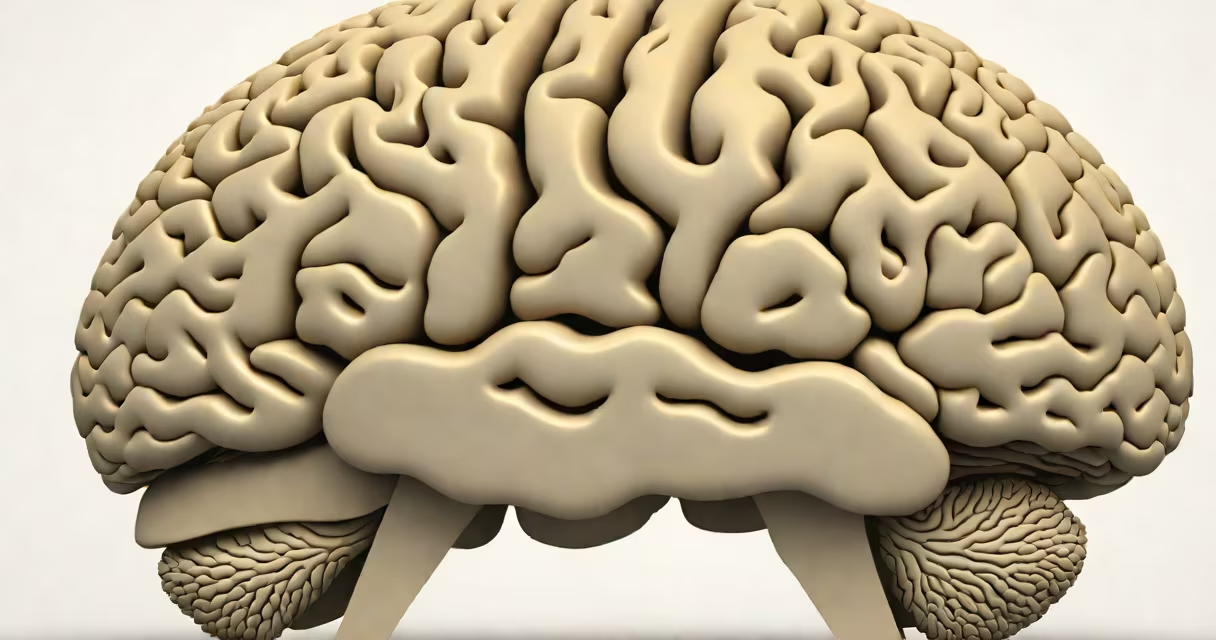
The parietal lobe processes sensory information related to touch, temperature, pain, and spatial awareness. Located behind the central sulcus and above the occipital lobe, it integrates inputs from the body's surface and constructs a coherent sense of where limbs are in space.
Each side of the brain contains a parietal lobe. The left side handles language-linked spatial tasks such as reading maps or writing. The right side specializes in visual-spatial attention, managing navigation and recognizing objects by shape and position. Damage to either side produces distinct deficits.
For example, a patient with right parietal damage may ignore the left side of their body or environment-a condition called hemispatial neglect. They might eat only food on the right side of their plate or fail to dress the left side of their body. This occurs even if vision and motor control remain intact.
Neurons in the primary somatosensory cortex, located in the postcentral gyrus, receive signals from skin receptors, joints, and muscles. These signals travel via the thalamus and form a detailed map of the body-the sensory homunculus. Areas representing the hands, face, and feet occupy disproportionately large regions due to high sensitivity.
When you touch a hot stove, nociceptors in your fingertip fire action potentials. These reach the spinal cord, then the thalamus, and finally the parietal lobe. Within milliseconds, the brain registers location, intensity, and quality of the sensation. You pull your hand away before conscious awareness of pain sets in.
Higher-order integration happens in the superior parietal lobule. Here, visual, vestibular (balance), and proprioceptive (limb position) data converge. This allows you to reach for a glass without looking-your hand knows where it is based on internal feedback.
The parietal lobe performs four core functions: somatic sensation, spatial cognition, attention shifting, and mathematical reasoning.
A study published in Nature Neuroscience showed that patients with parietal lesions struggle with basic arithmetic-even simple addition-despite intact memory and language skills. Brain imaging confirmed reduced activation in the intraparietal sulcus during number tasks.
Another example: surgeons rely on parietal lobe function during laparoscopic procedures. They must mentally track tool position relative to organs using visual cues and tactile feedback. Damage to the posterior parietal cortex impairs this ability, increasing error rates during simulated surgeries.
There are two major functional zones within the parietal lobe: the superior and inferior parietal lobules.
| Region | Primary Function | Common Deficit When Damaged |
|---|---|---|
| Superior parietal lobule | Integrates vision, balance, and limb position for movement planning | Impaired reaching, misjudging distance, difficulty using tools |
| Inferior parietal lobule | Processes language-related spatial concepts, math, and object recognition | Gerstmann syndrome: finger agnosia, dyscalculia, left-right confusion, agraphia |
Gerstmann syndrome is rare but instructive. A 62-year-old woman developed it after a stroke affecting her left angular gyrus-a part of the inferior parietal lobule. She could not name her fingers, struggled with subtraction, couldn't distinguish left from right, and lost the ability to write. Her speech remained fluent, confirming that language centers were spared.
The parietal lobe does not store memories. It contributes to episodic memory by helping encode spatial context-where something happened. But long-term storage occurs in the hippocampus and medial temporal lobe.
Many assume the parietal lobe controls voluntary movement. It does not. Motor commands originate in the frontal lobe, specifically the primary motor cortex. The parietal lobe prepares movements by analyzing spatial relationships but doesn't initiate them.
Another myth: the parietal lobe is purely sensory. While it receives most sensory input, it also generates predictions. Research from Journal of Neuroscience shows neurons in the posterior parietal cortex fire before a person moves, indicating anticipatory processing. This helps coordinate actions in changing environments.
I once observed a patient with a tumor near the right superior parietal lobule. He could not reach for objects accurately, even though his arm strength was normal. He consistently undershot or overshot targets. His eyes tracked the object correctly, but his brain failed to translate visual input into motor output. This confirmed the role of the parietal lobe in sensorimotor integration-not just perception.
Every time you drive and judge distance to another car, type on a keyboard without looking, or catch a ball, the parietal lobe is actively involved. It enables smooth interaction with the physical world.
Consider typing: your fingers move based on learned spatial patterns. You don't see each key-you feel it. The parietal lobe maintains a neural model of hand position and adjusts in real time. Without it, typing would require constant visual confirmation.
Understanding what the parietal lobe does reveals how fragile our sense of body and space truly is. A small lesion can disrupt daily functioning far beyond simple numbness. It alters identity, independence, and safety.