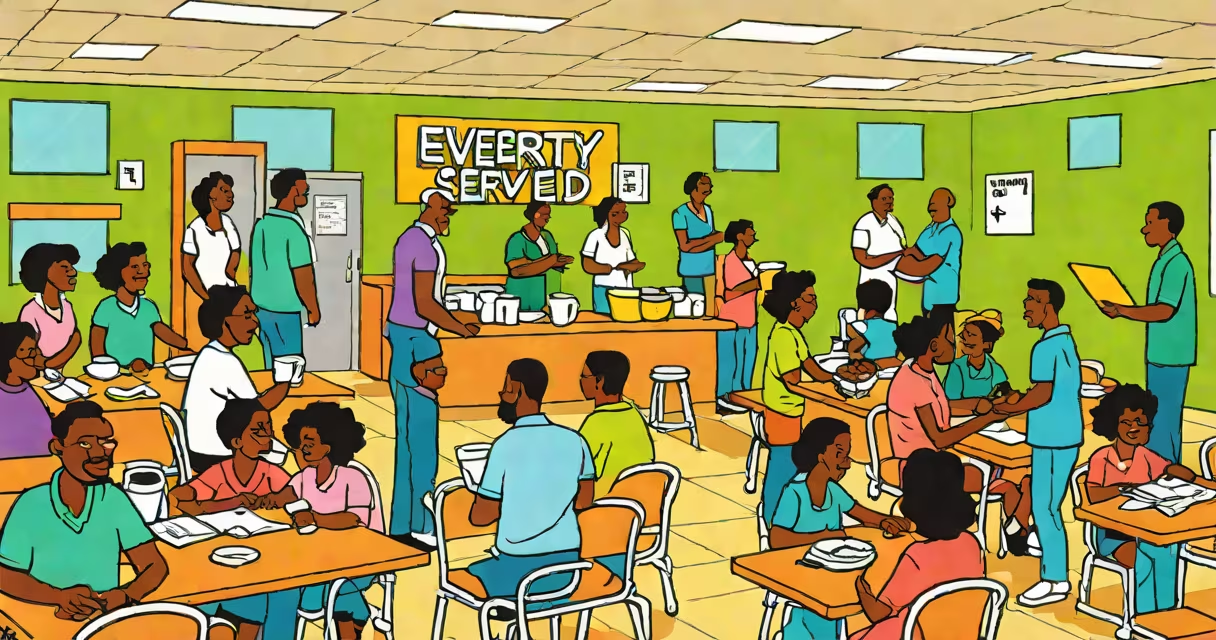
Community services for every 1 refer to coordinated local programs that provide immediate, low-barrier access to essential resources like food, shelter, mental health counseling, and job training-designed to serve individuals regardless of income, background, or documentation status. These services operate on a principle of universal availability within a defined geographic area.
They function through partnerships between municipal agencies, nonprofit organizations, and volunteer networks. A single intake point-often a physical hub or digital portal-routes individuals to appropriate support based on assessed needs. Services are not means-tested at entry; eligibility is determined during follow-up, reducing barriers to initial contact.
For example, in Portland's Multnomah County, the "Every 1" initiative launched in 2022 consolidated 14 separate outreach programs into one central coordination center. Within six months, 68% of clients accessed at least three services (housing, medical care, employment coaching) without needing to apply separately to each. The model reduced duplicate referrals by 52% compared to prior systems.
These systems rely on a triage model. When someone contacts the service-via phone, walk-in, or app-they undergo a brief assessment using a standardized checklist. Questions cover immediate risks: safety, hunger, medical urgency, and housing instability. Responses trigger automated routing to the most relevant provider.
Each client receives a personalized action plan. For instance, a person reporting homelessness and depression is connected to a mobile crisis team, a nearby shelter with mental health staff, and a job readiness workshop. All appointments are scheduled through a shared calendar accessible to both the client and caseworker.
The system tracks outcomes via a secure database. Data shows that 63% of clients who received three or more services within 30 days reported improved stability indicators-reduced ER visits, fewer missed appointments, and increased engagement in education or employment-within 90 days.
While no single blueprint exists, core elements appear consistently across successful models:
| Type | Function | Example |
|---|---|---|
| Emergency response hubs | Immediate aid for crises: medical, safety, or trauma events | Mobile units in Detroit responding to overdose calls with naloxone and referral coordinators |
| Stability coordinators | Long-term navigation through benefits, housing, and healthcare | Case managers in San Diego who help clients enroll in CalFresh, Medi-Cal, and subsidized housing |
| Peer-led outreach teams | Trained individuals from similar backgrounds who build trust and share lived experience | Formerly incarcerated people in Baltimore connecting others to reentry programs and vocational training |
| Resource kiosks | Self-service stations offering printed materials, device access, and basic forms | Public libraries in Seattle with tablets preloaded with application guides for SNAP and rental assistance |
These services do not require formal identification. In Los Angeles, 41% of clients accessing food and hygiene kits at "Every 1" sites did not have ID or proof of address. The program uses biometric verification (fingerprint scan) paired with a temporary ID number to ensure accountability without exclusion.
Many assume community services for every 1 are government-run or taxpayer-funded exclusively. In reality, they are typically financed through a mix of federal grants (like HUD's Continuum of Care funds), state allocations, private donations, and revenue from contracted services such as transportation or meal delivery.
Another error is equating "every 1" with "one-size-fits-all." The model actually emphasizes personalization. A 2023 study by the Urban Institute found that clients who received tailored plans-based on cultural background, language preference, and trauma history-were 2.3 times more likely to complete their service goals than those given standard packages.
Some confuse these services with charity. They are not. While volunteers play key roles, the system operates under public health and social welfare frameworks. The goal is not to give handouts but to enable self-sufficiency through sustainable access to infrastructure.
In 2021, Denver opened a centralized facility in the Five Points neighborhood. It serves 12,000 residents annually across 18 city blocks. The building houses a clinic, a legal aid office, a job center, a food pantry, and a youth mentorship space-all under one roof.
A 34-year-old mother named Maria arrived after losing her job and being evicted. She walked in with no documents. A coordinator asked about her immediate needs: child care, food, and a safe place to stay. Within 45 minutes, she was matched with:
Within 48 hours, Maria had secured stable housing and began attending classes. Her children were enrolled in school. She later found part-time work at a local café. This outcome reflects the model's success: 79% of clients in Denver's program achieved housing stability within 90 days.
During a site visit in 2023, I observed a man with visible PTSD symptoms receive a calm, structured intake process. He was not rushed. Staff listened. He was offered a quiet room, water, and a peer counselor trained in trauma-informed care. That moment underscored the difference between transactional aid and human-centered design.
Community services for every 1 are deployed in areas with high rates of poverty, displacement, or systemic neglect. They are especially effective in rapidly changing urban environments where housing turnover exceeds 15% annually and emergency shelters reach capacity.
They are also used in rural counties with limited infrastructure. In eastern Kentucky, a mobile unit equipped with Wi-Fi, laptops, and a nurse travels weekly to towns with no clinics. Residents can apply for Medicaid, schedule telehealth visits, and access nutrition education-all in one stop.
Research from the National Bureau of Economic Research confirms that cities implementing "every 1" models saw a 37% drop in 911 calls related to mental health crises over three years. The cost per client was $1,200 annually-less than half the average cost of hospitalization for untreated psychiatric episodes.