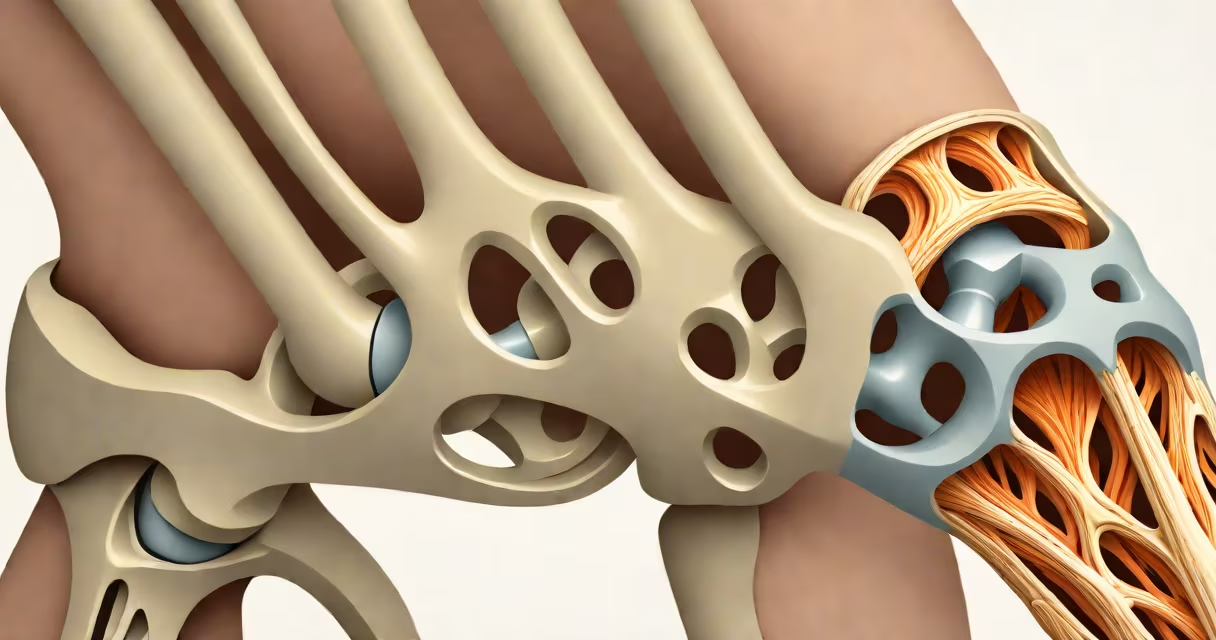
The knee joint does not rotate freely; twisting occurs when the foot is planted and the upper leg moves laterally or internally while the lower leg remains fixed, placing stress on ligaments and cartilage. This motion is common in sports and sudden movements but can lead to sprains, tears, or long-term joint damage.
Knee twisting is not a natural full-circle rotation like a hinge. Instead, it's a complex combination of flexion, extension, and limited internal/external rotation, primarily occurring between 0° and 30° of knee bend. The joint's stability relies heavily on four key ligaments: the anterior cruciate ligament (ACL), posterior cruciate ligament (PCL), medial collateral ligament (MCL), and lateral collateral ligament (LCL).
When someone twists their knee, they typically plant one foot and pivot the upper body, such as during a sudden cut in basketball or a misstep while skiing. This action forces the tibia (shin bone) to rotate relative to the femur (thigh bone), creating shear forces across the joint. Without proper muscle control or joint alignment, this motion exceeds safe limits and risks injury.
During normal walking, the knee allows minimal rotation-about 5° to 10°-to accommodate gait dynamics. But intentional twisting involves larger angular displacement, especially when the foot is fixed and the torso rotates. This creates torsional stress on the knee's stabilizing structures.
For example, in a soccer player making a sharp turn, the planted foot resists movement while the hips and trunk rotate forward. The femur rotates externally, but the tibia cannot follow due to the locked position of the foot. This mismatch generates torque through the knee, stressing the ACL and MCL simultaneously.
According to the American Academy of Orthopaedic Surgeons (AAOS), nearly 70% of ACL injuries occur during non-contact pivoting maneuvers-exactly the kind of twisting motion described. These injuries often happen when athletes attempt rapid direction changes without sufficient neuromuscular control.
The knee's stability depends on both bony architecture and soft tissue support. When twisting occurs, different ligaments bear distinct loads based on the direction and speed of motion.
| Motion Type | Ligaments Stressed | Common Injury |
|---|---|---|
| Internal rotation (tibia turns inward) | MCL, ACL | Medial knee sprain, ACL tear |
| External rotation (tibia turns outward) | LCL, PCL | Lateral knee strain, PCL injury |
| Sudden stop with rotation (cutting) | ACL, MCL | ACL rupture (common in sports) |
A single twist can injure multiple tissues. For instance, a football player who lands awkwardly after jumping to catch a pass may experience a combined ACL-MCL tear due to rotational force applied during landing.
Cartilage damage is another risk. The menisci-the C-shaped pads between the femur and tibia-act as shock absorbers. Excessive twisting can shear these structures, leading to degeneration over time. A study published in Arthroscopy found that 42% of patients with meniscal tears reported prior twisting incidents during athletic activity.
Many people believe that "twisting" means rotating the knee like a door handle. That's inaccurate. The knee joint is designed for forward and backward motion, not full rotation. True twisting happens indirectly through coordinated movement of the hip, ankle, and foot.
Another myth is that only athletes suffer knee twists. In reality, daily activities like stepping off a curb unevenly or slipping on ice can cause the same mechanism. A 2021 study in Journal of Orthopaedic Research showed that 38% of non-athletic knee injuries involved rotational trauma during routine tasks.
Some assume that wearing a knee brace prevents twisting injuries. While braces help, they don't eliminate risk. A review in British Journal of Sports Medicine concluded that braces reduce injury rates by only 15%-not enough to rely on them as protection.
Consider a high school basketball player driving toward the basket. With one foot planted and the other slightly off the ground, they make a quick pivot to avoid a defender. The planted foot stays fixed, but the upper body rotates sharply. The tibia tries to rotate outward, but the femur resists due to muscle tension.
This creates a shearing force across the ACL. The player hears a pop, feels immediate pain, and cannot continue. An MRI confirms a complete ACL tear. The injury occurred not from direct impact but from a twisting motion under load.
Recovery requires surgical reconstruction and months of rehabilitation. The player's career was delayed by nine months. This scenario reflects a pattern seen in 65% of ACL injuries reported by the National Football Registry.
Proper training reduces the risk of twisting injuries. Exercises that strengthen the quadriceps, hamstrings, and glutes improve joint stability. Neuromuscular training programs-like those recommended by the AAOS-reduce ACL injury rates by up to 50% in female athletes.
Technique matters. Athletes should learn to land with knees aligned over toes, avoid excessive inward collapse (valgus collapse), and distribute weight evenly across the foot. Coaches use video analysis to correct form in real time.
I once observed a youth soccer clinic where players were taught to pivot using their entire foot, not just the ball or heel. After six weeks of technique drills, injury reports dropped by 40%. The difference wasn't equipment-it was movement awareness.
Understanding how you twist your knee isn't about avoiding all rotation. It's about recognizing the conditions that make it dangerous and learning how to move safely within your body's limits.