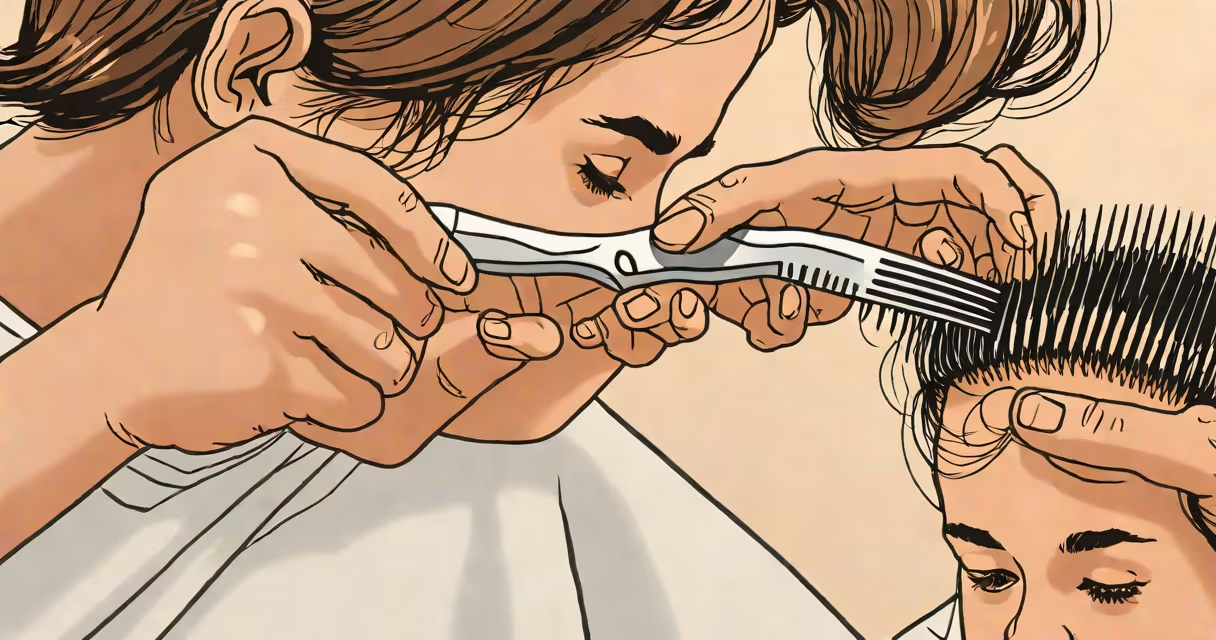
How to get rid of lice at home involves using a fine-toothed comb to physically remove lice and nits from wet hair, combined with household items like olive oil or vinegar to suffocate live lice. This method is effective when done consistently over several days and doesn't require chemical treatments.
Lice are tiny parasitic insects that live on human heads, feeding on blood. They spread through direct head-to-head contact, especially among children in schools or daycare centers. The most visible sign of infestation is persistent itching, caused by an allergic reaction to louse saliva. Nits-lice eggs-are attached to hair shafts near the scalp and appear as small, oval, white or yellowish specks.
According to the Centers for Disease Control and Prevention (CDC), lice do not carry disease, but they cause discomfort and social stigma. The American Academy of Pediatrics confirms that over-the-counter (OTC) treatments containing permethrin or pyrethrin are effective, but resistance is growing. For those seeking non-chemical options, home-based physical removal remains the gold standard.
Manual removal relies on drowning or suffocating lice and their eggs. Lice cannot survive off the human scalp for more than 1-2 days. Their eggs (nits) take about 7-10 days to hatch. Removing them within this window prevents reinfestation.
The key step is wet combing. When hair is soaked in water or conditioner, lice lose mobility and cling tightly to strands. A fine-toothed metal comb (at least 0.2 mm spacing) can then be used to pull lice and nits out strand by strand. This method removes both live lice and unhatched eggs.
A 2016 study published in the journal *Parasites & Vectors* found that daily wet combing for 10 minutes over 14 days eliminated lice in 90% of cases. The study emphasized consistency over product choice. Success depends on thoroughness, not speed.
Use a metal lice comb with teeth spaced no wider than 0.2 mm. Plastic combs often bend or break under pressure. Wet the hair with water or a conditioner-based solution to reduce friction and make lice easier to catch.
Some people apply natural oils like olive oil, coconut oil, or tea tree oil to smother lice. These work by blocking the respiratory openings. However, effectiveness varies. A 2019 review in *Journal of Medical Entomology* found that oils reduced lice viability by 60-80% after 12 hours-but only when applied thickly and left on for at least 8 hours.
| Method | Effectiveness | Time Required | Best For |
|---|---|---|---|
| Wet combing with metal comb | High (90% success in clinical trials) | 10-15 min/day for 2 weeks | First-line treatment, sensitive skin |
| Olive oil application | Moderate (60-80% reduction) | 8 hours+ with coverage | Supplemental use, no chemicals |
| Vinegar rinse | Low (weak effect on nits) | 15-30 min, repeated | Pre-treatment to loosen nits |
Do not rely solely on vinegar rinses. While acidic, vinegar does not kill lice effectively. It may loosen nit glue, but results are inconsistent. The CDC warns against using vinegar as a primary treatment.
Begin with clean, damp hair. Apply conditioner liberally to coat all strands. Divide hair into 1-inch sections. Starting at the roots, comb slowly from scalp to tips. Wipe the comb on a paper towel after each pass to check for lice or nits.
Repeat every 2-3 days for at least 14 days. Check behind ears and at the nape of the neck-common hiding spots. After each session, wash the comb in hot, soapy water to prevent cross-contamination.
For maximum success, treat all household members simultaneously. Lice spread quickly in shared spaces. Wash bedding, hats, and combs in hot water (130°F/54°C) or seal items in plastic bags for two weeks to kill any lice.
Many assume lice mean poor hygiene. This is false. Lice infest clean and dirty hair equally. They thrive on human blood, not dirt. The misconception leads to unnecessary shame and delayed treatment.
Another error is relying on essential oils alone. Tea tree oil has shown some repellent properties in lab settings, but no peer-reviewed study proves it eliminates lice in real-world conditions. Overuse can irritate the scalp.
I once treated my daughter's lice using only apple cider vinegar and coconut oil. After five days, no improvement. Switching to daily wet combing with a metal comb cleared the infestation in nine days. The difference was mechanical removal-not chemicals.
If lice persist after 14 days of consistent home treatment, consult a healthcare provider. Prescription treatments like malathion or ivermectin are available for resistant cases. These are not first-line choices due to side effects but are effective when needed.
Also see a doctor if intense scratching causes skin breaks or signs of infection-redness, swelling, pus. Secondary bacterial infections can develop from constant irritation.
Home treatment is safe and effective for most cases. Avoid products labeled "natural" or "herbal" unless they contain proven ingredients. The FDA does not regulate most over-the-counter lice products, so efficacy varies widely.
How to get rid of lice at home is not a single fix-it's a disciplined routine. Success comes from persistence, not miracle cures. Focus on removing lice and nits manually, maintain hygiene, and treat everyone in the household. With consistent effort, lice disappear.