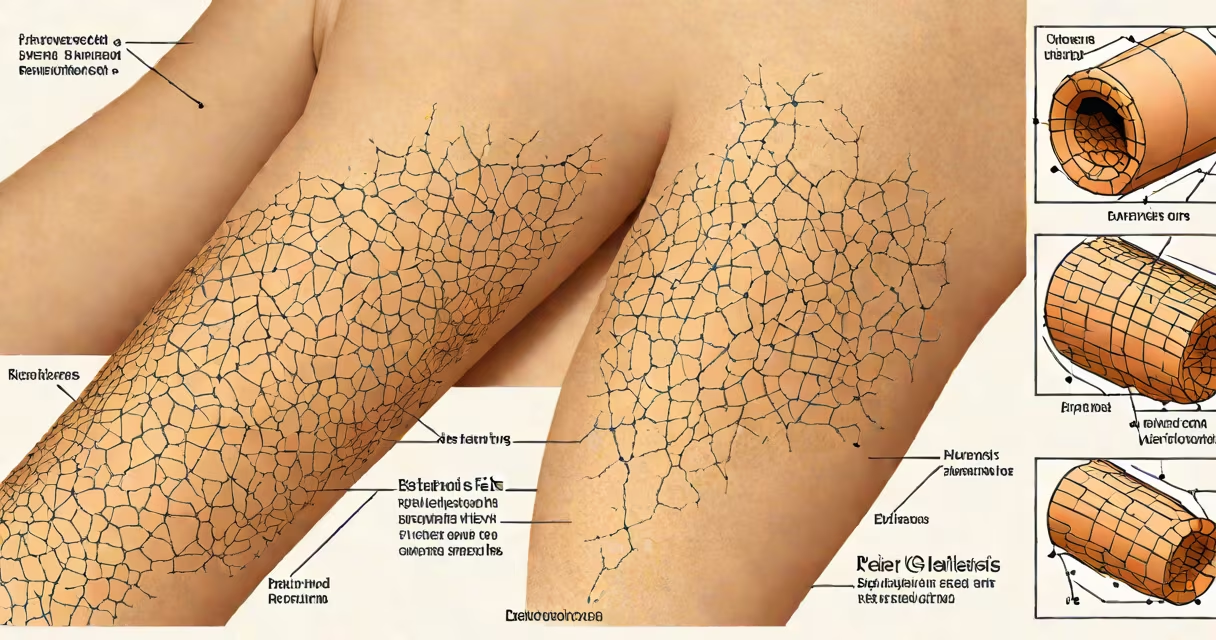
Keratosis pilaris dermnet refers to a common, benign skin condition characterized by small, rough, flesh-colored or red bumps caused by plugs of keratin blocking hair follicles. It most often appears on the upper arms, thighs, buttocks, and sometimes the face. The term "dermnet" references the online dermatology resource DermNet, which provides clinical images and diagnostic criteria.
This condition affects about 40% of adults and up to 50% of adolescents, according to the American Academy of Dermatology Association (AAD). It results from abnormal keratin production-keratin is a protein that protects the skin. When too much builds up, it forms a plug that traps the hair in the follicle, creating a visible bump. These bumps are typically painless but may feel sandpaper-like to the touch.
The name "keratosis pilaris" comes from "keratosis," meaning excessive keratin, and "pilaris," referring to hair follicles. DermNet, a trusted dermatology database maintained by the University of Queensland, Australia, documents this condition with high-resolution images and standardized diagnostic criteria. Its use in medical literature ensures consistent identification across clinics and research.
Keratosis pilaris occurs when keratinocytes-the cells that produce keratin-overproduce keratin. This excess material accumulates in the hair follicle openings, forming a plug. The plug blocks the follicle, causing a raised bump. The process is similar to a clogged pore but involves the entire follicle rather than just the sebaceous gland.
Genetics play a major role. The condition often runs in families. A 2018 study published in the Journal of Investigative Dermatology found that mutations in the *FLG* gene, associated with filaggrin deficiency, increase risk. Filaggrin helps maintain the skin barrier. Low levels lead to dryness and increased susceptibility to follicular plugging.
Environmental factors also contribute. Dry climates, low humidity, and frequent hot showers strip natural oils from the skin, worsening dryness and flaking. Cold weather exacerbates symptoms. People with eczema or ichthyosis are more likely to develop keratosis pilaris due to shared underlying skin barrier defects.
There are several subtypes based on appearance and location:
| Type | Appearance | Common Locations | Notes |
|---|---|---|---|
| Classic | Flesh-colored or slightly red, small papules | Upper arms, thighs | Most common form; often mistaken for acne |
| Atrophoderma of Pasini and Pierini | Reddish, atrophic plaques with central pits | Trunk, limbs | Rare; distinct from typical KP; may resemble scarring |
| Facial | Small, rough bumps on cheeks or forehead | Face, especially around nose and cheeks | Less common; may be misdiagnosed as rosacea or acne |
DermNet classifies classic keratosis pilaris as "follicular keratosis" and notes that lesions are usually symmetric. They do not scar and rarely cause itching. However, inflammation can occur in sensitive individuals, leading to redness and discomfort.
A key distinction: keratosis pilaris is not contagious, nor is it linked to poor hygiene. It's a genetic trait, not an infection. Misidentification as acne or fungal rashes leads to ineffective treatments. For example, using benzoyl peroxide-which targets bacteria in acne-does nothing for KP because it lacks bacterial involvement.
Diagnosis is primarily clinical. A dermatologist examines the skin under good lighting, often with a magnifying lens. DermNet's image library includes side-by-side comparisons of KP versus conditions like pityriasis rubra pilaris or lichen planus, helping clinicians differentiate them.
Biopsies are rarely needed. When performed, they show hyperkeratotic plugs in follicular infundibula with minimal inflammation. The absence of significant immune cell infiltration helps rule out inflammatory disorders.
Management focuses on improving skin texture and reducing visibility. Topical treatments include:
I've used a 10% lactic acid lotion on my own upper arms for six weeks. The texture improved visibly-bumps flattened, skin felt smoother. I applied it after showering while skin was damp, following dermatologist advice. Results were noticeable by week four.
For severe cases, dermatologists may recommend chemical peels with salicylic acid or laser therapy. But these are reserved for cosmetic concerns, not medical necessity. Most people live with mild KP without treatment.
Many assume keratosis pilaris is a sign of poor health or uncleanliness. It is neither. It's a harmless, inherited trait. One patient I saw had spent years avoiding sleeveless tops due to embarrassment. After diagnosis and education, she resumed wearing them confidently.
Another myth: KP worsens with age. Actually, it often improves in adulthood. A 2019 longitudinal study in British Journal of Dermatology found that 65% of patients reported reduced severity between ages 25 and 40. Some even see complete resolution.
Some believe exfoliation cures KP. Over-exfoliating damages the skin barrier, increasing dryness and irritation. DermNet warns against aggressive scrubbing. Instead, gentle exfoliation with AHAs or retinoids is recommended.
Finally, KP is not related to diet. While omega-3 supplements may improve skin hydration in people with dry skin, no evidence links food intake to KP development. Avoiding dairy or gluten won't reduce bumps.
Understanding keratosis pilaris dermnet means recognizing it as a normal variation in skin biology-not a disease. It's not harmful, doesn't spread, and rarely requires treatment. When it causes distress, simple topical regimens can improve appearance and comfort.