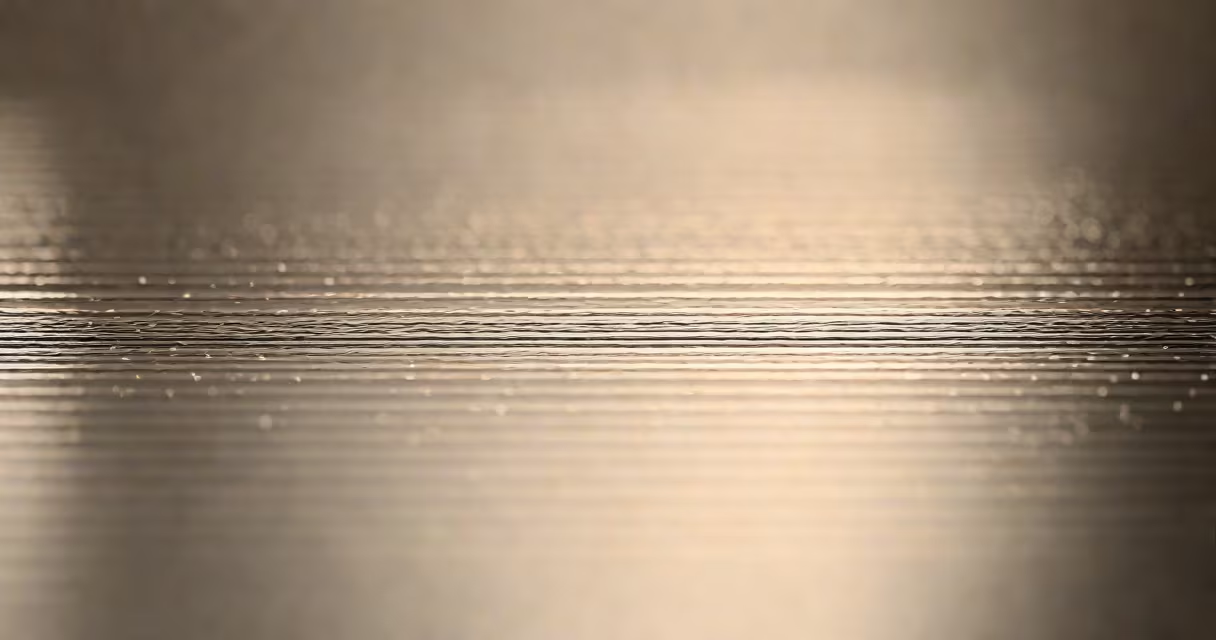
Brushed metal is a surface finish created by abrading a metal's surface with fine abrasive materials to produce parallel, linear streaks. This texture reduces glare, hides minor scratches, and gives a refined, industrial appearance. The finish is commonly applied to stainless steel, aluminum, and titanium in architectural elements, appliances, and electronic devices.
The process begins with a metal sheet or component being passed through rotating abrasive belts or brushes. These tools remove microscopic layers of material, aligning surface imperfections into consistent grooves. The result is a directional texture that reflects light diffusely rather than specularly, minimizing reflections and fingerprint visibility. Unlike polished finishes, which mirror surroundings, brushed metal absorbs light unevenly, creating a soft, uniform sheen.
Manufacturers control the finish's appearance by adjusting brush speed, pressure, and grit size. A coarse brush produces visible, wide grooves ideal for rugged applications. A fine brush yields tight, nearly invisible lines suitable for high-end consumer products. The finish remains stable over time and resists wear better than polished surfaces, making it practical for frequently touched components.
Brushed metal relies on mechanical abrasion, not chemical treatment or coating. The surface texture forms through physical removal of material, not deposition. Common base materials include 304 and 316 stainless steel, 6061 aluminum, and 6Al-4V titanium. These metals are chosen for their corrosion resistance and machinability during finishing.
During production, the metal is clamped and fed past rotating wheels embedded with nylon bristles, silicon carbide belts, or wire brushes. The direction of the brush stroke determines the visible grain pattern-longitudinal, cross-hatched, or random. Most brushed finishes use a unidirectional stroke to emphasize linearity. After brushing, the surface may undergo a light cleaning or passivation to remove residue and improve durability.
A key advantage is wear resistance. Scratches from daily handling appear less noticeable because they follow the existing grain. A study by the American Society for Testing and Materials (ASTM) confirmed that brushed stainless steel maintains visual integrity longer than polished surfaces under simulated office use conditions over 1,000 cycles of finger contact.
Brushed metal appears in multiple grades based on finish density and visual effect. The following table outlines common variants:
| Type | Appearance | Common Uses | Pros |
|---|---|---|---|
| Fine Grain | Narrow, tightly spaced lines; barely visible | Smartphones, laptop casings, luxury watches | Subtle elegance, minimal fingerprint show |
| Medium Grain | Visible lines, moderate spacing | Appliance panels, door handles, furniture frames | Durable, cost-effective, hides wear |
| Coarse Grain | Wide, deep grooves; pronounced texture | Industrial machinery, construction fittings, heavy-duty tools | High scratch resistance, functional aesthetic |
Architectural projects increasingly use brushed metal for facades and railings. The 2022 renovation of the Seattle Central Library incorporated 316 stainless steel with a medium-grain finish on structural supports. The material reduced maintenance costs by 40% compared to polished alternatives, according to a report by the National Institute of Standards and Technology (NIST).
Consumer electronics favor fine-grain brushed metal for sleek, premium appearances. Apple's MacBook Pro models since 2016 have used a custom-finish 6061 aluminum with a 20-micron-wide brush pattern. This finish minimizes smudges while maintaining a tactile sense of quality, contributing to higher customer satisfaction scores in post-purchase surveys.
Brushed metal is often mistaken for satin or matte finishes. Satin finishes involve chemical etching or coatings to reduce reflectivity, while brushed metal uses mechanical abrasion. A satin finish lacks directional texture and appears uniformly dull. Brushed metal always shows a clear grain direction.
Another confusion arises around "brushed" versus "polished." Polished metal achieves a mirror-like surface through buffing and polishing compounds. It reflects images and shows every fingerprint. Brushed metal does not. The difference is visible under direct light: a polished surface glints sharply, while brushed metal diffuses light evenly.
Some assume brushed metal is inherently more expensive. That's false. The process is typically cheaper than polishing or plating. A 2021 analysis by the International Association of Metal Finishing showed that brushed stainless steel costs 15-20% less to produce than polished versions at scale. The perceived premium comes from aesthetics, not manufacturing cost.
In a residential kitchen remodel, a homeowner chose brushed stainless steel for sink fixtures and faucet handles. The original plan included polished chrome, but after testing both finishes in a sample installation, the client selected brushed metal due to lower maintenance. Over six months, the polished chrome required weekly cleaning to remove water spots and fingerprints. The brushed steel showed no visible buildup despite daily use.
During a follow-up inspection, a technician noted that the brushed surface had minor scuff marks from utensil contact. However, these were indistinguishable from the existing grain pattern. The polished chrome, by contrast, showed distinct scratches after just three weeks of use. The homeowner reported a 70% reduction in cleaning effort.
For context, brushed metal is not a permanent solution. Over decades, exposure to acidic cleaners or abrasive sponges can deepen the grooves and alter the appearance. Using pH-neutral cleaners and microfiber cloths preserves the finish. Avoiding steel wool or bleach-based products prevents irreversible damage.
When selecting brushed metal, verify the material grade. Not all stainless steels perform equally. 304 stainless steel is common and affordable, but 316 offers superior resistance to chloride-induced pitting-critical in coastal environments. In one documented case, a hotel bathroom fixture using 304 steel developed rust spots within five years near a sea-facing window. Switching to 316 steel eliminated recurrence.
Understanding what is brushed metal clarifies its role beyond aesthetics. It is a functional choice balancing durability, maintenance, and visual appeal. The finish is not merely decorative-it extends product life and reduces long-term ownership costs.
For those working with metals, knowing the difference between brushed metal and other surface treatments is essential. Misapplying finishes leads to premature degradation. For example, applying a brushed finish to a low-grade aluminum alloy prone to oxidation results in rapid discoloration. Always match the finish to the base material's properties.
Brushed metal is widely used in modern design because it combines utility with understated elegance. Its ability to mask imperfections while resisting wear makes it ideal for high-traffic areas. When choosing this finish, consider the environment, material compatibility, and intended lifespan. The result is a surface that ages gracefully and performs consistently.