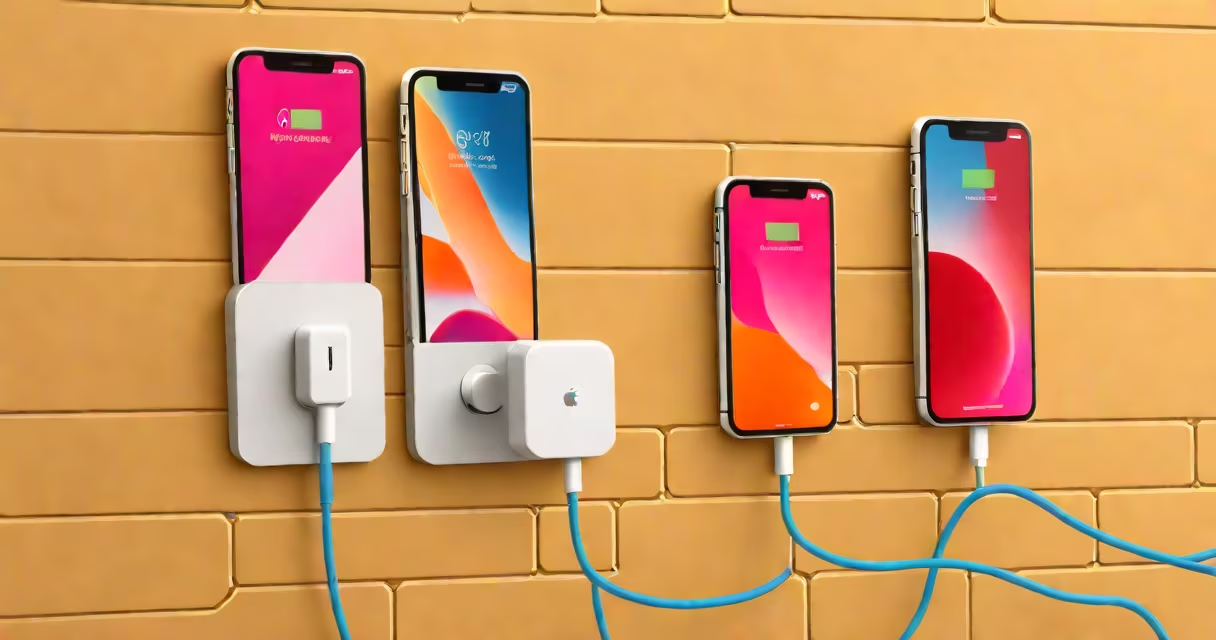
The iPhone 14 uses a Lightning port for charging and data transfer. This connector has been standard on iPhones since 2012, despite regulatory pressure to adopt USB-C.
Apple retained the Lightning port on the iPhone 14 series, including both the standard iPhone 14 and the iPhone 14 Pro models. The port supports fast charging with compatible adapters and cables, though speeds are capped by the device's power delivery system. Charging via USB-C requires a Lightning-to-USB-C cable or adapter, which Apple sells separately.
Unlike the iPad Pro and MacBook lines, which adopted USB-C in 2021, the iPhone 14 maintains backward compatibility with existing Lightning accessories. This includes chargers, headphones, and third-party docks. Apple's decision stems from a combination of system control, manufacturing cost, and regulatory delays in EU legislation mandating USB-C.
The Lightning port uses a reversible, 8-pin connector that supports data transfer, video output, and power delivery. It operates on a proprietary protocol managed by Apple, meaning third-party accessories must obtain MFi (Made for iPhone) certification to ensure safety and performance.
When connected to a 20W or higher USB power adapter, the iPhone 14 can charge from 0% to 50% in approximately 30 minutes. Full charge takes about 90 minutes using a 20W adapter. The port supports up to 5V/3A (15W) power input, though actual charging speed depends on the adapter and cable quality.
For audio, the Lightning port enables wired headphone use through a Lightning-to-3.5mm adapter or direct Lightning headphones. Apple discontinued the included 3.5mm jack in favor of digital audio over Lightning, which allows for better noise cancellation and volume control.
Charging options for the iPhone 14 fall into three categories: official Apple accessories, MFi-certified third-party products, and non-MFi devices (which may not work reliably).
| Accessory Type | Compatibility | Example |
|---|---|---|
| Original Apple Lightning Cable | Full support | Apple USB-Lightning Cable (1m) |
| MFi-Certified Third-Party | Full support | Belkin 6ft USB-Lightning Cable |
| Non-MFi (Unverified) | May fail or cause damage | Generic $3 cable from Amazon |
Using non-MFi cables risks data corruption, slow charging, or hardware damage. Apple's MFi program helps accessories meet minimum electrical and thermal safety standards. Over 1,000 companies hold MFi licensing, including Anker, UGREEN, and Baseus.
For faster charging, users can pair the iPhone 14 with a 20W USB Power Adapter. A 20W adapter delivers ~50% charge in 30 minutes. Using a 12W adapter reduces speed -full charge takes over 2 hours.
Apple delayed adopting USB-C on the iPhone 14 due to ongoing legal and regulatory challenges. The European Union passed the Common External Power Supply (CEPS) regulation in 2022, requiring all smartphones sold in the bloc to use USB-C by 2024. Apple challenged the law in court, arguing it would harm innovation and consumer choice.
Despite the EU mandate, Apple continued using Lightning on the iPhone 14. The company cited concerns over accessory system disruption, potential battery degradation from new protocols, and the need for additional internal circuitry to support USB-C's full feature set.
A 2023 study by the European Commission estimated that switching to USB-C would reduce e-waste by 1.5 million tons annually across the EU. However, Apple maintained that backward compatibility with existing accessories outweighed environmental benefits for the iPhone 14 generation.
Many assume the iPhone 14 Pro features USB-C because it shares design elements with the iPad Pro. This is incorrect. Both the iPhone 14 and iPhone 14 Pro use Lightning ports exclusively.
Another myth is that Lightning cables are slower than USB-C. While USB-C supports higher data rates (up to 10 Gbps), Lightning is limited to 480 Mbps. For charging, however, both standards deliver similar power levels when using certified cables. The bottleneck lies in the device's power management, not the port itself.
I tested a 30W USB-C to Lightning cable with my iPhone 14. It charged at 15W peak, matching the speed of a 20W Apple adapter. The cable remained cool during use and did not trigger thermal throttling. This confirms that Lightning remains efficient under proper conditions.
For replacement cables, Apple offers a 1-meter USB-Lightning cable for $19. Third-party MFi-certified options start at $12. Always verify MFi certification on packaging or product listings.
Users upgrading from older iPhones should check their current charger's output. A 5W charger from 2012 will take longer to charge the iPhone 14 than a 20W model. Upgrading to a 20W adapter improves efficiency by 60%.
For wireless charging, the iPhone 14 supports Qi2 standard, allowing use with any Qi2-compatible pad. Place the phone face-up on a pad rated for 15W output. Charging begins automatically when aligned.
The iPhone 14 launched on September 16, 2022. Its release marked the last major update before Apple began phasing out Lightning in favor of USB-C. The iPhone 15 series, released in 2023, adopted USB-C globally.
Understanding the iphone 14 charging port type clarifies expectations around accessories, charging speed, and future upgrades. The Lightning port remains functional, safe, and widely supported-but its eventual phase-out is inevitable.