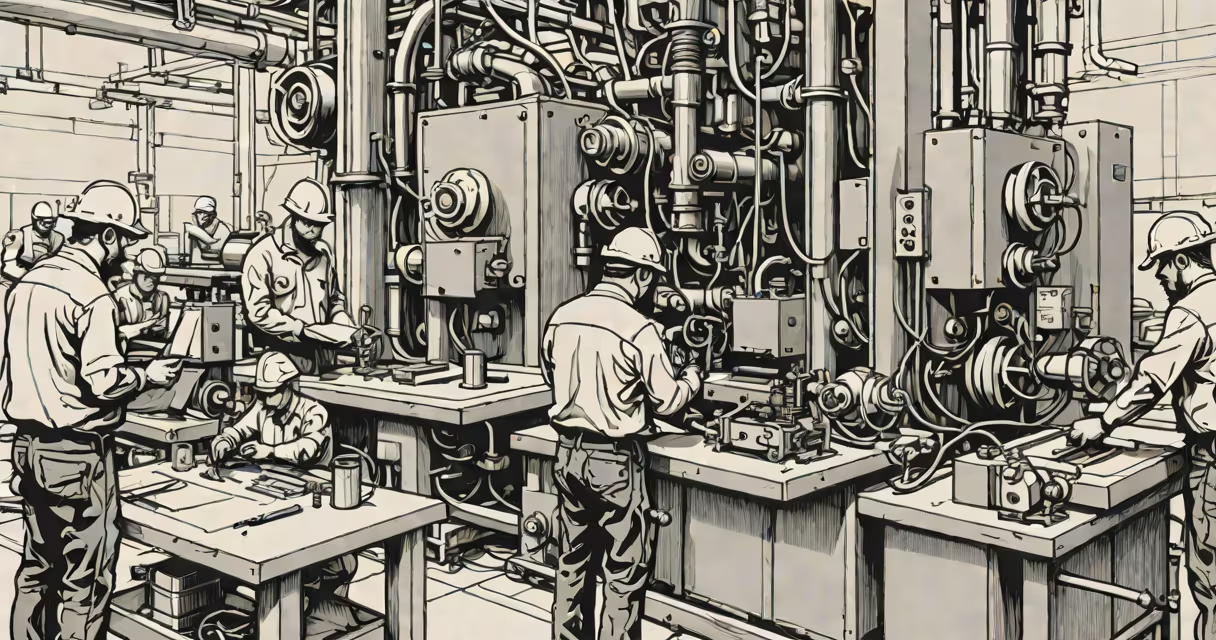
There are multiple specialized branches within mechanical engineering, including thermal, design, manufacturing, robotics, and biomedical engineering, each focused on distinct physical systems and industrial applications.
Mechanical engineering is a broad discipline rooted in the principles of motion, energy, and force. As such, it has evolved into several specialized domains, each addressing unique challenges in industries ranging from aerospace to healthcare. These specializations reflect both technical depth and application-specific expertise required to solve complex real-world problems.
The field began with foundational work in steam power and machine design during the Industrial Revolution. Today, it spans high-tech sectors like electric vehicle development, medical device innovation, and sustainable energy systems. Each specialization requires distinct training, tools, and problem-solving approaches.
Major categories of mechanical engineers include those specializing in thermodynamics, solid mechanics, fluid dynamics, materials science, and control systems. These areas form the core of mechanical engineering education and practice.
Thermal engineers focus on heat transfer, combustion, and energy conversion. They design systems like internal combustion engines, HVAC units, and solar thermal collectors. For example, a thermal engineer at General Electric develops gas turbine efficiency improvements that reduce fuel consumption by 3-5% per year through advanced cooling techniques.
Design engineers apply principles of kinematics and stress analysis to create functional components. They use CAD software to model parts and assemblies, ensuring reliability under load. A design engineer at Ford Motor Company recently reduced weight in a transmission housing by 18% using topology optimization, improving fuel economy without sacrificing strength.
Manufacturing engineers oversee production processes. They select materials, define tolerances, and implement automation. At Tesla's Gigafactory, manufacturing engineers improve battery cell assembly lines to achieve 99.7% yield rates through real-time defect detection algorithms.
Many mechanical engineers specialize based on the sector they serve. Automotive, aerospace, biomedical, and renewable energy industries each demand tailored expertise.
Aerospace mechanical engineers design aircraft structures and propulsion systems. They must comply with FAA regulations and perform rigorous fatigue testing. The Boeing 787 Dreamliner's composite wing structure was developed by a team of aerospace mechanical engineers who used finite element analysis to simulate 1.2 million flight cycles before certification.
Biomedical mechanical engineers work at the intersection of biology and mechanics. They develop prosthetics, artificial joints, and diagnostic devices. One team at MIT designed a wearable exoskeleton that reduces walking energy cost by 17% in patients with mobility impairments, using real-time gait analysis and adaptive torque control.
Renewable energy mechanical engineers focus on wind turbines, hydroelectric systems, and geothermal plants. At Vestas Wind Systems, engineers analyze blade aerodynamics using computational fluid dynamics to increase annual energy output by up to 6% per turbine model iteration.
People often assume all mechanical engineers build machines or fix cars. This overlooks the breadth of their work. Not all mechanical engineers design physical products-some focus on system modeling, simulation, or process optimization.
Another misconception is that mechanical engineering is limited to hardware. Modern mechanical engineers frequently integrate software and sensors. A mechanical engineer working on autonomous vehicles doesn't just design suspension systems-they also program sensor fusion algorithms that combine lidar, radar, and camera inputs for obstacle detection.
Some confuse mechanical engineering with electrical engineering. While both deal with systems, mechanical engineers focus on forces, motion, and material behavior. Electrical engineers handle current, voltage, and circuit design. A robotic arm in a factory involves both disciplines: mechanical engineers design the joints and actuators, while electrical engineers manage motor control signals and feedback loops.
| Type | Primary Focus | Typical Tools/Methods | Industry Examples |
|---|---|---|---|
| Thermal | Heat transfer, energy systems | CFD, thermodynamic modeling | Power plants, HVAC, engines |
| Design | Component and product creation | CAD, FEA, prototyping | Automotive, consumer goods |
| Manufacturing | Production processes and quality | Lean Six Sigma, CNC programming | Automotive, semiconductor |
| Robotics | Automation, control systems | ROS, PLCs, motion planning | Industrial automation, drones |
| Biomedical | Medical devices and implants | Bio-mechanical modeling, ISO 13485 compliance | Hospitals, medtech startups |
Each role uses different skill sets and certifications. For example, a manufacturing engineer may pursue ASQ Certified Quality Engineer (CQE) credentials, while a biomedical engineer might require FDA-regulated design process training.
Consider a project to redesign a mountain bike frame for improved stiffness and reduced weight. A team of mechanical engineers collaborates across disciplines:
This project illustrates how multiple mechanical engineering roles converge to deliver a safe, efficient product. No single engineer possesses all required skills-specialization enables precision and innovation.
During my time at a small aerospace startup, I observed how a single failure in a turbine vane design led to a cascade of issues. The root cause wasn't poor materials-it was inadequate thermal stress modeling. That experience confirmed that even minor oversights in a specialty area can compromise entire systems.
What type of mechanical engineers are there? The answer lies in the diversity of their focus: from thermal systems to biomechanics, from automotive design to renewable energy. Each path offers distinct challenges and opportunities shaped by evolving technology and industry needs.
According to the U.S. Bureau of Labor Statistics, employment of mechanical engineers is projected to grow 9% from 2021 to 2031, faster than average for all occupations. Growth is driven by advancements in robotics, electric vehicles, and clean energy infrastructure. The field continues to expand beyond traditional manufacturing into emerging domains like space exploration and personalized medicine.
Understanding these specializations helps students choose educational tracks and professionals identify growth areas. Whether designing wind turbines or developing surgical robots, mechanical engineers shape the physical world through applied science and engineering rigor.