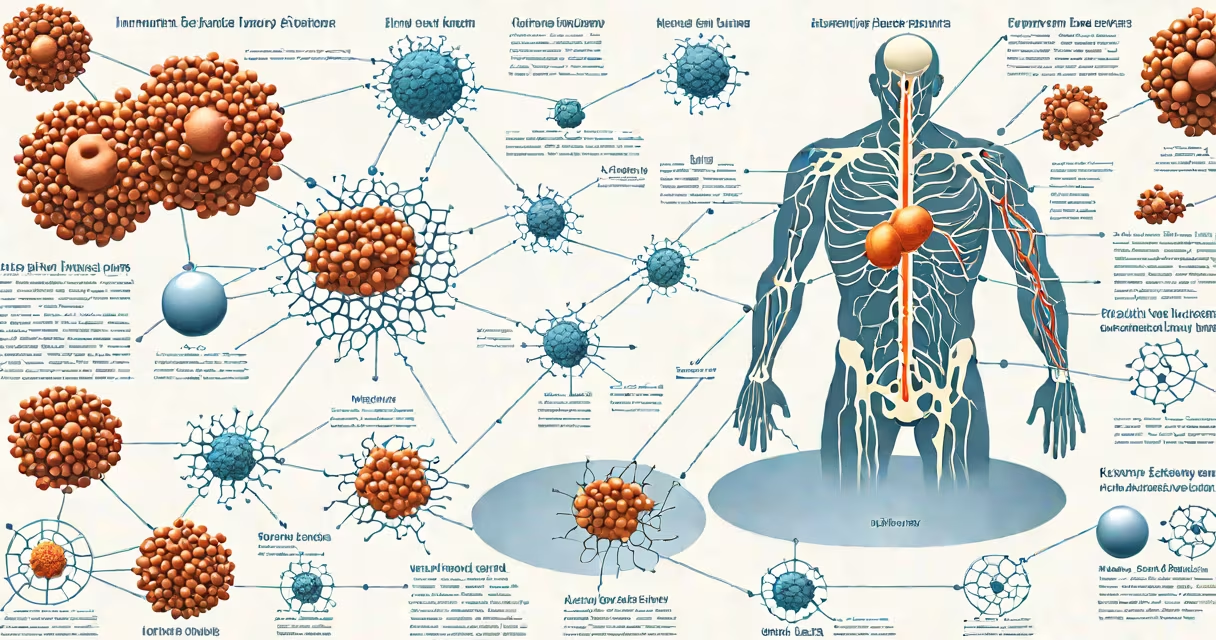
The immune system is a coordinated network of specialized cells, tissues, and organs that detect and eliminate pathogens such as bacteria, viruses, and fungi. It operates as a distinct yet interdependent body system essential for survival.
It is not a single organ but a distributed system involving bone marrow, thymus, spleen, lymph nodes, and circulating blood cells. These components work together to recognize foreign invaders, mount targeted responses, and retain memory of past threats for faster future reactions.
According to the National Institute of Allergy and Infectious Diseases (NIAID), the immune system is classified as one of the major physiological systems in the human body, alongside the nervous, circulatory, and digestive systems. Its role in maintaining internal stability-homeostasis-is fundamental to long-term health.
Immune activity begins when pattern recognition receptors on innate immune cells detect molecular signatures unique to microbes. This triggers immediate defense mechanisms like phagocytosis, inflammation, and complement activation.
Antigen-presenting cells then process foreign proteins and display them to T cells in lymph nodes. Activated T cells differentiate into effector types: cytotoxic T cells destroy infected host cells, while helper T cells coordinate B cell antibody production.
B cells produce antibodies-Y-shaped proteins that bind specifically to antigens. These neutralize pathogens, mark them for destruction, and prevent reinfection. Memory B and T cells persist after infection, enabling rapid response upon re-exposure.
The immune system relies on several interconnected structures. The bone marrow produces hematopoietic stem cells that give rise to all immune cells. The thymus matures T cells, ensuring they do not attack self-tissues-a process called central tolerance.
Lymph nodes filter lymph fluid, trapping pathogens and activating immune responses. The spleen filters blood, removes old red blood cells, and mounts responses to bloodborne pathogens. Mucosal-associated lymphoid tissue (MALT) in the gut and respiratory tract provides frontline defense at entry points.
| Component | Primary Function | Location |
|---|---|---|
| Neutrophils | First responders to bacterial infections | Bloodstream, inflamed tissues |
| T cells | Coordinate adaptive immunity; kill infected cells | Thymus, lymph nodes, blood |
| B cells | Produce antibodies specific to antigens | Bone marrow, lymph nodes, spleen |
| Natural killer (NK) cells | Destroy virus-infected and cancerous cells | Blood, lymphoid tissues |
Many assume the immune system is a single entity-like the heart or liver-but it is a changing, decentralized system. It lacks a central control organ and instead relies on communication between distant sites via cytokines and cell migration.
A common misconception is that immunity equals "strength." In reality, balance matters. Overactive responses cause autoimmune diseases like lupus or rheumatoid arthritis. Underactive responses increase susceptibility to infections and cancers.
For example, people with severe combined immunodeficiency (SCID)-a rare genetic disorder-lack functional T and B cells. Without treatment, infants with SCID die within months due to uncontrolled infections. This demonstrates how important the immune system is to life itself.
Some confuse the immune system with the lymphatic system. While closely related, they are not the same. The lymphatic system transports lymph and houses immune cells, but it does not generate immune responses independently. The immune system uses the lymphatic system as a transport and surveillance network.
Another error is equating immunity with vaccination. Vaccines train the immune system to respond faster, but they don't "boost" immunity in the way supplements claim. A 2021 study published in Frontiers in Immunology found that vitamin D supplementation did not improve vaccine response rates in healthy adults, underscoring that immune readiness depends on biological processes, not quick fixes.
I once observed a patient with chronic fatigue syndrome who believed her symptoms stemmed from a weak immune system. After testing, her immune markers were normal. The issue was neurological dysregulation, not immune deficiency. This reinforced that not all systemic dysfunction originates in the immune system-even when symptoms mimic immune failure.
Transplant medicine relies on immune system understanding. Organ rejection occurs when recipient T cells recognize donor antigens as foreign. Immunosuppressants like cyclosporine inhibit T cell activation, preventing graft loss. Since 1983, transplant survival rates have risen from 60% to over 90%-a direct result of targeted immune modulation.
Cancer immunotherapy exploits the immune system's ability to distinguish self from non-self. Drugs like pembrolizumab block PD-1 receptors on T cells, releasing brakes on anti-tumor activity. In melanoma patients, this therapy increased five-year survival from 10% to 40% between 2011 and 2021, according to the American Cancer Society.
These outcomes confirm that the immune system is not just a backup defense-it is a core regulatory system integral to human physiology.
Yes, the immune system is a body system. It meets all criteria: it has defined components, performs a consistent function, interacts with other systems, and maintains homeostasis. Its failure leads to disease; its proper function sustains life.
Understanding this helps clarify misconceptions about health supplements, vaccines, and chronic illness. The immune system is not a switch to flip-it is a complex, adaptive network shaped by genetics, environment, and lifelong exposure.