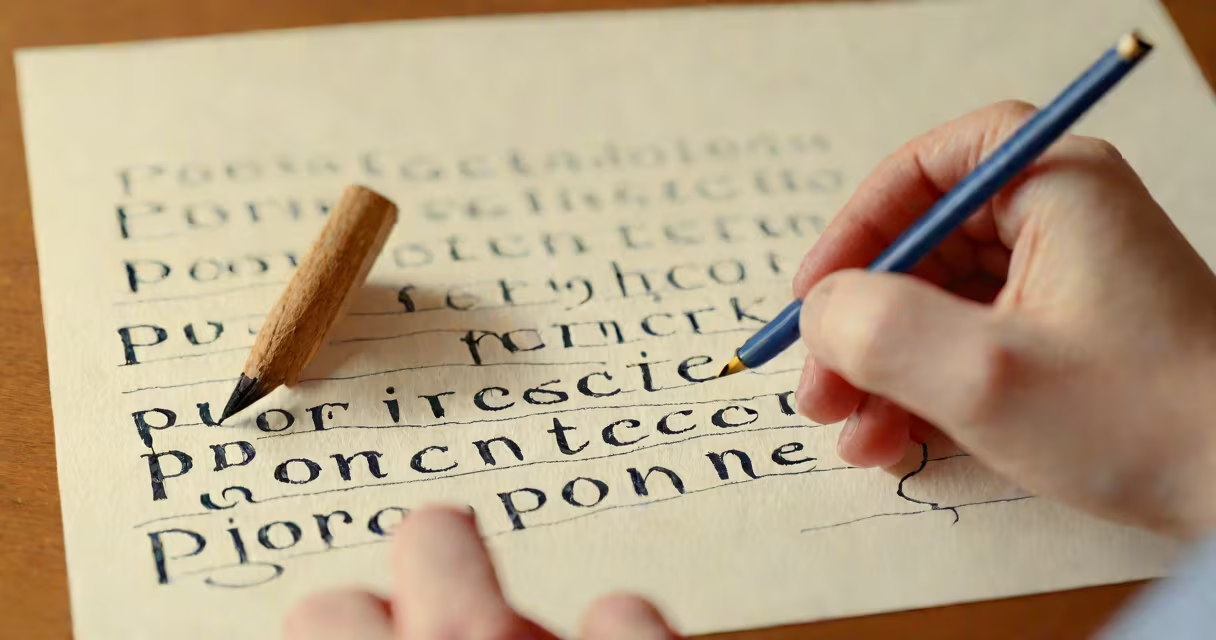
Write punctuation marks using standardized symbols to clarify meaning, structure, and tone in written language. Proper punctuation prevents ambiguity and ensures accurate communication.
Punctuation marks are not decorative. They serve functional roles: separating clauses, indicating pauses, showing possession, marking direct speech, and signaling sentence endings. Misplaced or missing punctuation alters meaning. For example, "Let's eat, Grandma" and "Let's eat Grandma" differ drastically in intent.
The most common punctuation marks include the period (.), comma (,), semicolon (;), colon (:), question mark (?), exclamation point (!), apostrophe ('), quotation marks (""), and parentheses (). Each has a specific rule-based function. Rules vary slightly between American and British English, especially with quotation marks and spacing around punctuation.
Punctuation marks control flow and interpretation. A period ends a declarative sentence. A comma separates elements in a list or introduces a dependent clause. A semicolon joins closely related independent clauses without a conjunction.
Consider this sentence: "I bought apples oranges and bananas." Without commas, it's ambiguous whether the list contains three items or two. Adding commas clarifies: "I bought apples, oranges, and bananas." The Oxford comma (the comma before 'and') is optional in American English but recommended for clarity in complex lists.
Quotation marks enclose direct speech. In American English, commas and periods go inside quotation marks: "She said, 'I'll be there at five.'" In British English, punctuation often goes outside unless it's part of the quoted text. This difference causes frequent errors in international writing.
There are 12 core punctuation marks. Their functions are consistent across formal writing systems.
| Punctuation Mark | Primary Function | Example |
|---|---|---|
| . | Ends a declarative sentence | I finished my homework. |
| , | Separates items in a list or clauses | She likes tea, coffee, and juice. |
| ; | Joins related independent clauses | I was tired; I went to bed early. |
| : | Introduces a list, explanation, or quote | Bring these items: pen, notebook, and water bottle. |
| ? | Ends a question | Are you coming to the party? |
| ! | Expresses strong emotion or command | Stop that right now! |
| ' | Shows possession or contractions | John's book is on the table. She's not coming. |
| "" | Encloses direct speech or titles | He said, "I'll call you later." |
| () | Contains supplementary information | She arrived at 6 p.m. (after the meeting ended). |
| - | Signals a break or emphasis | She didn't care-she was already gone. |
| - | Used in dialogue for interruption | "Wait-I don't understand." |
| ... | Indicates omission or pause | She said, "I'll be back... maybe." |
Some marks have dual roles. The apostrophe shows both contraction and possession. The dash can replace parentheses or commas for dramatic effect. The ellipsis (...) signals hesitation or trailing thought, common in dialogue.
One frequent error is placing commas and periods outside quotation marks in American English. Example: Incorrect - "She said, 'I'm leaving'." Correct - "She said, 'I'm leaving.'" The period belongs inside the quotation marks.
Another mistake is overusing commas. Consider: "I saw the dog, the cat, and the bird, which was flying." The comma after "bird" is unnecessary because "which was flying" is a restrictive clause modifying "bird," not a separate item in a list.
A less obvious issue is punctuation placement with quotation marks in dialogue. When quoting someone who says something that ends with a question or exclamation, the punctuation goes inside the quotes. Example: "Did you see that?" he asked. The question mark is inside the quotation marks because it's part of the spoken words.
When quoting a full sentence, the capital letter begins the quote. Example: "The sky turned red," she whispered. The capital "T" in "The" is correct because it starts the quoted sentence.
In academic writing, punctuation must follow style guides. APA uses double quotation marks for short quotes and single for quotes within quotes. MLA follows similar rules but places citations outside quotation marks.
For example, in APA style: According to Smith (2020), "The results were unexpected" (p. 45). The period is inside the quotation marks, and the citation appears after.
During editing, I once corrected a manuscript where the author wrote: "The meeting was cancelled, due to illness." This is a comma splice-a run-on sentence. The fix: "The meeting was cancelled due to illness." or "The meeting was cancelled; it was due to illness."
Another example: "She said, 'I'll be there at six o'clock.'" The apostrophe in "o'clock" is correct. The word "o'clock" comes from "of the clock." Missing the apostrophe creates confusion, especially in formal documents.
People often think punctuation is optional or stylistic. It is not. Punctuation defines syntax and meaning. Removing the comma in "Let's eat Grandma" changes a meal invitation into cannibalism.
Also, many assume that all punctuation goes outside quotation marks. This is false in American English. Commas and periods always go inside quotation marks when they are part of the quoted material. Semicolons and colons go outside.
Another misconception: that em dashes (-) and hyphens (-) are interchangeable. They are not. An em dash is longer and used for interruptions or emphasis. A hyphen connects compound words. Example: "She was-finally-ready." vs. "She was ready." The em dash adds dramatic pause.
Finally, people confuse parentheses with brackets. Parentheses ( ) contain extra information. Brackets [ ] are used to insert editorial comments inside quoted text. Example: "She said [in a whisper], 'I'm scared.'" The brackets show the editor's addition.
Correctly writing punctuation marks is not about memorizing rules-it's about ensuring your message lands as intended. A misplaced comma can change meaning. A missing period can make a sentence feel unfinished. Mastering punctuation marks builds precision in every sentence.