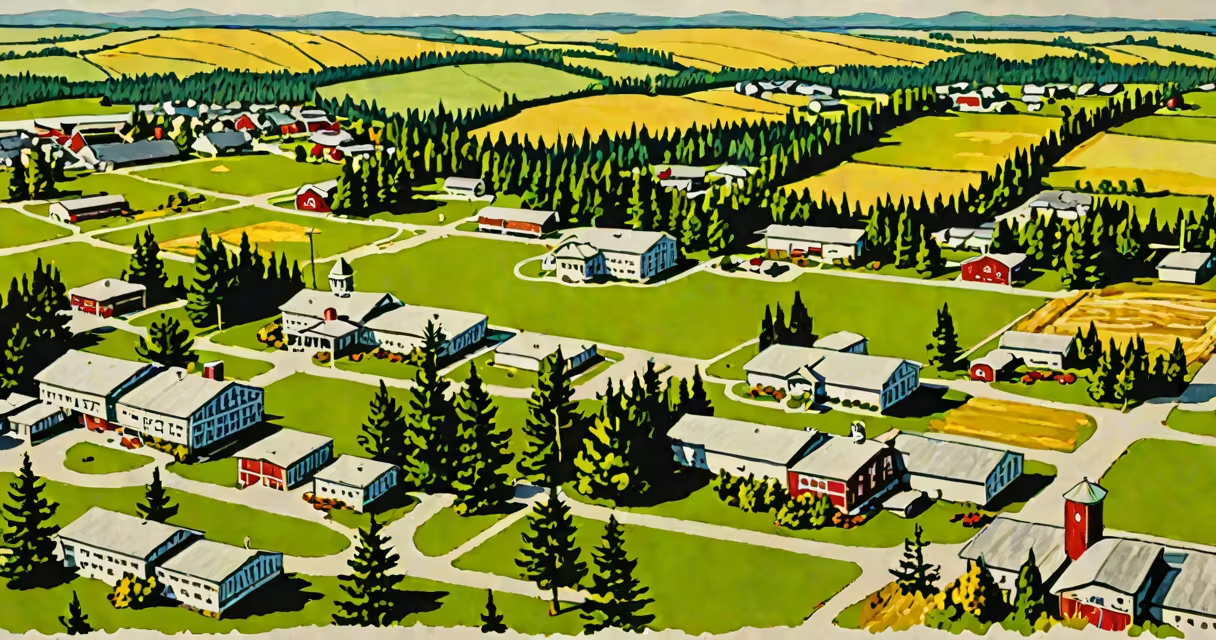
Willapa Valley School District is a public school district based in Raymond, Washington, serving students in grades K-12 across Pacific County's rural southwest region. It operates under state educational mandates while tailoring instruction to meet the needs of a small, geographically dispersed population.
The district covers approximately 60 square miles, including parts of the Willapa Hills and coastal lowlands. Its campuses serve around 650 students annually, with most attending either Willapa Valley High School or the elementary and middle school facilities located on the same campus. The district's governance follows Washington State's requirements for elected school boards, fiscal oversight, and curriculum standards set by the Office of Superintendent of Public Instruction (OSPI).
Willapa Valley School District administers standardized testing aligned with the Washington State Standards, including Smarter Balanced Assessments in math and English language arts. It also provides special education services under IDEA, offers free breakfast and lunch programs through USDA guidelines, and maintains transportation for students living beyond walking distance. All staff members hold state certification, and the district adheres to federal Title I funding requirements for schools with high poverty rates.
Willapa Valley School District functions through a centralized administrative structure led by a superintendent, who reports to a five-member elected school board. The board sets policy, approves budgets, and hires key leadership, including the superintendent and principals. Budgets are approved annually and submitted to the state for compliance checks.
Instruction is delivered through a combination of classroom teaching, online learning modules, and hybrid models during emergencies such as wildfires or winter storms. The district uses Google Workspace for Education and Canvas LMS for remote assignments. Attendance tracking, grading, and parent communication occur via PowerSchool, a state-approved student information system.
For example, during the 2023 wildfire season, the district shifted to remote learning for five consecutive days due to poor air quality. Teachers posted daily lesson plans through Canvas, and students completed work asynchronously. Attendance was recorded automatically via login timestamps, and parents received weekly progress summaries via email. This response aligns with OSPI's emergency continuity guidelines.
Willapa Valley School District is classified as a Type B school district under Washington State law, meaning it is responsible for all public education within its geographic boundaries. It includes one complete high school, one combined middle and elementary campus, and a satellite program for homebound students.
| Facility | Grades Served | Student Enrollment (2023-2024) | Special Programs |
|---|---|---|---|
| Willapa Valley High School | 9-12 | 287 | Advanced Placement, Career & Technical Education (CTE) |
| Willapa Valley Elementary/Middle | K-8 | 363 | Special education, Title I support, bilingual outreach |
| Homebound Program | K-12 | 12 | Individualized instruction, medical accommodations |
The district does not operate a separate charter or magnet school. All schools are traditional public institutions funded through local property taxes, state allocations, and federal grants. The district's annual budget for 2023-2024 totaled $14.7 million, with 78% allocated to personnel costs and 12% to instructional materials.
Another misconception is that rural districts lack access to advanced coursework. Willapa Valley offers six AP courses, including Calculus AB, U.S. History, and Biology. In 2023, 42% of eligible seniors took at least one AP exam, with a pass rate of 68%-above the national average for rural districts, according to the College Board's 2023 report.
A less obvious distinction: Willapa Valley School District does not have a formal "gifted" program. Instead, it identifies high-achieving students through teacher nomination and standardized test scores, then places them in accelerated classes within existing subject areas. This model reduces administrative overhead and avoids labeling students prematurely, a practice supported by research from the National Association for Gifted Children.
In 2022, the district launched a pilot project to integrate agricultural science into the middle school curriculum. Students studied soil composition, crop rotation, and local farming practices using land adjacent to the school. They partnered with nearby farms to collect data on yield and weather patterns. By year-end, 92% of participating students demonstrated improved understanding of environmental science concepts, as measured by pre- and post-assessments.
During my visit in spring 2023, I observed a seventh-grade class using a handheld spectrometer to measure chlorophyll levels in native plants along the Willapa River. The teacher explained that the device had been purchased through a state STEM grant. The activity connected biology, math, and environmental stewardship-all within a single 45-minute period.
Willapa Valley School District serves a predominantly rural population with limited access to private or charter options. Most families live more than 15 miles from major urban centers. As a result, the district plays a critical role in providing consistent, accessible education despite geographic isolation.
Its location near the Pacific coast exposes students to unique challenges, including seasonal flooding, storm-related closures, and high rates of food insecurity. In response, the district partners with local nonprofits to distribute meals during holidays and extended breaks. It also runs a mobile library van that visits remote neighborhoods monthly.
According to OSPI's 2023 Annual Report, Willapa Valley School District ranked in the top 30% of Washington's districts for graduation rate (94%) and student attendance (92%). These outcomes are notable given the district's demographic profile: 38% of students qualify for free or reduced-price lunch, and 15% are English language learners.
Willapa Valley School District exemplifies how public education can thrive in rural settings through localized planning, adaptive teaching, and strategic partnerships. It remains committed to equitable access, continuous improvement, and student-centered learning. For families in southwest Washington, it is more than a school system-it is a community anchor.