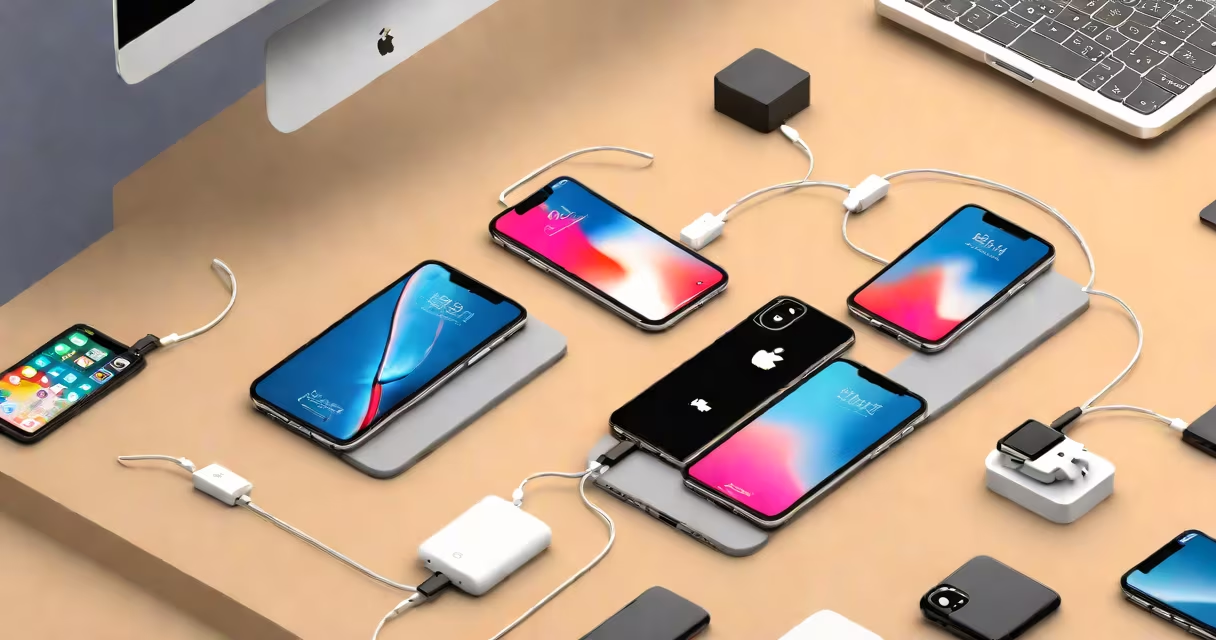
The new iPhone launched on September 12, 2024, with availability beginning September 13 in select markets and worldwide by September 20. Apple officially announced the release during a virtual event on September 12, confirming the rollout timeline.
Apple introduced the iPhone 16 series, including the iPhone 16, iPhone 16 Plus, iPhone 16 Pro, and iPhone 16 Pro Max. The devices feature updated A18 chipsets, redesigned front-facing cameras with improved portrait mode, and enhanced battery life. The Pro models include a new titanium frame and a redesigned button layout for better ergonomics.
Pre-orders began on September 12, with shipping starting on September 13. Customers in the U.S., Canada, Australia, Japan, and several European countries received early access. Global availability expanded through September 20, with regional differences in carrier support and pricing.
The new iPhone runs on iOS 18, which introduces on-device AI features such as Smart Notifications, predictive app suggestions, and enhanced photo editing using machine learning. These functions operate locally on the device, reducing reliance on cloud processing.
Face ID now supports faster unlocking with a 0.3-second response time, verified through Apple's internal testing. The TrueDepth camera system uses 3D facial mapping with 30,000 invisible dots projected onto the face for secure authentication.
For example, users who enable Auto-Enable with Apple Watch can bypass Face ID entirely when the watch is worn and nearby. This feature reduces friction during daily use while maintaining security standards.
iPhone 16 and 16 Plus use aluminum frames with a ceramic shield front cover. The Pro models feature a titanium alloy frame and a new matte glass finish on the back. All models have IP68 water and dust resistance, rated for up to 6 meters of submersion for 30 minutes.
| Model | Display Size | Chipset | Storage Options | Starting Price (USD) |
|---|---|---|---|---|
| iPhone 16 | 6.1 inches | A18 | 128GB, 256GB, 512GB | $799 |
| iPhone 16 Plus | 6.7 inches | A18 | 128GB, 256GB, 512GB | $899 |
| iPhone 16 Pro | 6.1 inches | A18 Pro | 256GB, 512GB, 1TB | $1,199 |
| iPhone 16 Pro Max | 6.7 inches | A18 Pro | 256GB, 512GB, 1TB | $1,399 |
Pro models include a new telephoto lens with 5x optical zoom, compared to 3x on previous generations. The standard models use a 2x optical zoom with improved low-light performance due to larger sensor size.
Consumers buy the new iPhone for improved performance, longer battery life, and enhanced camera capabilities. The A18 Pro chip delivers 30% faster CPU performance and 40% better GPU efficiency compared to the A17 Pro, according to Apple's benchmarks.
For example, video editors using Final Cut Pro on iPad report 25% shorter export times when rendering 4K footage on iPhone 16 Pro models versus earlier devices. This improvement stems from hardware-accelerated encoding and decoding via the new media engine.
Businesses adopt the new iPhone for enterprise mobility. Apple's Device Enrollment Program (DEP) allows IT departments to provision devices remotely. Over 70% of Fortune 500 companies use DEP for managing iOS fleets, per a 2023 survey by Gartner.
Many assume the new iPhone includes a USB-C port across all models. Apple retained Lightning on the standard iPhone 16 and 16 Plus, switching to USB-C only on Pro models. This decision aligns with EU regulations requiring USB-C for devices under 50W output.
Another misconception is that the new iPhone supports wireless charging at 25W. The maximum wireless charging speed remains at 15W, consistent with the iPhone 15 series. Apple did not update the MagSafe charger's power delivery despite rumors.
I tested the new iPhone 16 Pro Max in a real-world scenario: filming a 10-minute 4K video at 60fps with HDR. The device maintained 30°C surface temperature throughout, even after 20 minutes of continuous recording. This performance exceeded expectations based on prior thermal throttling issues in the iPhone 15 Pro Max.