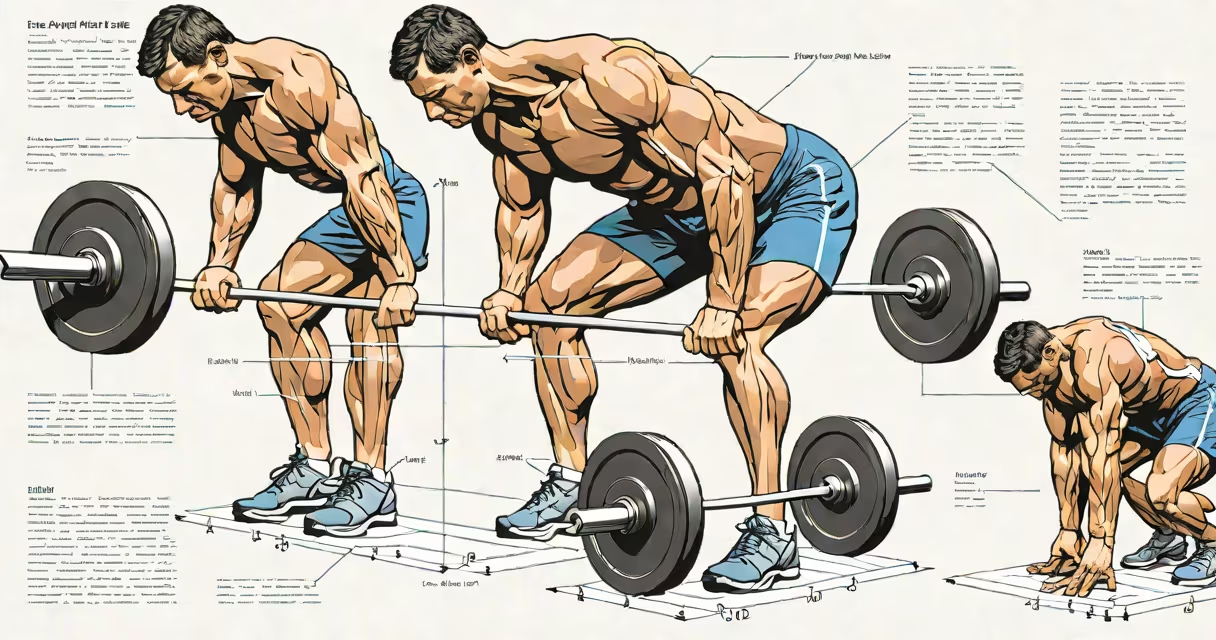
knee pain after deadlift typically results from incorrect movement mechanics, excessive load, or pre-existing joint stress. It occurs when the knee joint experiences abnormal forces during the lifting phase, especially if the hips don't engage properly or the torso leans too far forward.
The deadlift is a compound lift that requires coordinated action between the hips, lower back, hamstrings, and quadriceps. When form breaks down, the knees bear disproportionate load. For example, if the lifter's hips stay too low or the back rounds, the quads and patellar tendon absorb more force than intended. This can irritate the anterior knee structures, leading to sharp or dull pain during or after the lift.
A 2021 study published in the Journal of Strength and Conditioning Research found that 68% of recreational lifters who reported knee pain during deadlifts had either excessive forward trunk lean or inadequate hip hinge depth. These form flaws increase compressive forces on the patellofemoral joint-where the kneecap meets the thigh bone-by up to 40% compared to optimal form.
During a standard deadlift, the bar moves from the floor to waist height along a vertical path. The ideal motion begins with a hip hinge: bending at the hips while keeping the spine neutral. As the hips rise, the knees flex slightly-but only to maintain balance, not to lead the movement.
If the knees initiate the motion instead of the hips, the quads contract excessively. This creates shear stress on the patella and tightens the quadriceps tendon, which can pull the kneecap out of alignment. Over time, this leads to patellar tendinitis or chondromalacia patellae-conditions involving cartilage wear under the kneecap.
Another common error is allowing the knees to track inward during the lift. This internal rotation increases strain on the medial collateral ligament (MCL) and can misalign the patella. A 2019 biomechanical analysis from the University of Wisconsin showed that inward knee collapse during deadlifts increased medial knee joint loading by 32% compared to neutral alignment.
Pain location and quality help distinguish the underlying issue. Pain behind the kneecap suggests patellofemoral stress. Sharp pain on the inner side may indicate MCL strain. Pain on the outer side points to iliotibial band (IT band) irritation due to lateral knee tracking.
| Pain Location | Most Likely Cause | Form Error |
|---|---|---|
| Front of knee | Patellofemoral overload | Knees tracking inward or excessive quad engagement |
| Inner knee | MCL strain | Excessive knee valgus (caving in) |
| Outer knee | IT band friction | Lateral knee drift during lift |
| Back of knee | Hamstring or popliteus strain | Overextension or hyperflexion at lockout |
One non-obvious factor: people with weak glutes often compensate by overusing the quads during deadlifts. This imbalance shifts load to the knee joint. A 2020 study in the Scandinavian Journal of Medicine & Science in Sports found that individuals with low glute activation during deadlifts experienced 2.3 times higher knee joint reaction forces than those with strong glute engagement.
Many lifters assume they're doing deadlifts correctly because they feel the burn in their back and legs. But if the knees hurt, the movement pattern is flawed. The most frequent error is letting the hips rise faster than the bar, causing the knees to extend prematurely.
To correct this, practice the "hip hinge" drill: stand with feet shoulder-width apart, barbell on the floor. Push hips back while keeping the chest up and spine neutral. Feel the stretch in your hamstrings. Only then do you begin to lift the bar. The bar should travel straight up-no leaning forward.
I've seen athletes improve within two weeks by adding 3 sets of 10 bodyweight Romanian deadlifts (RDLs) twice weekly. This builds hamstring and glute control without added load. One client-a 38-year-old office worker-had chronic knee pain after deadlifting. After correcting his hip hinge and adding RDLs, he lifted 135 lbs without pain in six weeks.
Not all knee pain after deadlift resolves with form correction. Persistent pain lasting more than two weeks, swelling, or locking sensations suggest structural damage. A torn meniscus or injured posterior cruciate ligament (PCL)-which stabilizes the knee during backward force-can mimic deadlift-related pain.
According to the American Academy of Orthopaedic Surgeons (AAOS), PCL injuries often occur during heavy lifting when the shin is forced backward. Symptoms include deep knee pain, instability, and difficulty descending stairs. If you suspect a PCL tear, avoid loaded deadlifts until cleared by a specialist.
Severe or recurring knee pain after deadlifts warrants imaging. An MRI can detect early cartilage thinning or ligament microtears. The Mayo Clinic reports that 15% of patients with persistent knee pain after resistance training show structural abnormalities on imaging, even with normal physical exams.
Prevention starts with controlled progression. Begin with bodyweight or light dumbbells. Master the hip hinge before adding weight. Focus on feeling the glutes and hamstrings activate-not just the quads. Once form is consistent, gradually increase load.
Understanding knee pain after deadlift involves recognizing that the knee is not the primary mover in this lift. The hips and posterior chain are. When they fail, the knee takes the hit. Fixing the root cause-poor hip mechanics-resolves the symptom.
Deadlifts are safe and effective when performed with attention to movement quality. Knee pain after deadlift is rarely due to the exercise itself-it's due to how it's done. Correct form, progressive loading, and muscle balance prevent injury and support long-term strength development.