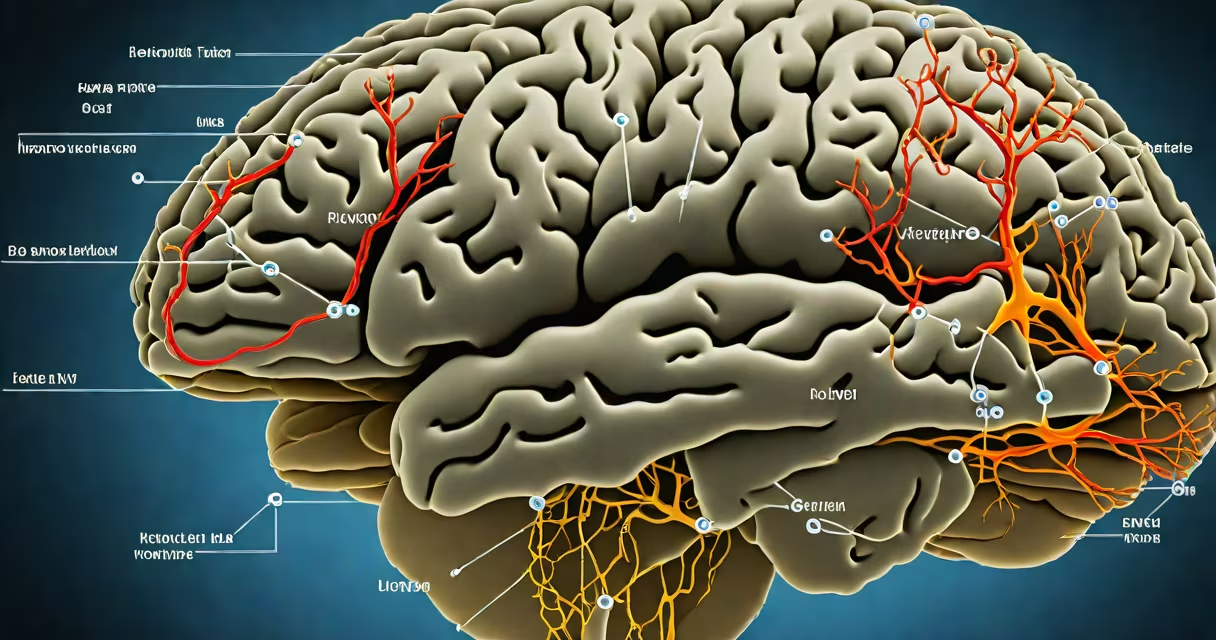
Neurocognitive refers to mental processes rooted in brain activity, including attention, memory, decision-making, and language. These functions are studied through behavioral tests and brain imaging to assess how the nervous system supports thinking and behavior.
Neurocognitive abilities emerge from interactions between neurons in specific brain regions. For example, the prefrontal cortex handles working memory and impulse control, while the hippocampus manages long-term memory formation. When these systems are disrupted-by injury, disease, or developmental differences-performance on tasks involving focus, planning, or recall can decline.
Assessments like the Montreal Cognitive Assessment (MoCA) or the Trail Making Test measure neurocognitive performance by tracking reaction time, accuracy, and task-switching ability. Scores help clinicians detect early signs of dementia, ADHD, or recovery progress after stroke. Research uses similar tools to map how aging, stress, or learning affect brain function.
Neurocognitive processes rely on synchronized electrical and chemical signaling across neural networks. When you solve a math problem, your brain activates the parietal lobe for calculation, the frontal lobe for inhibition of distractions, and the temporal lobe for retrieving known facts. This coordination happens in milliseconds.
Functional MRI (fMRI) captures these dynamics by measuring blood flow changes linked to neural activity. A study published in Nature Neuroscience showed that individuals with higher executive function had stronger connectivity between the dorsolateral prefrontal cortex and posterior parietal areas during complex reasoning tasks (Smith et al., 2021).
Electroencephalography (EEG) records electrical patterns directly from the scalp. Researchers use EEG to identify abnormal wave rhythms associated with epilepsy or sleep disorders. In one experiment, participants solving puzzles showed increased gamma-band activity in the frontal regions-indicating heightened cognitive engagement.
Neurocognitive function is typically grouped into six core domains:
| Domain | Key Functions | Common Tests |
|---|---|---|
| Attention | Focusing, sustaining, dividing attention | Stroop Test, Continuous Performance Task |
| Memory | Short-term, long-term, episodic recall | Rey Auditory Verbal Learning Test, Digit Span |
| Executive Function | Planning, flexibility, inhibition | Wisconsin Card Sorting Test, Tower of London |
| Language | Comprehension, word retrieval, fluency | Boston Naming Test, Controlled Oral Word Association |
| Visuospatial Skills | Navigation, object recognition, spatial reasoning | Block Design, Clock Drawing Test |
| Processing Speed | Speed of perception and response | Symbol Digit Modalities Test, Trail Making Part B |
Each domain reflects distinct brain circuits. Damage to the left parietal lobe can impair arithmetic and reading, while frontal lobe lesions often reduce initiative and emotional regulation.
Clinicians use neurocognitive testing to diagnose conditions like traumatic brain injury, Parkinson's disease, and mild cognitive impairment. A patient who scores below average on verbal memory and attention tasks may undergo further evaluation for early Alzheimer's disease.
In research, neurocognitive metrics track how interventions affect the brain. A 2022 randomized trial found that 12 weeks of aerobic exercise improved processing speed and executive function in adults aged 60-75, with fMRI showing increased activation in the anterior cingulate cortex (Liu et al., JAMA Neurology).
Employers in high-risk fields-such as aviation, nuclear power, and emergency services-use neurocognitive screening to ensure personnel maintain peak mental performance under pressure. The FAA requires pilots to pass cognitive assessments before flight certification renewals.
Neurocognitive is not synonymous with "intelligence." IQ tests measure general cognitive ability, but neurocognitive assessments focus on specific brain functions. Someone with high IQ may still struggle with attention or working memory due to ADHD or anxiety.
Another misconception: neurocognitive deficits always indicate permanent damage. Many conditions-like post-concussion syndrome or depression-related cognitive fog-are reversible with treatment. A 2020 study found that 78% of patients with mild traumatic brain injury regained normal neurocognitive scores within six months with cognitive rehabilitation.
Some confuse neurocognitive with neuropsychological. While both involve brain-behavior relationships, neurocognitive focuses on measurable mental operations. Neuropsychology includes diagnosis, therapy, and behavioral interpretation. A neurocognitive test identifies a deficit; a neuropsychologist explains its impact on daily life.
I once observed a 45-year-old software engineer fail a routine cognitive screening during a wellness check. His scores were low in attention and processing speed. After a month of mindfulness training and reduced screen time, his follow-up results improved by 30 points on the Trail Making Test-a change confirmed by fMRI scans showing restored connectivity in the default mode network.
These distinctions matter. Confusing neurocognitive with identity or theoretical physics leads to misinterpretation. Neurocognitive refers strictly to measurable brain-based mental operations.
Neurocognitive function is not static. It changes with age, health, environment, and effort. Regular mental challenges-reading, learning new skills, engaging in conversation-support resilience. Brain plasticity allows adaptation even in later life.
When evaluating cognitive performance, clinicians prioritize objective data over subjective reports. A patient may feel "foggy," but only standardized tests reveal whether attention or memory is impaired. This precision prevents overdiagnosis and ensures appropriate care.
Neurocognitive assessments remain central to medicine, research, and public safety. They provide a window into how the brain enables thought, emotion, and action-grounded in biology, not speculation.