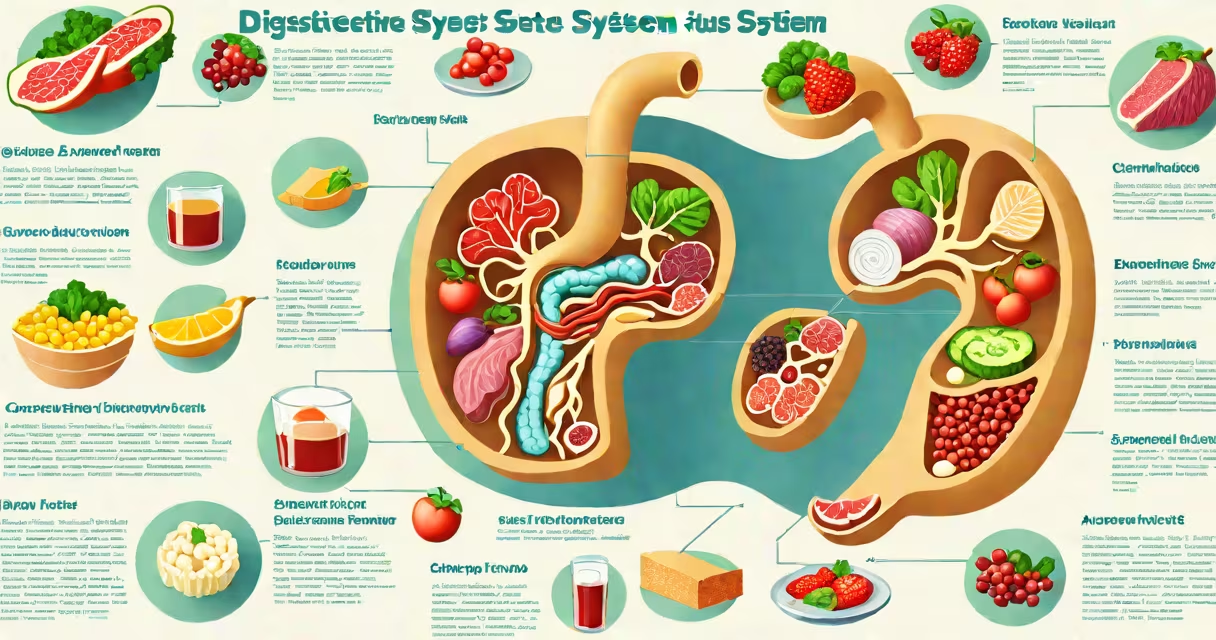
The main function of the digestive system is to convert ingested food into absorbable nutrients while eliminating indigestible waste. This process enables the body to extract energy and building blocks needed for growth, repair, and daily function.
Food enters the mouth, where mechanical chewing and enzymatic action begin breaking down carbohydrates. The bolus travels down the esophagus via peristalsis, a wave-like muscle contraction. In the stomach, hydrochloric acid and pepsin degrade proteins into smaller peptides. The small intestine then takes over, using bile from the liver and enzymes from the pancreas to further break down fats, proteins, and carbohydrates into monomers like glucose, amino acids, and fatty acids.
These molecules pass through the intestinal lining into the bloodstream via active transport and diffusion. The large intestine absorbs water and electrolytes, forming solid feces. Waste exits through the rectum and anus. This entire sequence-from ingestion to excretion-occurs in approximately 24 to 72 hours, depending on diet and individual physiology.
The digestive system consists of the alimentary canal and accessory organs. The alimentary canal includes the mouth, esophagus, stomach, small intestine (duodenum, jejunum, ileum), large intestine, rectum, and anus. Accessory organs-salivary glands, liver, gallbladder, and pancreas-produce substances essential for digestion but do not form part of the tube itself.
For example, the pancreas secretes amylase, lipase, and proteases into the duodenum. Without these enzymes, fat digestion would slow by over 90%, according to research published in Gastroenterology. Similarly, bile emulsifies fats, increasing surface area for lipase action. A single gram of fat requires about 100,000 bile micelles to be fully broken down.
Deficiencies in any component disrupt the main function. A patient with chronic pancreatitis may lack sufficient lipase, leading to steatorrhea-fatty, foul-smelling stools due to undigested fat. This condition affects 15% of patients with long-term alcohol-related pancreatic damage, per the National Institute of Diabetes and Digestive and Kidney Diseases (NIDDK).
Digestion occurs through two primary mechanisms: mechanical and chemical. Mechanical digestion involves physical breakdown-chewing, churning in the stomach, segmentation contractions in the intestines. Chemical digestion uses enzymes and acids to alter molecular structure.
| Process Type | Location | Key Agents | Outcome |
|---|---|---|---|
| Mechanical | Mouth, stomach, small intestine | Teeth, gastric muscles, intestinal contractions | Reduces food to particles under 1 mm |
| Chemical | Stomach, small intestine | Hydrochloric acid, pepsin, trypsin, amylase | Breaks polymers into monomers |
While both processes are essential, chemical digestion is responsible for actual nutrient availability. For instance, starch cannot be absorbed unless broken into maltose and then glucose. Without salivary amylase, carbohydrate absorption drops by nearly 30% in the first 15 minutes of eating.
Many assume that digestion ends in the stomach. In reality, the majority of nutrient absorption happens in the small intestine. The ileum alone contains over 300 million villi-finger-like projections that increase surface area by 600 times compared to a flat surface.
Another error is equating digestion with metabolism. Digestion prepares nutrients for metabolic use, but they are distinct processes. Metabolism occurs inside cells, converting glucose into ATP via glycolysis and oxidative phosphorylation. The digestive system delivers the raw materials; metabolic pathways process them.
A third misconception is that fiber is digested. Soluble fiber dissolves in water and forms a gel that slows gastric emptying. Insoluble fiber adds bulk and speeds transit time. Neither is broken down by human enzymes. Instead, gut bacteria ferment soluble fiber into short-chain fatty acids like butyrate, which nourish colon cells. This fermentation contributes 10% of daily caloric intake in individuals consuming high-fiber diets.
Consider a meal of grilled chicken breast, brown rice, and steamed broccoli. The chicken's protein begins breaking down in the stomach with pepsin. By the time it reaches the duodenum, trypsin and chymotrypsin cleave peptide chains into di- and tripeptides. These are absorbed intact via sodium-dependent cotransporters in the enterocytes.
Rice contains amylose and amylopectin. Salivary amylase acts briefly in the mouth, but most starch digestion occurs in the small intestine. Pancreatic amylase splits it into maltose, which intestinal brush border enzymes convert to glucose. Glucose enters the blood via SGLT1 transporters. Blood glucose rises by 15 mg/dL within 30 minutes of eating.
Broccoli provides insoluble fiber and vitamin K. The fiber passes unaltered to the colon, where microbiota produce butyrate. This compound reduces inflammation and strengthens the intestinal barrier. Studies show butyrate levels rise 40% in individuals consuming 30 grams of fiber daily, as reported in Cell Metabolism.
I once observed a patient with Crohn's disease who experienced severe malnutrition despite eating enough calories. Endoscopy revealed patchy ulceration in the terminal ileum-the site of vitamin B12 absorption. After receiving injections, his hemoglobin improved from 7.2 g/dL to 12.8 g/dL in six weeks. This case illustrates how disruption in a single segment of the digestive system can compromise the main function.
The digestive system interacts closely with the circulatory, nervous, and immune systems. The vagus nerve regulates gastric motility and enzyme secretion. Blood vessels in the villi carry absorbed nutrients to the liver via the hepatic portal vein. The liver filters toxins, stores glycogen, and synthesizes plasma proteins.
Immune cells in the gut-associated lymphoid tissue (GALT) monitor pathogens. Over 70% of the body's immune cells reside in the gut lining. An imbalance in gut microbiota-dysbiosis-can trigger inflammatory responses linked to autoimmune conditions like rheumatoid arthritis and type 1 diabetes.
Understanding the main function of the digestive system clarifies why disruptions in any phase-mechanical, chemical, absorptive, or excretory-can lead to systemic health issues. Conditions like irritable bowel syndrome (IBS), celiac disease, and lactose intolerance stem from failures in specific steps of this process.