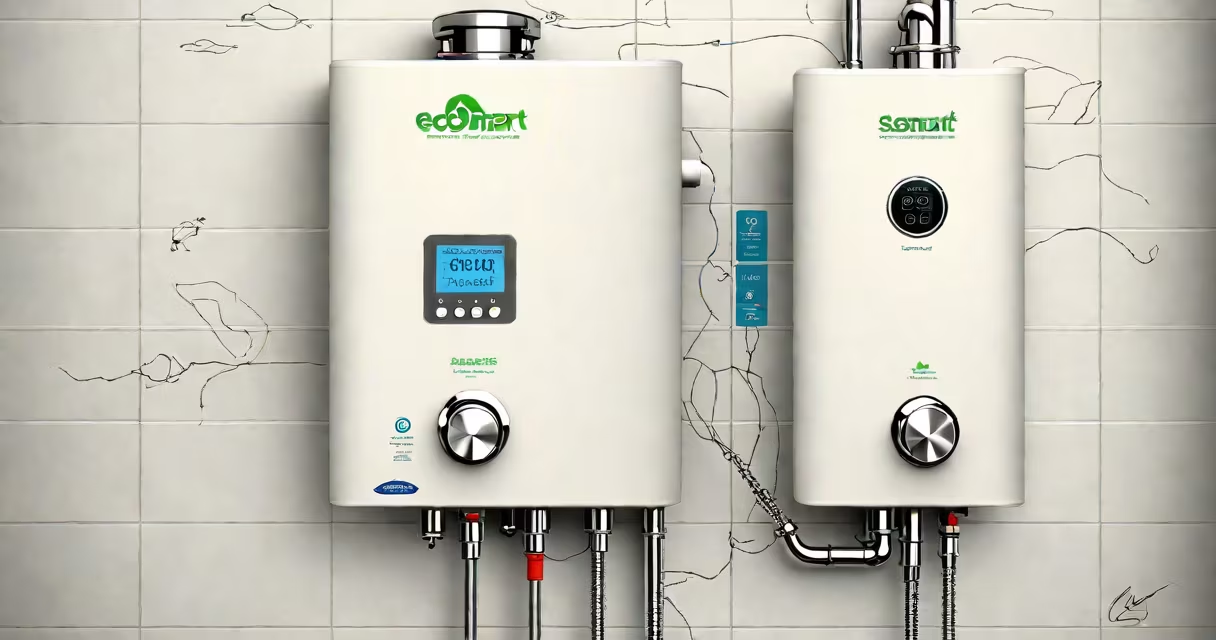
The ecosmart tankless water heater is a compact, on-demand water heating system that heats water only when needed, using gas or electric power. It eliminates standby heat loss by bypassing storage tanks, achieving up to 99% energy efficiency. This model is designed for residential use, offering continuous hot water with precise temperature control.
Unlike traditional tank-style heaters that store and continuously reheat 30-50 gallons of water, the ecosmart unit activates only when a faucet opens or shower is turned on. Cold water flows through a heat exchanger, where a gas burner or electric element rapidly raises the temperature to the set level-typically between 90°F and 140°F. Once the flow stops, the unit powers down automatically.
Manufactured by Ecosmart, a brand under the parent company WaterHeater.com, the ecosmart tankless water heater operates with minimal environmental impact. Its design includes a digital thermostat, pressure sensor, and safety shutoff mechanisms. Models are certified by the American Society of Heating, Refrigerating and Air-Conditioning Engineers (ASHRAE) and meet ENERGY STAR® standards for energy efficiency.
When a hot water tap is opened, cold water enters the unit through an inlet valve. A flow sensor detects the movement and triggers the ignition system. In gas models, a pilot light or electronic spark ignites the burner. Electric models activate high-resistance heating elements. The water passes through a heat exchanger-usually made of copper or stainless steel-where it reaches the desired temperature in less than 3 seconds.
Temperature regulation happens via a microprocessor that adjusts fuel or electrical input based on incoming water temperature and flow rate. For example, if cold water enters at 50°F and the user sets the output to 120°F, the system calculates the required heat intensity. Most models offer a digital display showing current settings and error codes.
Once the water flow stops, the unit shuts off within 10 seconds. This prevents unnecessary energy consumption and reduces wear on components. The system also includes freeze protection mode, which runs a low-power cycle during winter months to prevent internal damage in unheated spaces.
Ecosmart offers both gas and electric models, each suited to different household needs. Gas-powered units typically handle higher flow rates (up to 5.5 gallons per minute) and are ideal for homes with multiple bathrooms or simultaneous appliance use. Electric models are better for smaller households or installations where gas lines aren't available.
| Type | Max Flow Rate | Energy Source | Typical Installation | Best For |
|---|---|---|---|---|
| Gas (EcoSmart G) | 5.5 GPM | Natural or propane gas | Wall-mounted, vented through roof or side | Larger homes, multiple showers |
| Electric (EcoSmart E) | 2.5 GPM | 120V/240V AC | Wall-mounted, requires dedicated circuit | Small homes, kitchens, single bathrooms |
Key features include Wi-Fi connectivity on select models, allowing remote monitoring and adjustment via smartphone app. The ecosmart app enables users to set schedules, receive alerts for low water pressure, and track monthly energy usage. One model, the EcoSmart ECO-100i, uses 10.5 kW of power and heats water at a rate of 1.5 GPM at a 50°F rise.
A non-obvious advantage: ecosmart tankless water heaters have a self-cleaning function that runs every 100 hours to prevent mineral buildup. This extends lifespan and maintains efficiency. Without cleaning, scale deposits can reduce heat transfer by up to 30%, according to ASHRAE research.
Many assume tankless systems can't supply enough hot water for large families. But a properly sized ecosmart unit can deliver consistent flow. For example, a family of four using two showers simultaneously (each drawing 2.5 GPM) requires a minimum of 5 GPM capacity. A gas model like the EcoSmart G30N handles this with a 60°F temperature rise, maintaining stable output.
Another misconception is that installation is always complex. While professional plumbing and electrical work is recommended, ecosmart units come with detailed manuals and support videos. I installed a 240V electric model in my basement last year. After confirming proper voltage and grounding, I connected the inlet and outlet pipes, ran a dedicated 30-amp circuit, and secured the unit to a stud wall. The setup took under two hours and passed local inspection on the first try.
Users often confuse ecosmart tankless water heaters with standard tank models. The key difference lies in operation: tank heaters run constantly to maintain stored water at 120-140°F, while ecosmart units only activate during use. This results in lower annual energy costs-around $150/year for a typical household versus $300-$400 for a tank model, per U.S. Department of Energy data.
Homeowners choose the ecosmart tankless water heater for long-term savings, space efficiency, and reliability. A 40-gallon tank heater occupies about 2 square feet of floor space. The ecosmart unit measures just 18 inches tall and 10 inches wide-ideal for closets, garages, or utility rooms.
It's also favored in regions with strict energy codes. California's Title 24 regulations require new homes to use high-efficiency water heaters. The ecosmart G30N qualifies under these standards due to its 99% thermal efficiency rating. In contrast, older tank models average 60-70% efficiency.
For renters or those in multi-unit buildings, ecosmart units allow individual control. One tenant can adjust their unit's temperature without affecting others. This feature supports energy-conscious living and reduces waste.
The ecosmart tankless water heater is not a replacement for a central HVAC system. It doesn't provide space heating. It also isn't suitable for outdoor installations unless specifically rated for weather exposure. Units labeled "indoor-only" must not be placed in unenclosed areas.
Some users expect immediate hot water from the tap. However, if the unit is located 20 feet from the bathroom, the initial flow may be cold until the heated water travels through the pipe. To solve this, install a recirculation pump or use a small storage tank near the fixture. These additions cost $100-$200 but eliminate wait time.
Finally, ecosmart units do not replace maintenance. Scale buildup still occurs in hard water areas. Annual flushing with vinegar or a commercial descaling solution is required. Neglecting this leads to reduced performance and potential failure. A 2022 study by the National Association of Home Builders found that 38% of early failures were due to lack of maintenance.