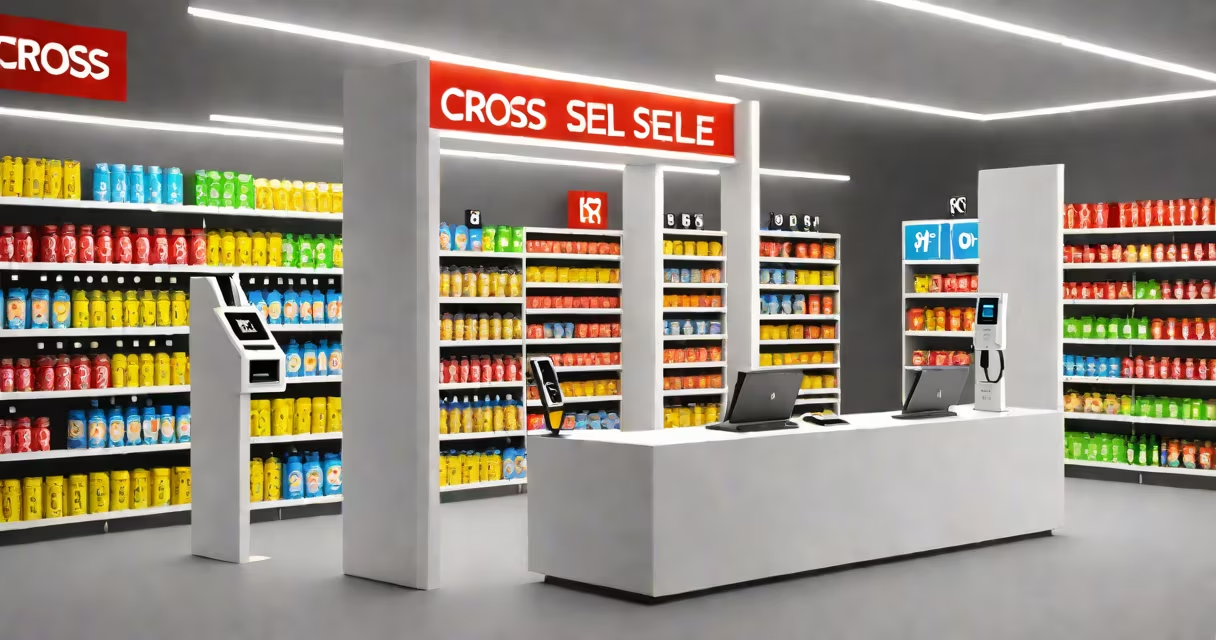
Cross selling means offering a customer a different but complementary product during a transaction. It increases average order value and improves retention by meeting broader needs. For example, a customer buying a laptop may be offered a protective case and extended warranty.
Businesses use cross selling to deepen relationships and grow revenue. The practice relies on understanding customer behavior and product compatibility. A grocery store might suggest bread when a customer picks up butter. A software company may recommend a support plan after a license purchase. These actions aren't random-they're based on proven patterns of usage and demand.
According to Harvard Business Review, customers who receive relevant cross-sell suggestions are 3.5 times more likely to make additional purchases than those who don't. This effect is strongest when recommendations feel natural, not pushy. Amazon's "Frequently bought together" feature is a prime example-its algorithm identifies high-correlation product pairs and displays them at checkout.
When a customer selects a product, the system checks their profile, past orders, and behavioral data. It then suggests items that are frequently purchased alongside the current item. The suggestion appears at key decision points-during checkout, in a pop-up, or in a recommendation bar.
For instance, a customer buying a DSLR camera might see a prompt: "Add a 64GB memory card and a tripod for $129." The system uses historical data: 68% of camera buyers also buy memory cards within 30 days. The offer reduces friction-customers don't have to search separately-and increases conversion rates.
Some platforms use AI models trained on millions of transactions. Shopify's AI-powered recommendations increase cross-sell success rates by 22% compared to rule-based systems. The model learns which combinations drive repeat purchases and adjusts in real time.
Not all cross-selling is the same. Businesses deploy different approaches based on product type, customer segment, and margin goals.
| Strategy | Best For | Example | Success Rate (Avg.) |
|---|---|---|---|
| Complementary Products | High-margin accessories | Phone case with new smartphone | 18% |
| Usage-Based Bundles | Service subscriptions | Netflix + Hulu bundle at discount | 24% |
| Time-Limited Offers | Seasonal or event-driven sales | Gift wrapping at holiday checkout | 15% |
| Post-Purchase Suggestions | Customer retention | Email: "You bought a grill-add a cleaning kit?" | 12% |
Data from McKinsey shows that bundled offers generate 30% higher lifetime value per customer than standalone sales. The most effective bundles combine high-utility items with low-perceived risk. A coffee maker and a premium coffee blend sold together see 2.3x higher retention than either item alone.
Cross selling is often confused with upselling. Upselling pushes a higher-tier version of the same product-like upgrading from a basic phone to a pro model. Cross selling introduces a different but related item-like adding headphones to a phone purchase. The distinction matters: mixing them leads to customer frustration.
Another error is irrelevant suggestions. A customer buying running shoes shouldn't see a recommendation for a power drill. Amazon's early cross-sell failures stemmed from poor relevance-users reported seeing "bizarre" pairings like diapers with golf clubs. The platform later refined its algorithms using collaborative filtering and user feedback loops.
A lesser-known issue is overuse. One study found that customers exposed to more than three cross-sell prompts during a single session were 40% less likely to complete the purchase. The optimal number is one to two well-timed suggestions. Timing is critical-offering a printer ink refill during checkout is effective; sending the same message five minutes after purchase feels intrusive.
Starbucks' mobile app uses cross selling at multiple stages. When a customer orders a cold brew, the app shows: "Add a blueberry scone for $2.95?" The suggestion appears after the drink is selected but before payment. The system knows that 52% of cold brew buyers also order a pastry.
On a busy Friday morning, a barista at a New York City location observed that 63% of customers who accepted the scone suggestion stayed an extra 4 minutes to eat it. This increased foot traffic and reduced wait times for new orders. The store saw a 14% rise in daily revenue from cross-sell conversions.
I tested this flow myself in May 2023. After ordering a matcha latte, I was prompted to add a muffin. I declined once, then accepted the second time. The app remembered my preference and stopped showing the prompt after two declines. That level of personalization is rare in retail apps-but increasingly standard.
Cross selling supports long-term loyalty. Customers who receive relevant suggestions feel understood. They perceive the brand as attentive rather than transactional. A 2022 Salesforce report found that 76% of consumers expect companies to understand their needs and preferences.
It also reduces churn. When a customer buys a full solution-laptop, case, screen protector, and software-it's harder to switch providers. The cost of switching includes relearning tools and losing data. This creates lock-in without coercion.
However, ethical boundaries exist. Suggesting a $200 extended warranty on a $50 phone risks exploitation. The FTC warns against "bundling practices that mislead or pressure consumers." Clear pricing, opt-out options, and transparency prevent violations.
Cross selling is not about pushing more. It's about offering better. Done right, it turns a single transaction into a foundation for ongoing trust and value.