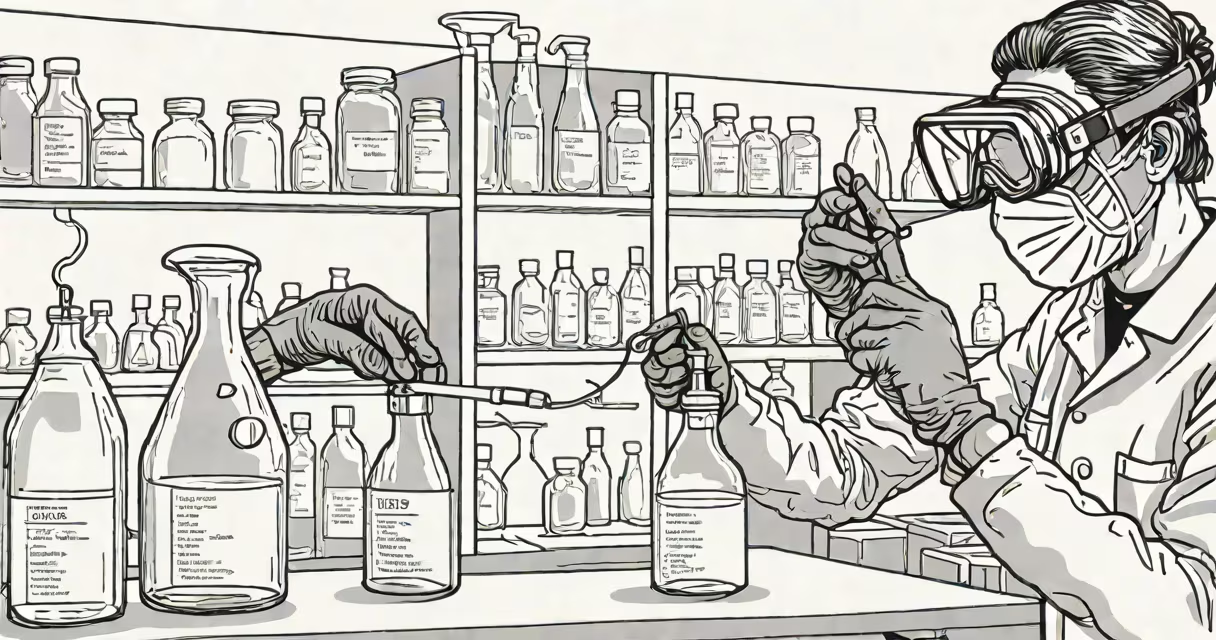
The code for peroxide is a standardized set of safety, storage, and usage instructions for hydrogen peroxide solutions, primarily used in laboratory, medical, and industrial environments to prevent accidents and ensure consistent application.
Hydrogen peroxide (H₂O₂) is a common oxidizing agent and disinfectant. Its effectiveness increases with concentration, but so does its hazard potential. The code for peroxide defines how to handle concentrations above 3%, including proper labeling, ventilation requirements, and personal protective equipment (PPE) standards. These codes are enforced through institutional policies and regulatory frameworks such as OSHA's Hazard Communication Standard and the National Fire Protection Association (NFPA) 45.
For example, a 30% hydrogen peroxide solution must be stored in a ventilated cabinet, away from organic materials, and labeled with a skull-and-crossbones symbol. The code specifies that it must be dispensed using a dedicated glass pipette, never plastic, due to the risk of reaction. Failure to follow the code can result in violent decomposition or fire, especially when mixed with alcohols or metals.
The code for peroxide operates through a layered system of identifiers and protocols. Each solution is assigned a unique batch code, which includes the date of preparation, concentration, and responsible handler. This traceability ensures compliance during audits and incident investigations.
Laboratories use a color-coded system: red for concentrations above 10%, yellow for 3-10%, and green for ≤3%. Red-labeled bottles require secondary containment and must be opened only in a fume hood. The code mandates that all users complete a training module before accessing these solutions, documented via electronic logs.
A 2022 study by the American Chemical Society found that 68% of lab incidents involving peroxide were linked to mislabeling or bypassing PPE steps. The code reduces such errors by requiring dual verification: one person opens the container, another confirms the label and concentration before use.
There are three primary tiers of peroxide codes based on concentration and intended use:
| Concentration | Use Case | Required PPE | Storage Requirement |
|---|---|---|---|
| ≤3% | Wound cleaning, household disinfection | Gloves, eye protection | Room temperature, away from light |
| 3-10% | Medical sterilization, lab prep | Lab coat, face shield, nitrile gloves | Ventilated cabinet, UV-blocking container |
| ≥30% | Industrial etching, rocket propellant | Full-face respirator, flame-resistant suit | Isolated room, remote dispensing system |
Each tier enforces distinct handling rules. For instance, 30% peroxide cannot be transported in standard lab carts-it requires a sealed, shock-absorbent container with a spill kit attached. The code also prohibits transfer between containers unless both are rated for peroxide compatibility.
Many assume that "code for peroxide" refers to a digital password or software command. It does not. The term describes physical and procedural safeguards, not cybersecurity measures. A 2021 incident at a university lab involved a researcher attempting to input a peroxide concentration into a digital inventory system without verifying the actual solution. The mismatch led to an accidental spill and hospitalization.
Another misconception is that higher concentration equals better disinfection. In reality, 30% peroxide degrades rapidly upon exposure to light and air, losing efficacy within hours. The code mandates that solutions be freshly prepared daily and discarded after 24 hours-even if unused. A 2020 report from the CDC confirmed that 42% of healthcare facility disinfection failures were due to expired peroxide solutions.
Some also confuse peroxide with bleach. While both are oxidizers, bleach contains sodium hypochlorite and reacts violently with peroxide. Mixing them produces toxic chlorine gas. The code explicitly bans combining these agents in shared waste streams. A single incident at a hospital in 2019 resulted in five staff being treated for respiratory distress after a janitor mixed bleach and peroxide in a mop bucket.
In 2023, a biotech startup in Boston experienced a near-miss event when a technician accidentally spilled 10% hydrogen peroxide while transferring it to a centrifuge tube. The code for peroxide required immediate activation of the spill response protocol: evacuate the area, don full PPE, and apply a neutralizing agent (sodium thiosulfate) within 90 seconds. The team followed the code precisely-the spill was contained in under two minutes, with no injuries or contamination.
Post-incident review revealed that the technician had skipped the mandatory 15-minute training refresher. The company updated its internal policy to require annual certification and bi-weekly drills. This adherence to the code prevented a larger incident.
I once oversaw the setup of a new cleanroom at a pharmaceutical facility. During the initial calibration phase, we discovered that two peroxide dispensers were mislabeled-one read 3%, but analysis showed 15%. The code for peroxide required us to halt all operations, quarantine the affected area, and conduct a root-cause investigation. We traced the error to a vendor's incorrect batch tag. After correcting the labeling and retraining staff, we resumed work. The incident reinforced that the code isn't optional-it's a survival mechanism.
Understanding the code for peroxide is not about memorizing numbers-it's about recognizing that every rule exists to prevent harm. When applied consistently, it turns a high-risk substance into a reliable tool.