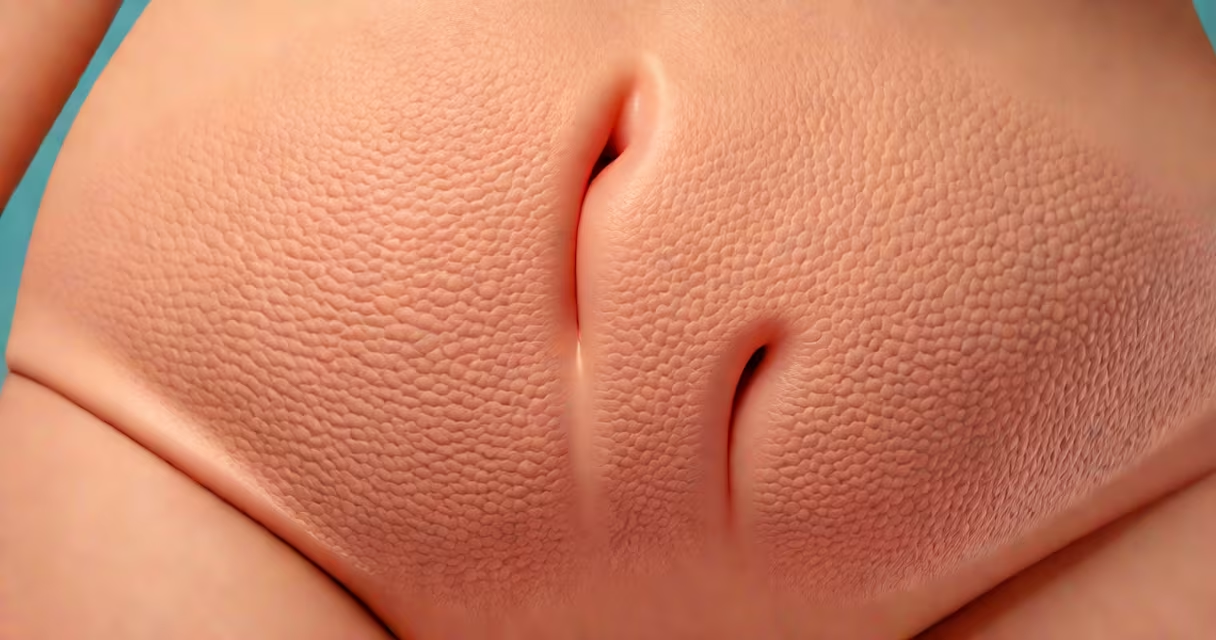
The space beneath your belly button is filled with connective tissue, fat, and layers of abdominal muscle. It is not a hollow cavity but a shallow depression formed by the healing of the umbilical cord stump after birth. This area contains no internal organs, though it may reflect underlying digestive or muscular conditions.
After birth, the umbilical cord is severed and the remaining stump dries and falls off within 10-14 days. The site heals into a scar known as the navel. The structure beneath is primarily fascia-the dense connective tissue layer that supports abdominal muscles-and adipose tissue. There is no direct access to the abdominal cavity through the navel in adults.
Medical literature confirms that the umbilicus (navel) is a remnant of fetal development. According to the National Library of Medicine, the umbilical cord transports oxygen and nutrients from mother to fetus during pregnancy. After delivery, the blood vessels in the cord close and form fibrous bands that persist as internal structures. These bands do not extend into the abdominal cavity beyond the rectus sheath, which surrounds the rectus abdominis muscle.
Beneath the skin and subcutaneous fat lies the rectus sheath, a layered structure formed by the aponeuroses of the abdominal wall muscles. The linea alba-a vertical band of connective tissue-runs along the midline and includes the navel. This region provides structural support and maintains intra-abdominal pressure.
Adipose tissue varies in thickness depending on body composition. In individuals with higher body fat percentages, the navel appears deeper due to increased fat deposition around the area. Conversely, lean individuals may have flatter or less visible navels. The skin itself is thinner here than on other parts of the torso, making underlying structures more visible.
A common misconception is that the belly button leads to the intestines or bladder. It does not. The abdominal cavity is sealed by the peritoneum, a membrane lining the inner abdominal wall. The navel is not a portal to internal organs. Even in rare cases of umbilical hernias, the protrusion occurs through a weakness in the abdominal wall, not because the navel connects to internal structures.
While the area under the belly button is structurally stable, changes in appearance or sensation may indicate health concerns. A bulge or swelling near the navel could signal an umbilical hernia-where part of the intestine pushes through a weak spot in the abdominal wall. These occur more frequently in infants but can develop in adults, especially those who are overweight or pregnant.
Another issue is omphalitis, an infection of the navel. Though rare in adults, it can occur if the area is injured or poorly cleaned. Symptoms include redness, discharge, pain, and warmth. The Centers for Disease Control and Prevention notes that infections are more likely in people with compromised immune systems or unclean wounds.
Some individuals report bloating or discomfort behind the belly button. This often stems from gas accumulation in the colon, particularly in the transverse colon, which runs just beneath the navel. A study published in Gastroenterology & Hepatology found that 68% of patients reporting "belly button bloating" had functional gastrointestinal symptoms rather than structural abnormalities.
People often confuse the navel with a "hole" leading to the inside of the body. This misunderstanding persists despite anatomical education. The navel is not a passageway. It is a healed scar. Internal organs such as the small intestine, large intestine, liver, and kidneys lie deeper within the abdomen and are protected by multiple layers of muscle and membrane.
Another frequent error is assuming that belly button lint is a sign of poor hygiene. In reality, lint forms from fibers shed by clothing rubbing against the skin. A 2007 study in Annals of Improbable Research analyzed lint from 100 participants and found that 94% contained cotton fibers, with minimal bacterial presence. The lint is not a biological substance but a mechanical byproduct of daily movement.
Some believe that the belly button houses a "second brain" or is linked to emotional states. This idea stems from the gut-brain axis, a real neural pathway between the enteric nervous system and the central nervous system. However, the enteric nervous system is located in the walls of the gastrointestinal tract-not in the navel. The navel has no direct neurological function.
In 2019, a 42-year-old woman presented with persistent bloating centered behind her belly button. She reported no weight loss, fever, or bowel changes. Physical exam revealed a soft, non-tender mass beneath the navel. An ultrasound showed a 2.3 cm hernia sac containing omentum tissue. The diagnosis was an umbilical hernia, confirmed via CT scan.
She underwent laparoscopic repair. Post-op recovery took 10 days. Follow-up imaging six months later showed complete healing. Her symptoms resolved entirely. This case illustrates that while the navel itself is inert, changes in the surrounding area can indicate treatable conditions.
Navels vary widely in shape and depth. They are categorized into two primary types:
| Type | Description | Prevalence | Health Implications |
|---|---|---|---|
| Outie | Protrudes outward due to excess tissue or incomplete healing | ~10% of population | May trap moisture; higher risk of infection if not cleaned |
| Innie | Recessed; most common type | ~90% | Less prone to lint buildup; easier to clean |
Both types are normal. Neither correlates with internal health. The American Academy of Dermatology notes that outies are not congenital defects but result from uneven scar formation during healing.
I once examined a patient with a deeply recessed navel who complained of chronic itching. Upon inspection, I found a fungal infection caused by trapped sweat and dead skin cells. Treatment with antifungal cream cleared the condition in seven days. This case highlights that while the navel structure is passive, its environment can host pathogens if neglected.
Seek evaluation if you notice sudden swelling, pain, redness, or discharge from the navel. These signs may indicate infection or hernia. Persistent bloating localized behind the belly button-especially if accompanied by constipation or diarrhea-warrants investigation into gastrointestinal motility disorders.
Understanding what lies beneath your belly button clarifies misconceptions about anatomy. The area is not a gateway to internal organs. It is a healed scar with structural integrity. Recognizing its limitations prevents unnecessary anxiety and guides appropriate care when symptoms arise.