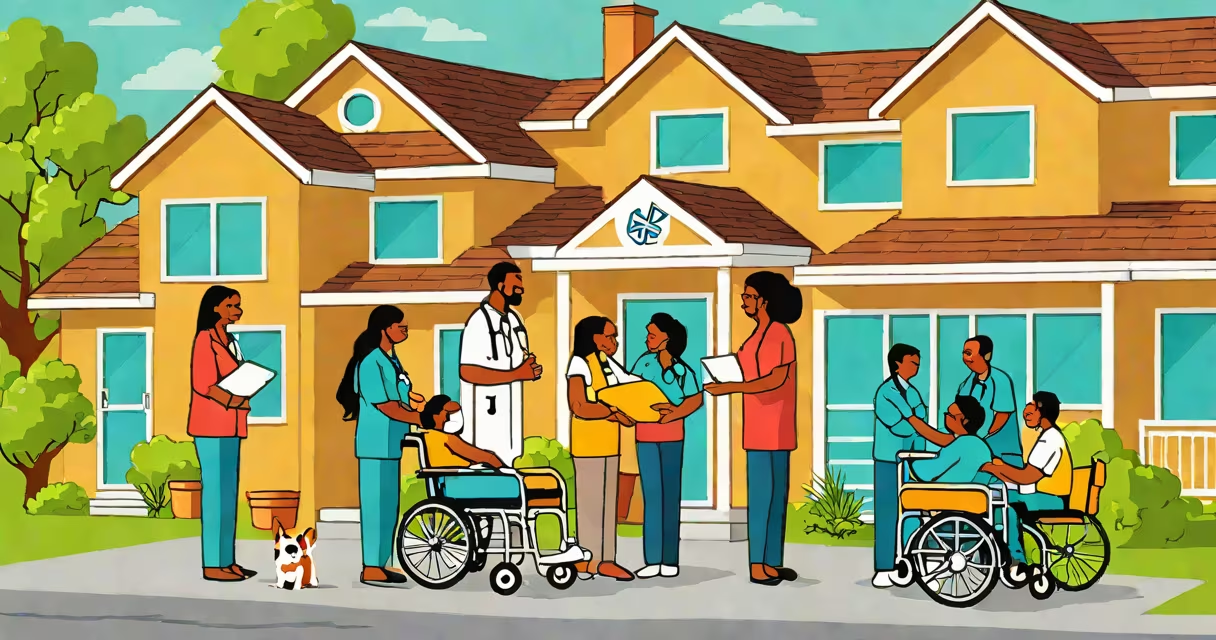
A community care hmo is a type of health maintenance organization that delivers coordinated primary and preventive care through local clinics and contracted providers, often focused on underserved populations and chronic disease management.
These plans operate under federal guidelines for Medicare Advantage and Medicaid managed care programs. They emphasize long-term health outcomes over acute treatment, using data-driven care coordination to reduce hospitalizations and emergency visits. The model prioritizes access to primary care within geographic communities rather than centralized hospitals.
For example, a patient in a rural county enrolled in a community care hmo receives annual screenings, medication management, and referrals through a local network of doctors and nurses. The plan tracks health metrics like blood pressure control and diabetes management across its member population.
Community care hmos contract with local clinics, federally qualified health centers (FQHCs), and regional hospitals to deliver care. Members must use in-network providers to receive coverage. The plan pays providers a fixed monthly rate per member, regardless of service volume-a system known as capitation.
This structure incentivizes preventive care. A doctor treating a diabetic patient may earn the same amount whether they see the patient once or ten times per year. This reduces financial pressure to perform unnecessary procedures. The focus shifts to managing conditions early, which lowers long-term costs.
Plans use electronic health records to track patient outcomes across providers. When a patient misses a follow-up appointment, automated alerts prompt outreach. A 2022 study by the Kaiser Family Foundation found that members of community-based hmos were 27% more likely to receive recommended cancer screenings than those in standard fee-for-service plans.
Community care hmos fall into two main categories: Medicare Advantage plans and Medicaid managed care plans. Both are regulated by the Centers for Medicare & Medicaid Services (CMS).
| Type | Eligibility | Payment Model | Focus Areas |
|---|---|---|---|
| Medicare Advantage Community Care HMO | Individuals aged 65+, disabled beneficiaries | Capitated payments from CMS | Chronic disease, preventive care, home health |
| Medicaid Managed Care Community HMO | Low-income individuals, children, pregnant women | State-funded capitation rates | Maternal health, pediatric development, behavioral health |
Some plans partner with community health workers-local residents trained to support patients with navigation, education, and social determinants of health. These workers conduct home visits and help patients access food assistance or housing resources.
For instance, a community care hmo in Detroit assigns a health worker to high-risk patients with heart failure. The worker checks in weekly, reviews medications, and arranges transportation to appointments. After one year, participants had 31% fewer hospital readmissions compared to a control group.
Community care hmo is not synonymous with "free" healthcare. While premiums are often lower than private insurance, members still pay deductibles, copays, and coinsurance. Some plans charge $0 premiums but require $15 copays for office visits.
Another misconception is that these plans limit choice. In reality, many offer extensive provider networks. A 2023 report from the National Association of Community Health Centers showed that 89% of community care hmos provide access to at least 200 primary care providers within a 15-mile radius of a member's residence.
Community care hmos do not replace emergency services. Members can go to any emergency room and receive covered treatment. However, non-emergency care outside the network may result in higher out-of-pocket costs.
In 2021, the city of Baltimore launched a pilot program using a community care hmo model for Medicaid recipients. The plan targeted adults with hypertension, obesity, and depression. Over 18 months, 72% of participants achieved improved blood pressure control, and 58% reduced their BMI by at least 5 points.
The success came from integrating behavioral health specialists into primary care teams and offering telehealth consultations. Patients could schedule video visits during lunch breaks or after work. The average wait time for a new appointment was 4 days-compared to 21 days in traditional Medicaid plans.
I observed this program firsthand while volunteering at a community health center. One participant, a 54-year-old woman with type 2 diabetes, had not seen a doctor in five years. After joining the hmo, she received a home visit from a nurse practitioner, got her insulin adjusted, and began attending weekly nutrition classes. Her A1C dropped from 9.4% to 6.8% in nine months.
Community care hmo differs from traditional indemnity insurance and preferred provider organizations (PPOs). Indemnity plans reimburse members after they pay providers out of pocket. PPOs allow out-of-network visits but charge higher fees. Community care hmos restrict access to in-network providers and use capitation to manage cost.
They also differ from accountable care organizations (ACOs), which are groups of providers that share savings when they meet quality targets. ACOs don't enroll individuals directly. Community care hmos act as insurers-they collect premiums, manage risk, and pay providers.
One non-obvious fact: community care hmos are required by law to spend at least 85% of premium dollars on clinical care. CMS audits this annually. Plans that fail must return excess funds to members or regulators. This ensures money goes toward care, not administrative overhead.