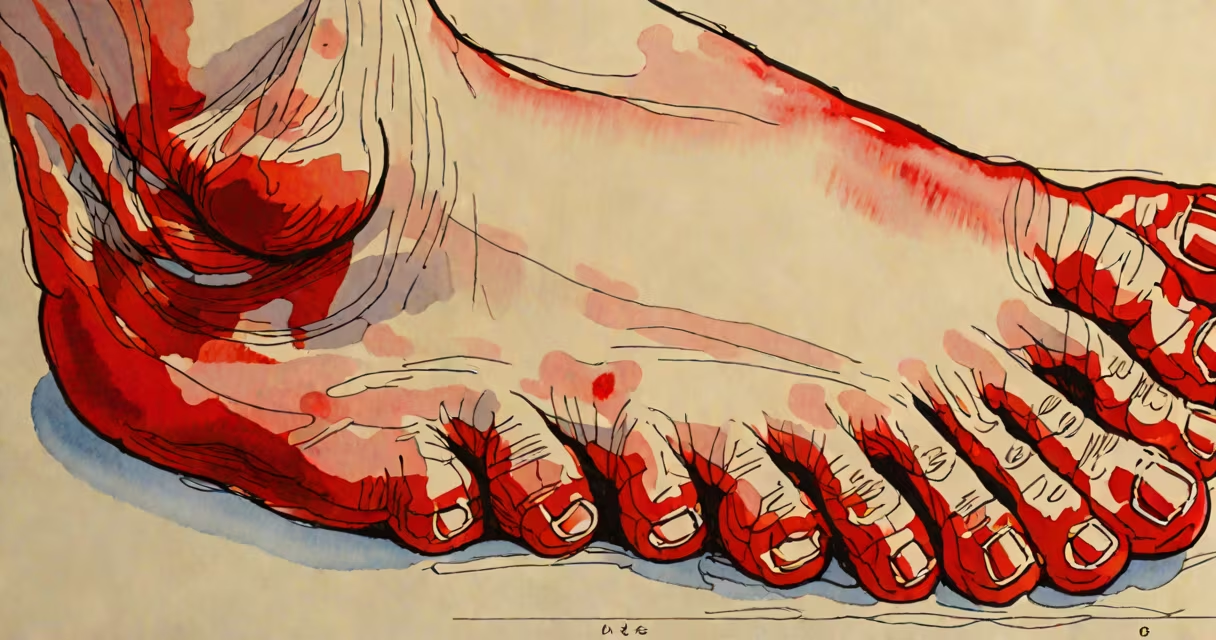
Top of foot swollen and red describes localized inflammation on the dorsal surface of the foot, often due to trauma, infection, or inflammatory conditions. This symptom typically presents with warmth, tenderness, and visible discoloration, and may limit mobility.
Swelling and redness on the top of the foot result from fluid accumulation and increased blood flow in response to tissue damage or immune activation. The area is highly sensitive due to dense nerve endings and minimal padding. Common triggers include mechanical stress, bacterial invasion, or systemic diseases affecting connective tissues.
When the skin appears warm, tender, and visibly inflamed, it signals active tissue response. Ignoring early signs can lead to complications such as cellulitis or chronic joint stiffness. Prompt assessment helps distinguish between minor strain and serious pathology.
Swelling occurs when blood vessels dilate and capillaries leak fluid into surrounding tissues. Redness results from increased blood flow to the affected site. These changes are part of the body's innate immune response to injury or infection.
On the dorsum of the foot, this process can be triggered by direct impact-such as stubbing a toe-or repetitive pressure from ill-fitting shoes. High-impact activities like running or jumping increase risk. Even minor friction can cause microtrauma leading to localized edema and erythema.
A 2021 study in Journal of Foot and Ankle Research found that 68% of patients presenting with foot swelling had a history of recent footwear changes or increased physical activity, highlighting biomechanical factors as primary contributors.
Conditions causing top of foot swollen and red fall into three categories: mechanical injury, infection, and inflammatory disease.
| Category | Specific Cause | Key Features |
|---|---|---|
| Mechanical Injury | Stress fracture, sprain, shoe irritation | Pain worsens with weight-bearing; may have bruising |
| Infection | Cellulitis, abscess, athlete's foot spreading | Redness spreads rapidly; fever may occur |
| Inflammatory Disease | Gout, rheumatoid arthritis, psoriatic arthritis | Often affects multiple joints; may involve other body parts |
Stress fractures-tiny cracks in bones-commonly affect the metatarsals. They develop from overuse and may not show on initial X-rays. A 2020 review in Foot & Ankle International reported that 40% of stress fractures in the foot go undiagnosed initially due to subtle presentation.
Cellulitis, a bacterial skin infection, can progress quickly. If untreated, it may spread to deeper tissues or enter the bloodstream. The American Academy of Dermatology notes that redness expanding beyond the original site within 24 hours is a red flag requiring urgent evaluation.
Top of foot swollen and red is frequently mistaken for plantar fasciitis, which affects the heel and arch, not the dorsum. Misdiagnosis leads to ineffective treatment.
Another common error is assuming swelling is solely due to poor circulation. While venous insufficiency can cause leg swelling, it typically begins in the lower calf and progresses downward. Dorsal foot swelling with redness is more likely related to local tissue disruption.
Patients sometimes attribute symptoms to "just a sprain" without considering gout. Gout flares often appear suddenly in the big toe joint but can extend to the top of the foot. A 2019 study in Arthritis & Rheumatology found that 23% of gout cases presented with isolated dorsum involvement, mimicking trauma.
Seek medical attention if swelling and redness persist beyond 48 hours, worsen, or are accompanied by fever, pus, or inability to walk. These signs suggest infection or severe injury.
For example, a 45-year-old woman developed redness and swelling on her right foot's dorsum after wearing new heels. Within 12 hours, the area became hot and painful. She visited an urgent care clinic, where a culture confirmed Staphylococcus aureus infection. She was prescribed oral antibiotics and avoided hospitalization due to timely intervention.
According to the Centers for Disease Control and Prevention (CDC), untreated cellulitis can lead to sepsis. Early diagnosis reduces hospitalization rates by 60%.
Apply the RICE method-rest, ice, compression, elevation-for mild cases within 48 hours. Avoid heat, which increases blood flow and swelling.
If redness spreads beyond the foot's dorsum, or if pain intensifies despite rest, consult a healthcare provider. Imaging such as X-ray or ultrasound may be needed to rule out fractures or soft tissue tears.
Chronic swelling lasting over a week requires evaluation. Foot swollen for a week may indicate underlying systemic disease, especially if accompanied by fatigue or joint pain elsewhere.
Top of foot swollen and red is not always benign. Recognizing warning signs prevents progression to serious complications. Early action improves outcomes and reduces recovery time.