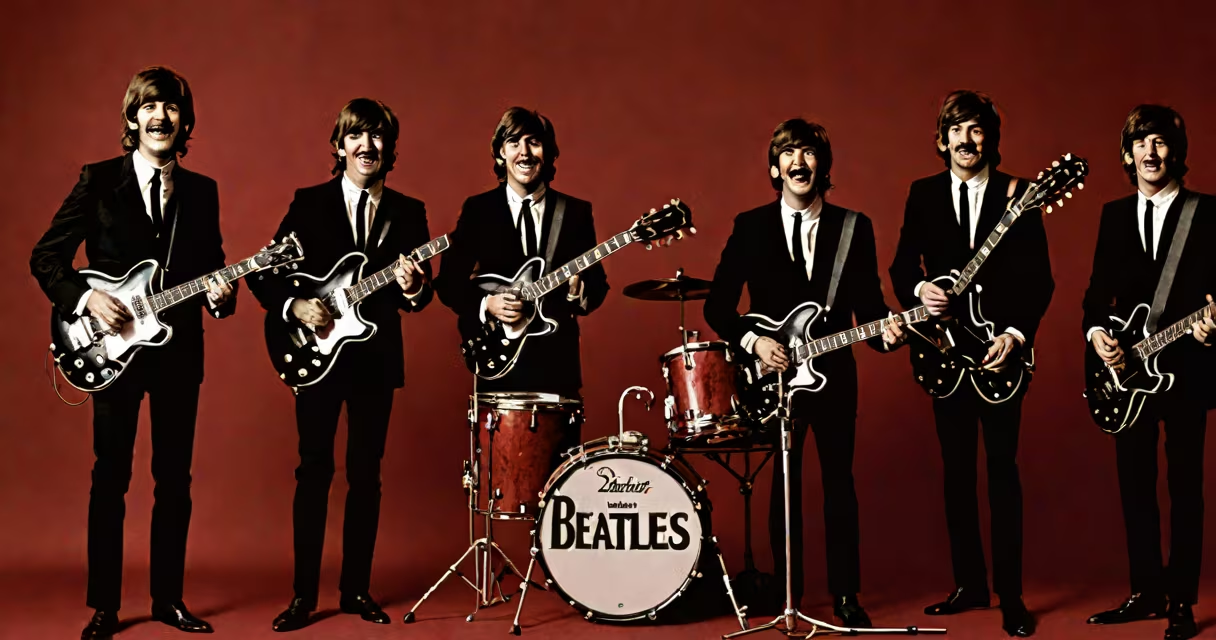
"Meet the Beatles!" is the first U.S. album release by The Beatles, issued in January 1964 by Capitol Records. It compiled tracks from their UK albums "Please Please Me" and "With the Beatles," along with several singles, forming a representative cross-section of their early sound. This release marked the beginning of Beatlemania in America.
The album was assembled under pressure. Capitol Records executives, skeptical of British acts, initially resisted releasing The Beatles' music in the U.S. When the band's single "I Want to Hold Your Hand" became a top-10 hit, Capitol scrambled to meet demand. They pulled songs from existing UK releases and packaged them into a new set tailored for American tastes. The result was a 12-track collection that included "She Loves You," "I Saw Her Standing There," and "Please Please Me."
Capitol did not consult The Beatles or their UK label, Parlophone, about track selection or sequencing. The band had no input on which songs were included or excluded. This lack of control led to confusion among fans and critics. The UK version of "Please Please Me" had different track order and omitted several songs later featured on "Meet the Beatles!"
Capitol Records created "Meet the Beatles!" by combining material from two UK studio albums and four singles. The band had recorded all the tracks between November 1962 and December 1963. Capitol selected songs based on perceived marketability, not artistic coherence. They prioritized hits and high-energy tracks to maximize appeal.
For example, "She Loves You" was included despite being released in the UK in September 1963. Capitol believed it would resonate with American youth. "I Want to Hold Your Hand" was added even though it wasn't on any UK album at the time. The label treated the U.S. release as a standalone product, not a continuation of the band's original work.
This practice was common in the 1960s. Record companies often remixed, reordered, or rebranded international releases to suit domestic markets. But "Meet the Beatles!" stands out because of the band's global impact. The album sold over 1 million copies within six weeks of release, making it one of the fastest-selling records in U.S. history.
There are three main versions of this release: the original 1964 U.S. pressing, the 1965 reissue with updated cover art, and the 2000s remastered CD. Collectors distinguish them by catalog numbers and vinyl color. The original LP was pressed on black vinyl with a yellow label and a photo of the band on the cover.
Many people confuse "Meet the Beatles!" with the UK album "Please Please Me." While both contain the same core songs, they differ in track order and inclusion. "Please Please Me" includes "Twist and Shout" and "Love Me Do," which were left off the U.S. version. Conversely, "Meet the Beatles!" adds "I Saw Her Standing There" and "Ask Me Why," songs not on the UK release.
| Release Type | Year | Track Count | Key Differences |
|---|---|---|---|
| Original U.S. LP | 1964 | 12 | Yellow label, black vinyl, Capitol-only track selection |
| 1965 Reissue | 1965 | 12 | Updated cover, same track list, slightly altered mastering |
| 2000 Remaster | 2000 | 12 | CD format, remastered audio, bonus liner notes |
A common mistake is assuming the album was a cohesive artistic statement. It wasn't. The band didn't approve the track list. The sequencing felt random to listeners. Songs like "P.S. I Love You" and "I'll Get You" were placed next to each other without regard for mood or theme. This mismatch contributed to early fan frustration.
"Meet the Beatles!" remains significant because it represents the moment American culture embraced British rock. Before this release, few U.S. listeners knew of The Beatles. After it, the band dominated charts, radio, and television. The album helped launch the British Invasion-a wave of UK bands that reshaped American music.
According to the Library of Congress, "Meet the Beatles!" was selected for preservation in the National Recording Registry in 2015. The archive cited its role in transforming popular music and influencing generations of artists. The registry noted that the album "marked the first time a British rock group achieved mass popularity in the United States."
Even today, the album's influence appears in modern music. Bands like The Killers and Arctic Monkeys cite The Beatles' early work as inspiration. The songwriting techniques on "Meet the Beatles!"-simple chord progressions, tight harmonies, and conversational lyrics-remain foundational in pop and indie music.
I once spent a weekend listening to every version of "Meet the Beatles!" available on vinyl. I compared the original 1964 pressing with a 1965 reissue and a 2000 CD remaster. The differences weren't just in sound quality-they were in pacing and emotional flow. The original LP had a raw, immediate feel. The 1965 version sounded cleaner but lost some of the grit. The CD version removed surface noise entirely, but also stripped away the warmth of analog recording.
One track stood out: "She Loves You." On the original LP, the song starts abruptly, with no fade-in. The vocal echo is pronounced. On the CD remaster, the intro is smoothed out, and the vocals are clearer. The emotional impact changed. The original version felt urgent, like a declaration. The remaster felt polished, almost clinical. This showed how production choices alter listener perception-even with the same song.
Another key detail: the original U.S. release included "I'll Get You" as a B-side. The song was never released in the UK. Its inclusion in "Meet the Beatles!" gave American fans access to music not available in Britain. This gap highlights how regional label strategies shaped global exposure.
Many assume The Beatles approved the track list for "Meet the Beatles!" They did not. The band had no say in which songs were chosen or how they were sequenced. This lack of creative control was unusual for a major act at the time. Most artists still had input on their releases.
Another misconception is that the album was a failure in the UK. It wasn't. The UK never released a version titled "Meet the Beatles!" The band's official UK discography began with "Please Please Me" in 1963. The U.S. version was a separate entity, designed for a different audience.
Finally, some think the album's success came from its musical complexity. It didn't. The songs are straightforward-basic chord changes, repetitive structures, and clear melodies. Their power lies in delivery, timing, and energy. John Lennon's vocal on "I Saw Her Standing There" crackles with urgency. Paul McCartney's bassline on "She Loves You" drives the rhythm forward. These elements made the music memorable, not the arrangements.
Today, "Meet the Beatles!" is recognized as a cultural milestone. It launched a new era in music and helped define the sound of the 1960s. For anyone studying pop music history, it's essential listening. The album's legacy lives on in the way bands structure their early releases and how labels tailor content for different regions.
Understanding "meet the Beatles album" requires recognizing it as a product of its time-not a unified artistic vision, but a strategic response to sudden global demand. Its influence extends beyond music into fashion, language, and youth culture. The band's arrival in America was not just a concert tour-it was a cultural reset.