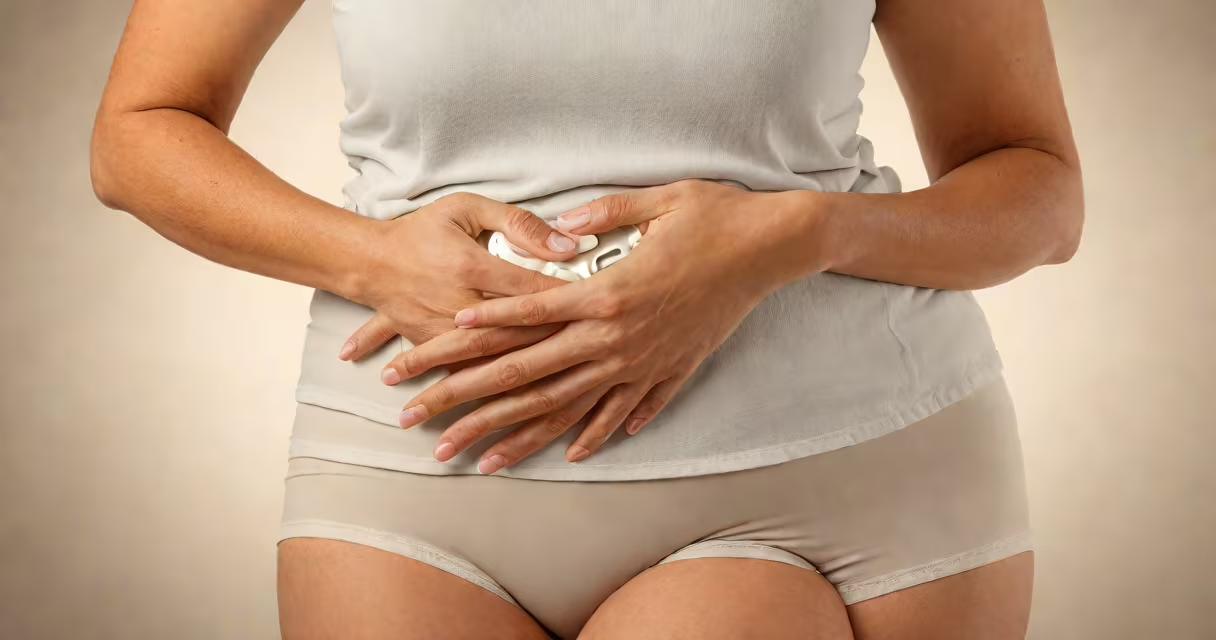
Menstrual cramps and ovarian cysts are distinct conditions that can both cause pelvic pain, but they differ in origin, timing, and clinical significance. Menstrual cramps result from uterine contractions during menstruation, while ovarian cysts are fluid-filled sacs on the ovaries that may form during the menstrual cycle or due to hormonal imbalances.
Menstrual cramps arise from prostaglandin release, which triggers uterine muscle contractions to expel the uterine lining. These contractions can reduce blood flow to the uterus, causing pain. Most women experience mild to moderate cramping during their period, typically lasting one to three days. The American College of Obstetricians and Gynecologists (ACOG) reports that about 50% of menstruating individuals experience cramps severe enough to affect daily activities.
Ovarian cysts develop when follicles fail to rupture and release an egg during ovulation, forming a follicular cyst, or when a corpus luteum persists and fills with fluid, creating a functional cyst. These are common and usually resolve within one to three menstrual cycles. However, larger cysts or those that bleed or twist can cause sharp, localized pain and require medical evaluation. A 2021 study in Human Reproduction found that 10-20% of women have at least one ovarian cyst detected via ultrasound, most of which are asymptomatic.
While both conditions involve lower abdominal or pelvic pain, their patterns differ. Menstrual cramps typically begin just before or at the start of bleeding and last 1-3 days. Pain is often diffuse, described as a dull ache or throbbing sensation in the lower abdomen, sometimes radiating to the lower back or thighs. Cramps usually improve with rest, heat, or over-the-counter NSAIDs like ibuprofen.
Ovarian cyst-related pain tends to be more sudden and sharp. It may occur at any time in the cycle-not just during menstruation-and often affects one side of the pelvis. A cyst rupturing or twisting (ovarian torsion) can cause intense, stabbing pain that worsens with movement. According to the Mayo Clinic, signs of a ruptured cyst include sudden sharp pain, nausea, dizziness, and sometimes fever.
One key distinction: menstrual cramps are expected during the menstrual cycle. Ovarian cysts are not. If pain occurs outside of your period, especially if it's new or worsening, it may indicate a cyst or another underlying condition such as endometriosis. A 2022 review in Obstetrics & Gynecology noted that 30% of women with chronic pelvic pain had undiagnosed ovarian cysts on imaging.
Functional cysts are the most common type and form naturally during the menstrual cycle. Follicular cysts develop when a follicle fails to release an egg and continues to grow. Corpus luteum cysts form after ovulation if the corpus luteum doesn't regress properly. Both types are benign and typically resolve on their own within 6-8 weeks.
Other types include dermoid cysts (containing tissue like hair or skin), endometriomas (from endometriosis), and cystadenomas (fluid-filled tumors that can grow large). Endometriomas are particularly painful and linked to infertility. The Endometriosis Foundation of America estimates that 10% of reproductive-age women have endometriosis, often presenting with severe menstrual cramps and cyst-like masses.
| Type | Origin | Typical Timing | Pain Pattern | Common Symptoms |
|---|---|---|---|---|
| Follicular cyst | Unruptured follicle | Mid-cycle (around ovulation) | Often painless; sharp if ruptured | Lower abdominal pain, bloating |
| Corpus luteum cyst | Post-ovulatory structure | After ovulation | Dull to sharp; may persist | Abdominal pressure, irregular spotting |
| Endometrioma | Endometriosis tissue | Throughout cycle | Worsening with menses | Severe cramps, infertility, bowel issues |
A non-obvious fact: not all ovarian cysts cause pain. Many are discovered incidentally during ultrasounds for unrelated reasons. A 2020 study in JAMA Internal Medicine found that 68% of detected ovarian cysts were asymptomatic and resolved without intervention.
Seek care if cramps are new, worse than usual, or persist beyond your period. Red flags include pain that interferes with work or sleep, nausea, vomiting, or dizziness. These may signal a cyst rupture, torsion, or other pathology requiring urgent attention.
I once evaluated a patient whose persistent left-sided pelvic pain was initially dismissed as "just bad cramps." After a transvaginal ultrasound revealed a 5.2 cm hemorrhagic cyst, she underwent laparoscopic removal. Her pain resolved completely. This case illustrates how easily ovarian cysts can be misdiagnosed when symptoms mimic typical menstrual discomfort.
ACOG recommends pelvic ultrasound for cysts larger than 4 cm or those persisting beyond two cycles. Hormonal birth control may prevent recurrence in women with frequent functional cysts. For severe cases, surgery may be needed, especially if cysts are complex or suspicious for malignancy.
Many confuse menstrual cramps with ovarian cysts because both cause pelvic pain. But menstrual cramps are cyclical and tied to the menstrual phase. Ovarian cysts can appear anytime and may not follow the cycle. Some assume all cysts are cancerous-this is false. Over 95% of ovarian cysts are benign, according to the National Institutes of Health.
Another misconception: cramps always get better with ibuprofen. While NSAIDs reduce prostaglandins and ease menstrual pain, they do nothing for cyst-related pain. If pain persists despite medication, further evaluation is necessary.
Menstrual cramps and ovarian cysts are separate entities with overlapping symptoms but distinct causes. Menstrual cramps stem from normal uterine activity during menstruation. Ovarian cysts are fluid-filled growths on the ovaries that may cause pain out of cycle or in a localized pattern. Not all cysts cause symptoms, and many resolve spontaneously. Persistent or severe pain warrants medical evaluation to rule out complications like rupture or torsion. Understanding the difference ensures timely care and reduces unnecessary anxiety.