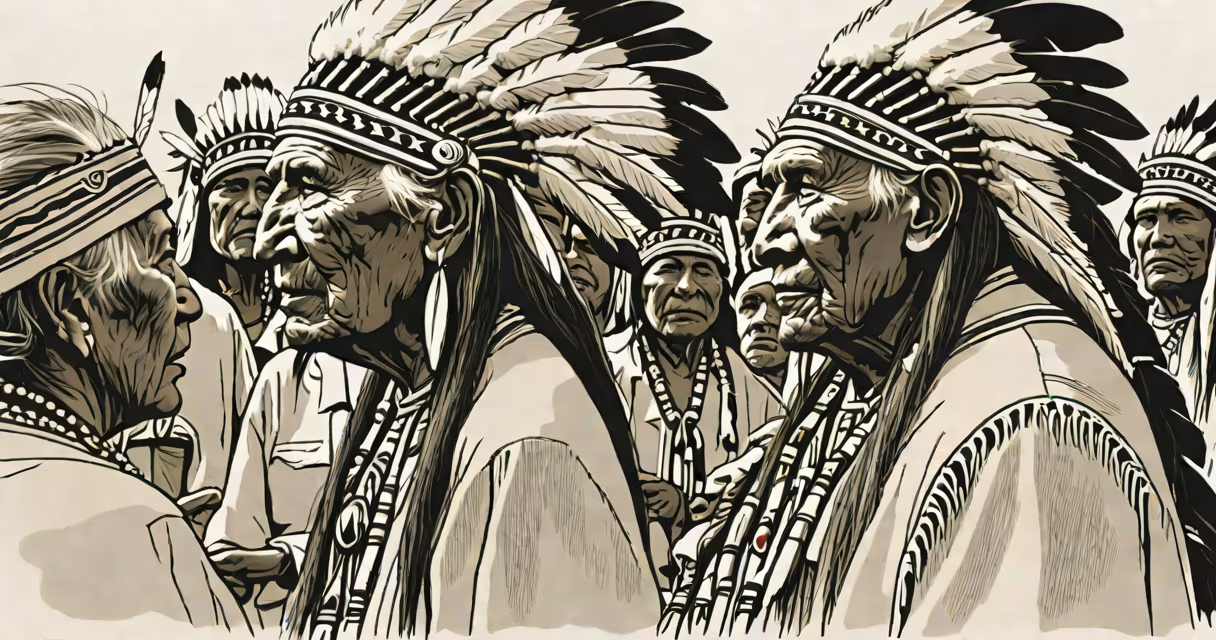
The phrase "native american mean" describes a set of enduring values derived from Indigenous worldviews across North America-principles centered on respect for all living things, balance in relationships, and responsibility to future generations. These meanings are not abstract ideals but lived ethics passed through oral tradition, ceremony, and daily practice.
Unlike Western interpretations of meaning as individual purpose or achievement, native american mean emphasizes relationality. A person's role is defined not by personal success but by their contribution to community well-being and ecological harmony. This structure shapes decisions about land use, governance, education, and conflict resolution.
For example, the Lakota concept of *Mitákuye Oyás'iŋ*-"all my relations"-expresses this worldview. It acknowledges that humans, animals, plants, water, and even rocks are kin. When a decision is made, the question isn't "What benefits me?" but "How does this affect the web of life?" This principle underlies many tribal environmental policies, such as the Standing Rock Sioux Tribe's opposition to the Dakota Access Pipeline based on spiritual and ecological concerns.
Native american mean is not a single idea but a cluster of interwoven principles. These are not listed in textbooks-they emerge from centuries of observation, ritual, and adaptation to specific landscapes.
Respect (*wâpanâk* among the Anishinaabe) means honoring the inherent dignity of all beings. It manifests in practices like offering tobacco before harvesting plants or asking permission before entering sacred sites. The act isn't superstition-it's a recognition that every being holds agency and deserves acknowledgment.
Reciprocity is central. In many tribes, giving is not charity but obligation. The Haudenosaunee Thanksgiving Address begins with gratitude to the Earth, water, fire, and sky-not as metaphors, but as active participants in survival. Each gift given is expected to return in kind, whether through labor, prayer, or stewardship.
Balance (*nááts'íí* in Navajo) governs time and action. The Navajo concept of *hózhǫ́*-harmony, beauty, and rightness-guides behavior. When imbalance occurs-through war, pollution, or broken relationships-rituals like the Blessingway ceremony restore alignment. The goal is not perfection but ongoing repair.
| Value | Meaning | Example Practice |
|---|---|---|
| Respect | Honor all life forms as kin | Offering tobacco before entering a forest |
| Reciprocity | Mutual exchange sustains relationships | Returning seeds to the earth after harvest |
| Balance | Maintain harmony between people and nature | Performing a healing ceremony after environmental harm |
These values persist in contemporary Native communities despite centuries of colonization, forced assimilation, and cultural suppression. They inform tribal governance, education systems, and environmental activism.
The National Congress of American Indians reports that over 60% of federally recognized tribes have established language immersion programs. These aren't just about preserving words-they're about reviving the worldview embedded in them. For instance, the Ojibwe word *mashkiizii*-"to live in balance"-is taught not as vocabulary but as a daily ethical compass.
In urban settings, Native youth organize gatherings around the concept of *tł'įchǫ* (Dene for "to care for"). These events focus on food sovereignty, mental health, and cultural continuity. One group in Minneapolis hosts monthly meals using ingredients from local Indigenous gardens, with elders sharing stories about how each plant was traditionally used.
A 2021 study published in the Journal of Indigenous Studies found that Native youth who regularly engage in cultural practices report higher resilience to trauma and lower rates of substance use. The researchers concluded that connection to traditional meaning systems acts as a protective factor-more effective than generic wellness programs.
Many people assume native american mean is about mysticism or romanticized primitivism. This misreads the depth of these systems. The values are not relics-they are changing frameworks adapted to modern challenges.
One widespread error is equating "meaning" with spirituality. While ceremony plays a role, native american mean is not tied to belief in deities. Many tribes do not center a supreme being. Instead, meaning arises from participation in cycles-seasonal planting, seasonal fasting, seasonal mourning.
Another misconception is that these values are universal across all tribes. They are not. The Navajo emphasize *hózhǫ́*-beauty and balance-but the Tlingit of Southeast Alaska prioritize *yáx̱k'u*-righteousness in action. The Kwakwaka'wakw have *q'u'w'u*-the duty to redistribute wealth. Each nation's understanding of meaning reflects its unique history, geography, and social structure.
For example, the Hopi people don't speak of "success" in economic terms. Their annual Bean Ceremony celebrates the harvest not for surplus, but for the promise of renewal. The beans are planted in a pattern that mirrors constellations, linking agriculture to celestial cycles. To outsiders, this may seem symbolic. To the Hopi, it's a practical method of tracking climate patterns over generations.
I once attended a community meeting hosted by the Mvskoke (Creek) Nation in Oklahoma. The topic was water rights. Instead of presenting data or legal arguments, the facilitator began by asking everyone to close their eyes and imagine the river as a relative. After five minutes of silence, someone spoke: "I remember when the creek ran clear. My grandmother used to bathe her babies in it." The room fell quiet. Then another voice said, "Now the fish are sick. We have to protect it-for the children who haven't seen clean water."
This wasn't emotional appeal. It was native american mean in motion. The discussion didn't start with policy or law. It began with memory, kinship, and shared responsibility. That meeting led to a joint initiative with state agencies to monitor water quality using traditional ecological knowledge.
Understanding native american mean requires letting go of the idea that meaning must be defined, quantified, or optimized. It's not a system to be mastered. It's a way of being that unfolds through listening, observing, and responding.
When considering what it means to belong, to serve, or to endure, look beyond individualism. Look to the traditions that teach us we are part of something larger. These are not ancient ideas-they are living practices. And they offer a different path to meaning-one grounded in presence, not progress.
Native american mean is not a philosophy to adopt. It is a way of seeing the world that invites participation, not consumption. It asks not "What can I gain?" but "How can I belong?"