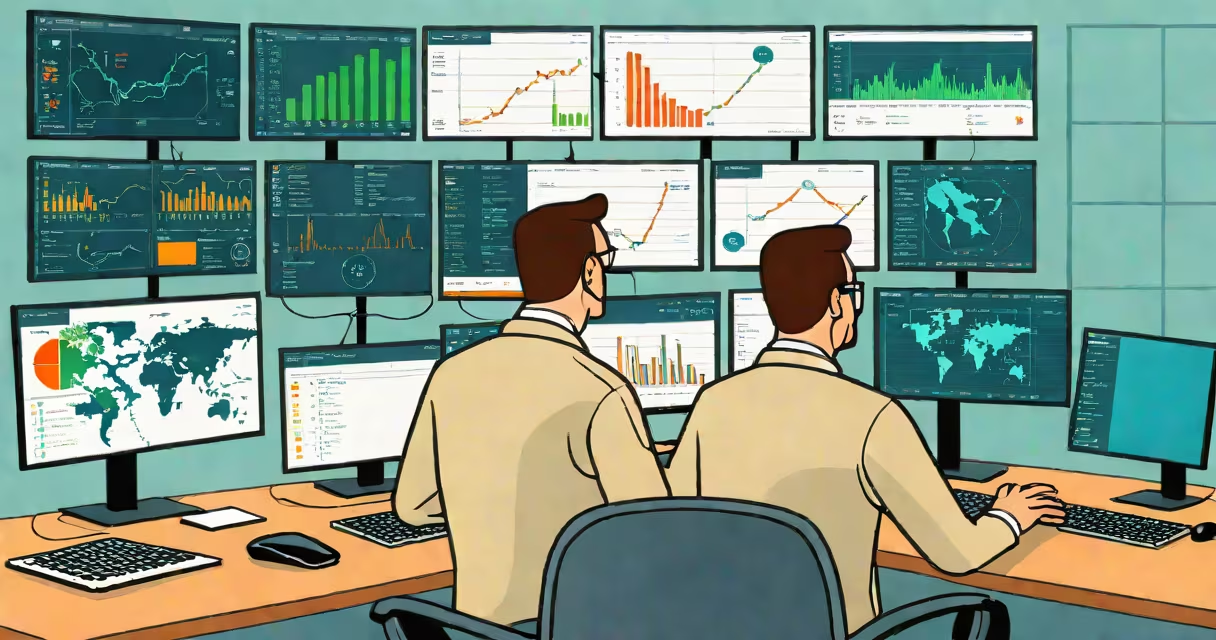
The security market encompasses the global economy dedicated to safeguarding digital assets, networks, and infrastructure from cyber threats through products, services, and skilled labor. It spans cybersecurity software, managed security services, physical access controls, and workforce training.
Organizations spend $188 billion globally on cybersecurity annually, according to Gartner (2023), reflecting demand for tools that detect intrusions, prevent data breaches, and respond to incidents. This spending fuels a complex system involving vendors, integrators, consultants, and certified professionals who assess risks and implement protective measures.
Security market functions as both a defensive and commercial sector. Defensive roles include monitoring for anomalies, patching vulnerabilities, and containing attacks. Commercial roles involve selling risk mitigation solutions, offering compliance audits, and providing incident response teams. The market grows faster than most tech sectors due to rising cybercrime volume and regulatory pressure.
Security market operates through layered defense models. At the base are foundational technologies-firewalls, endpoint detection systems, and encryption protocols-that block unauthorized access. Above them sit analytics platforms that process logs and telemetry to identify suspicious behavior. At the top are human-led operations such as threat hunting and forensic analysis.
For example, a financial institution uses a SIEM (Security Information and Event Management) system to collect data from servers, routers, and user devices. When the system detects multiple failed login attempts from a single IP address, it triggers an alert. A security analyst investigates whether this indicates brute-force hacking or a misconfigured device. If confirmed as malicious, the team blocks the IP and updates firewall rules across the network.
Market transactions occur via contracts, subscriptions, or one-time purchases. Enterprises often buy integrated platforms from vendors like Palo Alto Networks or CrowdStrike. Small businesses may outsource monitoring to MSSPs (Managed Security Service Providers), paying monthly fees based on coverage level and response time guarantees.
The security market divides into five core segments:
| Type | Examples | Key Function |
|---|---|---|
| Prevention Tools | Firewalls, antivirus software, email filters | Stop known threats before they enter the network |
| Detection Systems | SIEM, IDS/IPS, EDR | Monitor activity for signs of compromise |
| Response Services | Incident response teams, breach recovery | Contain damage and restore systems after an attack |
| Compliance & Auditing | Penetration testing, risk assessments, certification | Verify adherence to standards like HIPAA or PCI-DSS |
| Workforce & Training | Certified professionals, security awareness programs | Build internal capability to manage ongoing threats |
Each segment serves distinct phases of the cyber defense lifecycle. Prevention tools reduce attack surface; detection systems catch what slips through; response services limit fallout; auditing ensures accountability; and trained personnel sustain long-term resilience.
A non-obvious distinction: many organizations treat security market offerings as interchangeable. In reality, prevention tools fail silently when misconfigured, while detection systems generate false positives without proper tuning. A 2022 Verizon Data Breach Investigations Report found that 60% of breaches involved compromised credentials-yet 45% of companies still rely solely on password-based authentication despite available multi-factor alternatives.
Every organization with digital operations participates in the security market. Financial institutions face high-value targets, so they invest heavily in fraud detection and real-time transaction monitoring. Healthcare providers prioritize patient data protection under HIPAA regulations, requiring encrypted storage and audit trails.
Manufacturers use industrial control system (ICS) security to prevent sabotage of production lines. A 2021 attack on a water treatment plant in Florida demonstrated how a single unpatched remote access tool enabled attackers to alter chemical levels-a scenario that triggered national attention and new federal guidelines.
Small businesses often underestimate their exposure. According to the National Cyber Security Alliance, 43% of cyberattacks target small firms. Yet only 28% have formal incident response plans. This gap creates demand for affordable, cloud-based security packages tailored to limited IT staff.
People frequently confuse "security market" with "cybersecurity." While related, they differ in scope. The security market includes everything sold to improve safety-software licenses, consulting hours, training courses, and even insurance policies. Cybersecurity refers specifically to protecting digital systems from unauthorized access, alteration, or destruction.
Another error: assuming that buying expensive tools equals safety. In 2020, a major U.S. retail chain spent $2 million on endpoint protection software but suffered a ransomware breach because administrators hadn't applied critical patches. The tools were present, but operational discipline was missing.
I once observed a mid-sized nonprofit deploy a new firewall and assume it was secure. After a week, we discovered that default admin passwords remained unchanged and port scanning revealed open services. The device had been installed correctly-but not configured properly. This illustrates that technology alone doesn't create security; implementation matters more.
Finally, the term "security market" is sometimes mistaken for a single entity. It's not. It's a distributed network of suppliers, buyers, regulators, and standards bodies. No central authority governs it. Instead, market dynamics emerge from competition, regulation, and evolving threat patterns.
Understanding what is security market requires recognizing it as a living system shaped by technology, human decisions, and economic forces. As cyber threats grow more sophisticated, so too does the complexity of the market designed to counter them.