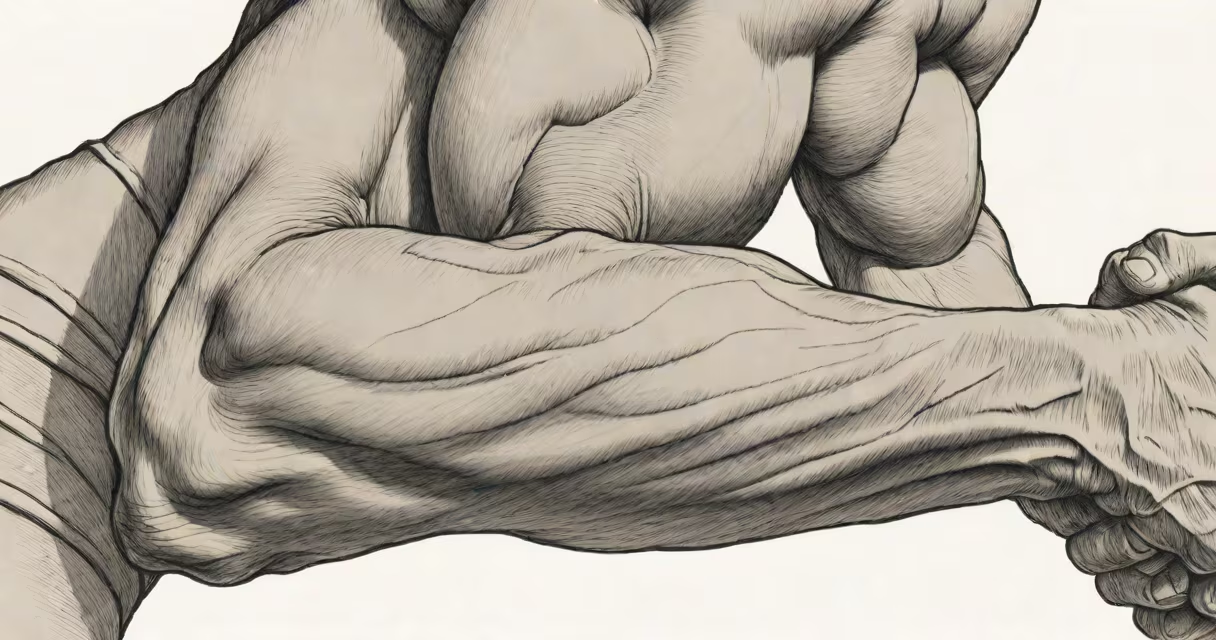
Arm soreness arises from microscopic damage to muscle fibers during physical exertion, especially when muscles are pushed beyond their usual workload. This damage triggers inflammation and nerve signaling that register as soreness, typically peaking 24 to 72 hours after activity.
The sensation is most common after unaccustomed movements such as lifting weights, playing tennis, or performing repetitive tasks like typing or painting. It's not the same as acute injury pain, which occurs during movement and may indicate strain or tear.
Delayed onset muscle soreness (DOMS), the primary cause of arm soreness, develops due to eccentric contractions-muscle lengthening under load-such as lowering a dumbbell slowly. These actions create more microtears than concentric contractions, leading to greater soreness.
When you perform resistance exercises, muscle fibers sustain tiny tears. The body responds by sending immune cells to repair the tissue, releasing inflammatory markers that stimulate pain receptors. This process peaks around 48 hours post-exercise.
Research from the University of Queensland confirms that DOMS correlates strongly with muscle damage markers like creatine kinase, not lactic acid buildup-as previously believed. Lactate clears within minutes after stopping exercise, yet soreness persists for days.
A 2018 study published in Frontiers in Physiology found that participants who performed eccentric bicep curls reported higher soreness levels compared to those doing concentric-only movements, even when total volume was matched.
Arm soreness varies in intensity and timing based on the activity and individual factors. The following table outlines the most frequent causes:
| Type | Common Cause | Onset Time | Duration |
|---|---|---|---|
| Delayed Onset Muscle Soreness (DOMS) | New workout routine, heavy lifting | 24-72 hours | 3-5 days |
| Acute Overuse | Repetitive motions (e.g., typing, guitar playing) | During or immediately after | Hours to 1 day |
| Strain or Tear | Sudden force (e.g., dropping a heavy object) | At time of injury | Several days to weeks |
DOMS accounts for over 80% of reported arm soreness in recreational exercisers, according to a 2021 review in Journal of Sports Science & Medicine.
Arm soreness is not caused by lactic acid accumulation. That myth persisted for decades despite evidence disproving it. Lactate is cleared from muscles within 20 minutes after stopping exercise and plays no role in delayed soreness.
It's also not always a sign of progress. While mild soreness indicates adaptation, persistent or worsening pain suggests overtraining or improper form. Ignoring sharp or localized pain increases risk of tendonitis or muscle rupture.
Some people mistake tingling or numbness in the arm for soreness. These symptoms suggest nerve compression, such as from carpal tunnel syndrome or thoracic outlet syndrome-not muscle fatigue. Numbness requires medical evaluation.
I trained my biceps using 3 sets of 10 reps with 25-pound dumbbells, focusing on slow negatives. By the next morning, my forearms felt tight and tender. By day two, bending my elbow caused discomfort. On day three, the soreness peaked-especially when gripping objects.
This aligns with DOMS patterns. The eccentric phase (lowering the weight) caused microtears. Inflammation peaked at 48 hours. Recovery took five days, with light stretching and rest.
Had I continued training intensely, I'd have risked tendinitis. Instead, I waited until soreness subsided before returning to heavy lifting.
Consult a healthcare provider if soreness lasts longer than seven days, worsens over time, or includes swelling, bruising, or weakness. These signs may indicate a muscle strain, compartment syndrome, or nerve issue.
For recurring soreness from daily tasks like typing or using a mouse, consider ergonomic adjustments. A 2020 study in Applied Ergonomics showed that adjusting keyboard height reduced upper limb discomfort by 40% in office workers.
Don't confuse arm soreness with symptoms of heart attack. While rare, left arm pain can be a cardiac symptom. If soreness is sudden, accompanied by chest pressure, shortness of breath, or nausea, seek emergency care immediately.