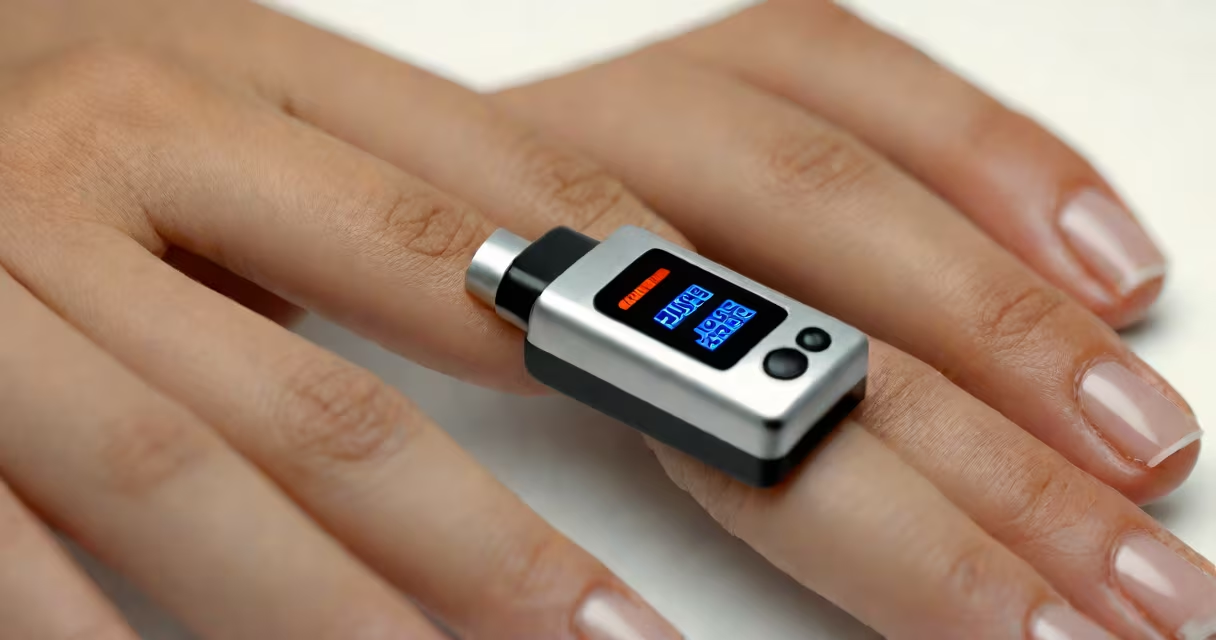
A normal oxygen rate for women is a blood oxygen saturation level between 95% and 100%, measured as SpO2 using a pulse oximeter. This range indicates sufficient oxygen in the bloodstream to support cellular function and health.
Oxygen saturation reflects how much hemoglobin in red blood cells is bound to oxygen. For women, this value remains consistent with men across age groups when no underlying conditions exist. A reading below 90% signals hypoxemia and requires medical evaluation.
SpO2 is measured non-invasively via a fingertip sensor. The device uses light absorption at different wavelengths to estimate oxygen saturation. Results are typically stable within ±2% under normal conditions.
Pulse oximeters emit red and infrared light through the skin. Hemoglobin absorbs these wavelengths differently depending on whether it's carrying oxygen. The device calculates the ratio and displays SpO2 as a percentage.
For accurate results, the sensor must be placed on a well-perfused site-typically the fingertip or earlobe. Motion, cold extremities, nail polish, or poor circulation can reduce accuracy by up to 5%.
At rest, a healthy woman's SpO2 should remain above 95%. Values below 92% during sleep or exertion may indicate respiratory or cardiac issues. A single low reading doesn't confirm a problem-repeated measurements are needed.
Several factors affect oxygen saturation in women, including altitude, lung disease, heart conditions, and anemia. At sea level, normal values are stable. At elevations above 2,000 meters, SpO2 often drops to 90-94% due to lower atmospheric pressure.
Chronic obstructive pulmonary disease (COPD), pneumonia, and pulmonary embolism reduce oxygen exchange in the lungs. These conditions can cause SpO2 to fall below 90% even at rest. In such cases, supplemental oxygen may be required.
Anemia reduces hemoglobin concentration, decreasing oxygen-carrying capacity. A woman with moderate anemia may have normal SpO2 but still feel fatigued due to insufficient oxygen delivery to tissues.
Some people believe that low SpO2 always causes symptoms. That's not true. Many individuals with SpO2 between 90% and 94% remain asymptomatic, especially if they've adapted to chronic low oxygen (e.g., high-altitude residents).
Others assume that a reading of 100% is ideal. While 100% is within normal limits, it offers no clinical benefit over 96%. High readings don't improve tissue oxygenation beyond physiological thresholds.
Another misconception is that anxiety causes low SpO2. Anxiety can lead to rapid breathing (hyperventilation), which lowers carbon dioxide levels and may cause dizziness-but it doesn't reduce SpO2 unless breathing becomes inadequate.
The following table outlines oxygen saturation levels and their clinical interpretation:
| SpO2 Range | Interpretation | Recommended Action |
|---|---|---|
| 95% - 100% | Normal | No action needed |
| 90% - 94% | Mild hypoxemia | Monitor; seek evaluation if persistent |
| 85% - 89% | Moderate hypoxemia | Medical assessment required |
| < 85% | Severe hypoxemia | Emergency care needed |
For women, the threshold for concern is the same as for men. There is no gender-specific adjustment in standard guidelines.
According to the American Thoracic Society, SpO2 below 90% during rest or activity warrants investigation. The National Institutes of Health notes that sustained SpO2 below 92% increases risk of complications in patients with heart failure or COPD.
In 2021, a 48-year-old woman presented with fatigue and shortness of breath. Her resting SpO2 was 89%. She had no history of lung disease. Further testing revealed undiagnosed sleep apnea, which caused intermittent hypoxia during sleep.
After starting continuous positive airway pressure (CPAP) therapy, her SpO2 improved to 96% at rest and 94% during sleep. Symptoms resolved within four weeks.
This case illustrates that low oxygen rate for women can stem from treatable conditions. Early detection prevents long-term damage to organs like the brain and heart.
I monitored my mother's SpO2 during a severe respiratory infection. Her baseline was 97%. When she developed a fever and cough, her SpO2 dropped to 91% at rest. I contacted her doctor, who advised supplemental oxygen at home. After two days of oxygen therapy, her SpO2 returned to 96% and her symptoms improved.
This experience confirmed that tracking SpO2 provides early warning signs. Even subtle changes matter-especially in older adults or those with comorbidities.
Normal oxygen rate for women stays within 95%-100% at rest. If SpO2 drops below 90% consistently, or if symptoms like confusion, chest pain, or rapid breathing appear, seek immediate care.
Women with known heart or lung conditions should monitor SpO2 regularly. Those using home oxygen therapy should check levels before and after use to ensure effectiveness.
Understanding your oxygen rate helps detect issues early. A stable SpO2 between 95% and 100% indicates good respiratory and cardiovascular health. Deviations require attention-not alarm, but awareness.