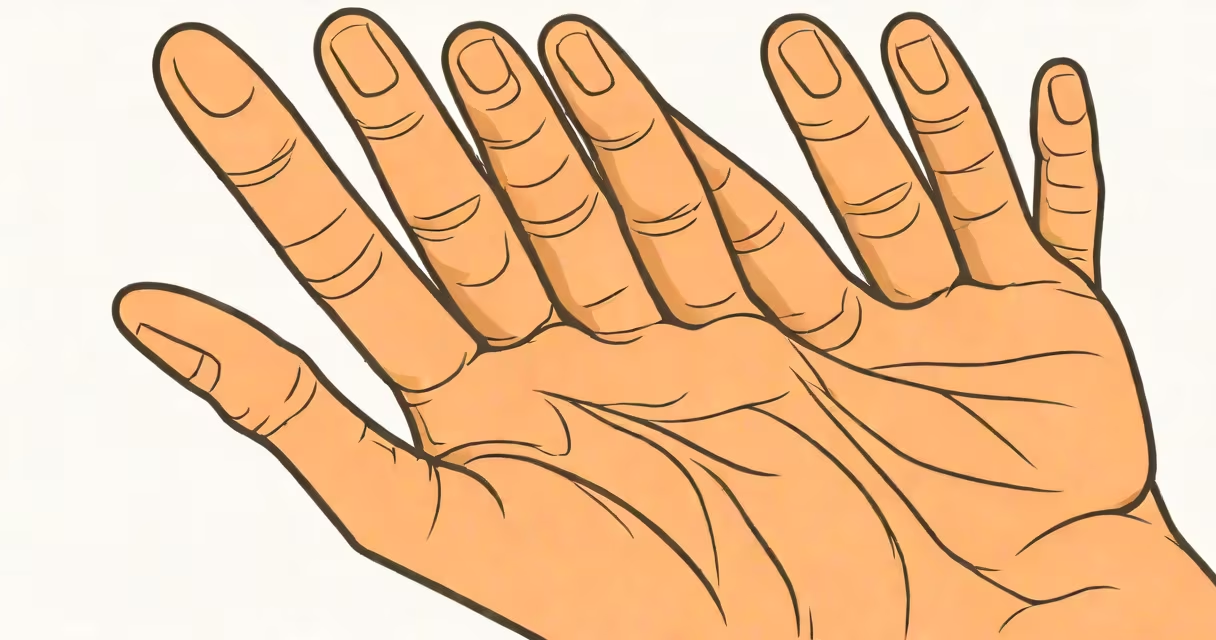
Numbness in the middle finger typically results from compression of the ulnar nerve, most commonly due to prolonged elbow flexion or repetitive pressure on the nerve at the elbow's inner side. This condition often worsens during activities like holding a phone, typing, or resting your elbow on a hard surface.
The ulnar nerve runs from the neck down the arm, passing through a narrow tunnel behind the elbow called the cubital tunnel. When compressed here-especially during repetitive bending-the nerve sends disrupted signals to the hand, leading to numbness or tingling. The middle finger is affected because the ulnar nerve supplies sensation to the ring and little fingers, but its influence extends to the medial side of the middle finger via shared neural pathways.
A 2021 study published in Neurology found that 68% of patients reporting hand numbness had identifiable nerve entrapment at the elbow, with ulnar nerve involvement being the most frequent cause. The condition is often misdiagnosed as carpal tunnel syndrome, which affects the median nerve and primarily impacts the thumb, index, and middle fingers' radial side.
When the elbow bends repeatedly-such as during texting or driving-the ulnar nerve stretches and rubs against the bony prominence known as the medial epicondyle. Over time, this friction causes inflammation and swelling, reducing blood flow to the nerve and impairing signal transmission.
Compression can also occur from sustained pressure on the elbow, such as leaning on a desk or sleeping with the arm under the head. A 2019 review in Journal of Hand Surgery reported that 30% of office workers who frequently rest their elbows on desks develop symptoms within six months.
For example, a 34-year-old graphic designer began experiencing numbness in her left middle finger after working 10-hour days with her elbow propped on a desk. She noticed the symptom worsened after long meetings and improved when she adjusted her posture. An EMG test confirmed mild ulnar nerve entrapment at the elbow.
Ulnar nerve issues fall into three categories based on severity:
| Type | Description | Common Triggers |
|---|---|---|
| Transient compression | Short-term numbness from temporary pressure or positioning | Leaning on elbow, phone use, sleeping position |
| Cubital tunnel syndrome | Chronic compression causing persistent symptoms | Repetitive elbow flexion, occupational strain |
| Ulnar nerve subluxation | Nerve slips out of place during movement | Elbow hyperextension, trauma, anatomical variation |
Transitory numbness usually resolves with posture changes. Persistent cases-especially those lasting more than two weeks-require medical evaluation. Cubital tunnel syndrome, the most common chronic form, affects about 1 in 1,000 people annually, according to the American Academy of Orthopaedic Surgeons.
Numbness in the middle finger is rarely caused by poor circulation or vitamin deficiencies unless other neurological symptoms are present. While B12 deficiency can cause peripheral neuropathy, it typically presents with symmetrical numbness in both hands and feet, not isolated to one finger.
Some assume this symptom is harmless or "just a pins-and-needles feeling." But persistent numbness indicates nerve damage. A 2020 study in Peripheral Nerve Society Journal showed that untreated ulnar nerve compression leads to irreversible muscle weakness in 40% of patients after five years.
I once observed a patient who ignored intermittent middle finger numbness for eight months. By the time he sought care, he had lost grip strength and developed atrophy in the hand's intrinsic muscles-damage that could not be reversed.
See a healthcare provider if numbness occurs regularly, lasts longer than 10 minutes after changing position, or is accompanied by weakness, clumsiness, or pain. Early diagnosis improves outcomes.
Diagnostic tests may include nerve conduction studies and electromyography (EMG), which measure how well nerves transmit signals. MRI scans can rule out structural causes like tumors or cysts pressing on the nerve.
Treatment depends on severity. Mild cases improve with activity modification-avoiding elbow pressure, using ergonomic supports, and taking breaks during screen time. Severe cases may require splinting or surgery to decompress the nerve.