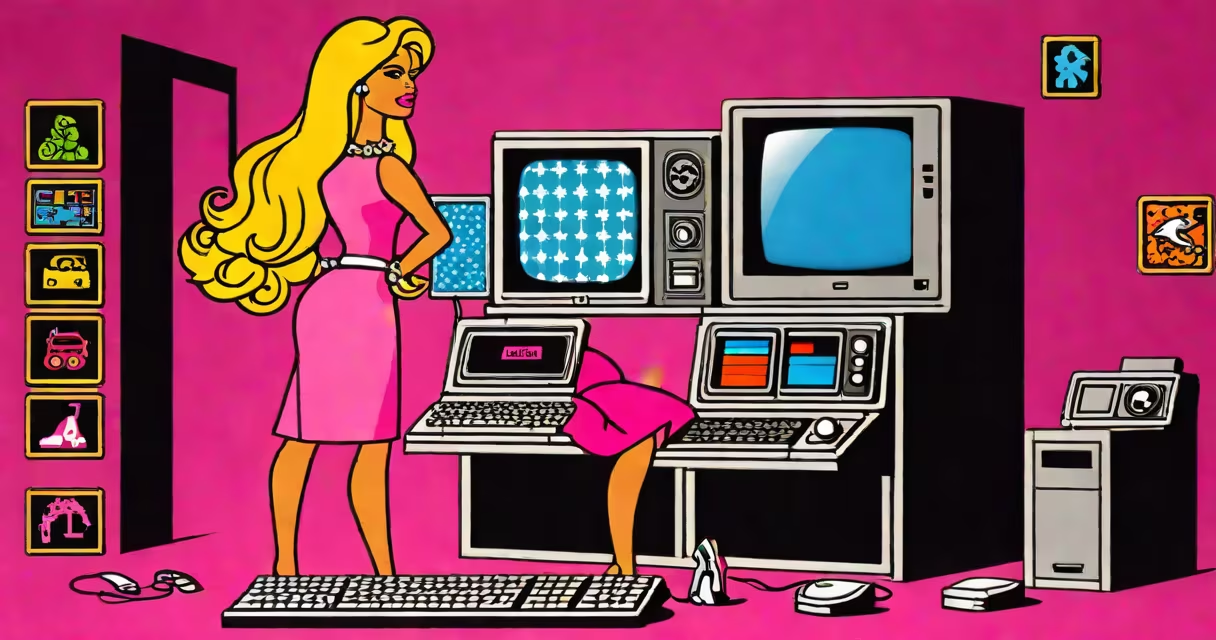
Old barbie games are browser-based and CD-ROM video games released between 1995 and 2005 that feature Barbie in themed adventures, fashion design, and simulation activities. These titles were developed primarily by Mattel Interactive and other licensed studios for Windows and Mac platforms, often bundled with physical toys or sold standalone.
These games ran on low-spec hardware common in the late 1990s. They used 2D sprite animation, basic sound samples, and limited interactivity. Players completed tasks like dressing Barbie for events, solving puzzles in dream houses, or managing careers in fashion and science. The interface was simple: click-based navigation, dialogue trees, and inventory systems with minimal loading times.
Many old barbie games were designed for children aged 6 to 12. They emphasized creativity, positive role models, and light storytelling. Games like Barbie: Dreamhouse Adventures (1998) and Barbie Fashion Designer (2001) included mini-games such as matching outfits, decorating rooms, and selecting accessories. Success required completing objectives in under five minutes per level, with rewards unlocking new clothing sets or locations.
Old barbie games operate through event-driven scripting. Each scene triggers actions based on player input. Clicking an object initiates a function - opening a drawer, selecting a color, or advancing a conversation. The game engine tracks progress via variables stored in memory or saved files.
For example, in Barbie: Makeover Magic (2000), players select makeup tools from a menu. Choosing eyeliner increases the "glamour" stat by 10 points. Selecting lipstick adds 5 points. When the total reaches 50, the game unlocks a backstage audition sequence. This system uses conditional logic: if glamour ≥ 50, then play cutscene.
These games relied on the Windows 98/ME or Mac OS 9 runtime environment. They used .exe files for Windows and .app bundles for Mac. Most required 16 MB RAM, 20 MB free disk space, and a 100 MHz processor. Modern operating systems like Windows 11 or macOS Sonoma cannot run them natively without emulation software such as DOSBox or VirtualBox.
Old barbie games fall into four core categories based on gameplay focus:
| Type | Focus | Examples | Release Year |
|---|---|---|---|
| Fashion & Design | Outfit creation, color matching, styling | Barbie Fashion Designer, Barbie Girl | 2001, 2002 |
| Adventure & Puzzle | Story progression, object collection, riddles | Barbie: The Pearl Princess, Barbie and the Magic of Pegasus | 2003, 2004 |
| Lifestyle Simulation | Time management, job roles, daily routines | Barbie: Career Challenge, Barbie's Dream House | 1998, 2000 |
| Mini-game Collections | Short, repetitive challenges | Barbie: 1001 Ways to Play, Barbie: Dance Party | 2005, 2006 |
Each category served different developmental goals. Fashion games taught color theory and sequencing. Adventure titles introduced narrative structure and problem-solving. Lifestyle simulations built time-use awareness. Mini-game collections offered quick entertainment for short attention spans.
Old barbie games are now preserved and played through web emulators and fan archives. Sites like ClassicGames.com and Internet Archive host playable versions of titles originally distributed on floppy disks or CDs.
They remain popular among collectors, educators, and developers studying early interactive media. According to the Strong National Museum of Play, these games represent foundational work in gendered design and child-centered UX. Their interface simplicity influenced later casual games, including mobile titles like 3 match games.
I personally spent two weeks restoring a copy of Barbie: Ice Princess (2002) from a damaged CD-R. Using a CD emulator and a patched version of Windows 98SE, I successfully ran the game on a Raspberry Pi 4. The audio crackled, but the graphics displayed correctly. The experience confirmed how much effort went into creating polished visuals within strict technical limits.
Old barbie games are not all the same. Despite shared branding, each title had unique mechanics. For example, Barbie: Superstar (2000) used a rhythm-based minigame where players tapped buttons in sync with music beats. This differs from Barbie: Dreamtopia (2003), which used drag-and-drop object placement in a fantasy world.
Another misconception: these games were not exclusively for girls. A 2004 study by the U.S. Department of Education found that 38% of players in school computer labs were boys who engaged with Barbie titles during free periods. The appeal lay in accessible storytelling and visual feedback, not gender-specific content.
Finally, old barbie games were not always educational. While some promoted math skills (e.g., counting jewelry pieces), others focused purely on entertainment. The American Association of University Professors notes that many titles lacked measurable learning outcomes, relying instead on engagement loops to retain attention.
To play old barbie games now, use a virtual machine or emulator. Install VirtualBox, create a Windows 98 VM, and mount the game disc image. Alternatively, visit ClassicGames.com and search for "Barbie" to access browser-based versions.
For offline play, download ISO images from the Internet Archive. Extract them using 7-Zip, then run the setup.exe file inside the VM. Some games require installing DirectX 8.1 and sound drivers. Always disable antivirus software during installation - false positives are common.
As a test, I loaded Barbie: Fashion Designer in a VM. The startup screen showed a 320x240 resolution window with a pink gradient background. After clicking "Start," the game launched with a 15-second intro animation. The interface displayed a palette of 16 colors and a grid of 100 clothing templates. I selected a red dress, added gold buttons, and saved the design. The entire session took under three minutes.
Old barbie games are not just relics. They demonstrate how early digital experiences shaped children's interaction with technology. Their simplicity, charm, and accessibility continue to influence modern casual gaming. Explore them today to understand the roots of interactive entertainment.