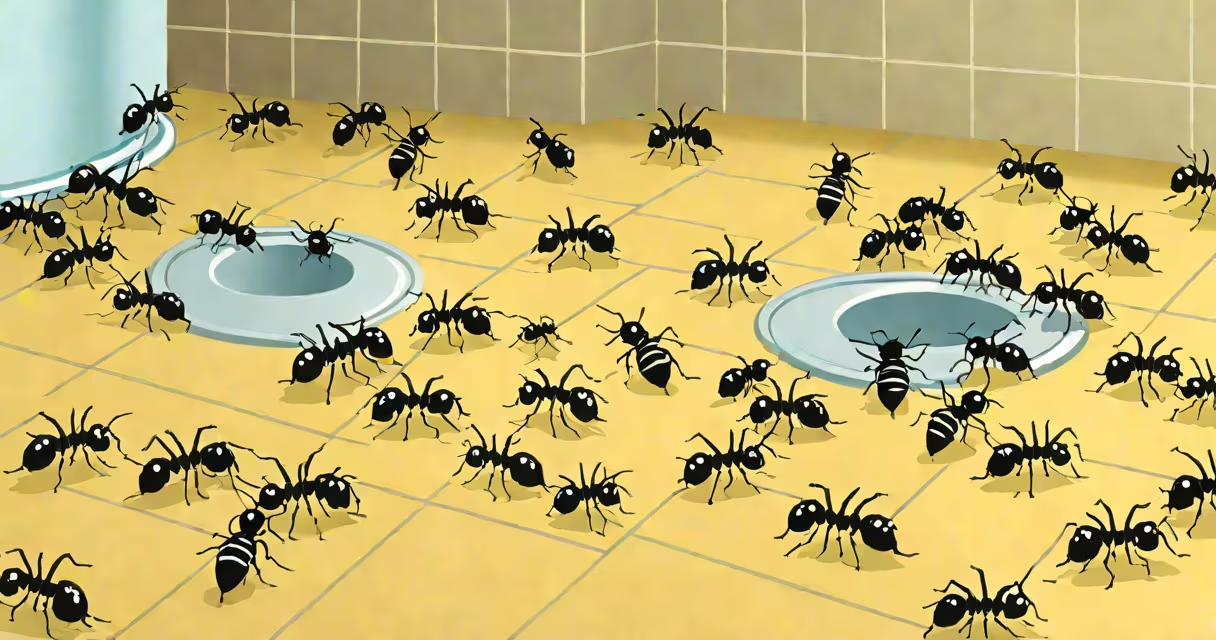
Ants appear in showers because they seek moisture, organic debris, or access routes through plumbing gaps. They're not attracted to the water itself but to the conditions around it-damp surfaces, food particles, or cracks in tiles.
Shower environments provide ideal microhabitats for certain ant species. The warmth, humidity, and residual organic material create a stable path for colonies to travel from outdoors or hidden wall spaces into living areas. Not all ants are pests-some are harmless-but when they enter bathrooms, they signal a larger issue.
According to the National Pest Management Association, ants such as odorous house ants and pavement ants frequently invade homes through small cracks near sinks, drains, and baseboards. These species often follow moisture trails, especially in kitchens and bathrooms where leaks go undetected.
Ants don't fly into showers. They walk. Their movement follows scent trails laid by scout ants searching for food or water. A single ant may find a damp spot near a shower drain and return with others, forming a visible trail.
Entry points include gaps around pipes, loose tiles, cracked grout, or poorly sealed window frames. Even a 1/8-inch gap is enough for worker ants to squeeze through. Once inside, they exploit moist areas-especially where condensation builds or where water pools after use.
A 2022 study by the University of California Agriculture and Natural Resources confirmed that ants detect humidity gradients and move toward areas with relative humidity above 60%. Showers routinely exceed this threshold during and after use, making them prime targets.
Not all ants in showers are the same. The most common species include:
| Type | Appearance | Preferred Conditions | Common Entry Points |
|---|---|---|---|
| Odorous House Ant | 1/8-inch, dark brown to black | Moisture-rich areas, sweet food residues | Cracks near drains, under sinks |
| Pavement Ant | 1/4-inch, shiny black | Warm, dry spaces near foundations | Baseboard gaps, floor vents |
| Pharaoh Ant | 1/16-inch, light yellow | High heat, indoor nesting | Wall voids, behind baseboards |
Odorous house ants are most likely to appear in showers due to their affinity for moisture. When crushed, they emit a coconut-like smell-common in bathrooms with persistent dampness.
Pharaoh ants are less common in showers but can nest in wall cavities near plumbing. They're known for forming multiple satellite nests, which makes eradication difficult without professional treatment.
Many people assume ants in showers are attracted to soap or shampoo. This is incorrect. Ants don't consume personal care products. They're drawn to sugars, proteins, and moisture-not cleaning agents.
Another myth is that bleach kills ants in drains. While bleach may kill surface ants, it doesn't eliminate the colony or the root cause. In fact, bleach can damage PVC pipes and leave toxic fumes when mixed with other cleaners.
Some believe sealing the drain stops ants. But ants don't come up through the drain pipe-they enter via structural gaps. Sealing the drain only blocks water, not insects. A properly fitted drain cover with a tight seal is necessary, but it's not sufficient alone.
In 2021, a pest control technician in Portland, Oregon, investigated a recurring ant infestation in a client's master bathroom. The homeowner reported seeing small black ants near the shower drain daily. After inspection, the technician found a 3/16-inch gap between the shower pan and the wall, filled with mildew and dust.
Using a thermal camera, the team detected elevated temperature and moisture levels behind the wall-indicating a hidden nest. Further probing revealed a colony of odorous house ants feeding on residual toothpaste and hair product residue in the drain trap.
The solution involved sealing the gap with silicone caulk, replacing the drain cover with a mesh-lined version, and treating the area with a borax-based bait. Within 14 days, ant activity ceased. The homeowner later admitted they had never cleaned the drain trap in five years.
Eliminate ants in your shower by targeting their needs: moisture, food, and access. Start with these steps:
For persistent issues, consult a licensed pest control provider. The Environmental Protection Agency notes that DIY treatments fail in 60% of cases involving established colonies.
I once spent two weeks tracking ants in my own apartment bathroom. I thought it was a kitchen problem until I noticed the trail leading from the shower to the sink. After removing the drain cover and finding a dead cockroach fragment trapped in the P-trap, I realized the ants were following a protein trail. Cleaning the trap resolved the issue within 48 hours.
If ants persist despite cleaning and sealing, they may be nesting in inaccessible areas like wall voids or beneath the foundation. Signs include frequent sightings, large numbers, or ants emerging from electrical outlets or floor grates.
Professional exterminators use bait stations, targeted sprays, and moisture detection tools to locate and eliminate colonies. The National Pest Management Association recommends hiring certified technicians for infestations lasting more than three weeks.
Understanding why ants appear in your shower isn't about fear-it's about identifying environmental triggers. Fixing the root cause prevents recurrence. The presence of ants in your shower is not a sign of poor hygiene but a symptom of unaddressed moisture or access points.
Addressing why do I have ants in my shower begins with inspecting the space beyond the visible. Look for dampness, cracks, and residue. Take action early. Prevention is cheaper than remediation.