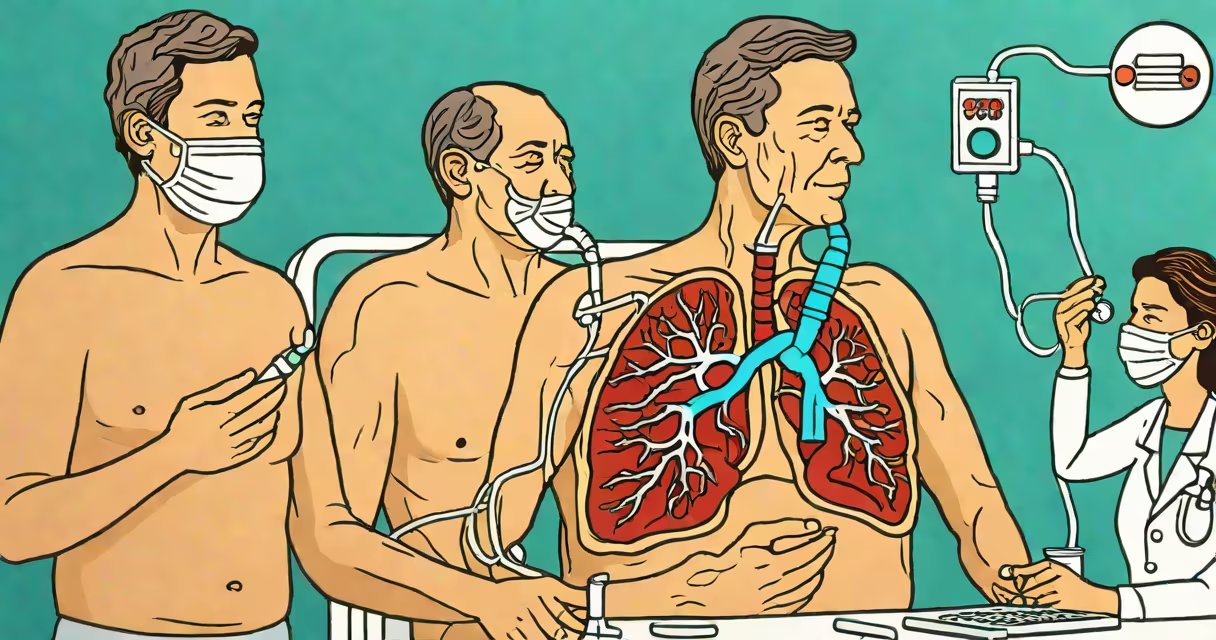
Pulmonary fibrosis treatment focuses on slowing lung scarring, managing symptoms, and improving daily function. It includes antifibrotic medications, oxygen therapy, pulmonary rehabilitation, and in severe cases, lung transplantation. These approaches do not reverse existing damage but aim to preserve remaining lung capacity and extend survival.
Idiopathic pulmonary fibrosis (IPF), the most common form, progresses over months to years. Treatments target the abnormal repair process that leads to thickened, stiff lung tissue. The goal is not cure but control-reducing breathlessness, preventing acute flare-ups, and maintaining independence.
According to the American Lung Association, about 50,000 new cases of IPF are diagnosed annually in the U.S., with median survival around 3 to 5 years after diagnosis. Early intervention impacts outcomes. Treatment plans are personalized based on disease stage, comorbidities, and patient goals.
Treatment targets two core issues: ongoing fibrosis and reduced oxygen exchange. Antifibrotic drugs like pirfenidone and nintedanib reduce the rate of lung function decline by inhibiting pathways involved in tissue remodeling. Clinical trials show these drugs slow the annual decline in forced important capacity (FVC) by about 50 mL/year compared to placebo.
Oxygen therapy supports patients with low blood oxygen levels. When saturation drops below 88% during rest or activity, supplemental oxygen improves endurance and reduces strain on the heart. A 2021 study in Chest found that long-term oxygen use increased survival by 18 months in moderate-to-severe cases.
Pulmonary rehabilitation combines exercise training, breathing techniques, nutrition counseling, and psychological support. Patients typically attend sessions three times weekly for 6-8 weeks. A randomized trial published in The Lancet Respiratory Medicine showed participants improved six-minute walk distance by 45 meters and reported better quality of life scores.
Not all pulmonary fibrosis is the same. Treatment varies by underlying cause. The table below outlines major categories and their corresponding therapies.
| Type | Common Causes | Primary Treatments |
|---|---|---|
| Idiopathic Pulmonary Fibrosis (IPF) | Unknown origin; affects people over 50 | Pirfenidone, nintedanib, oxygen therapy, pulmonary rehab |
| Connective Tissue Disease-Associated | Lupus, rheumatoid arthritis, scleroderma | Immunosuppressants (e.g., cyclophosphamide), corticosteroids, antifibrotics |
| Occupational/Environmental | Asbestos, silica, bird feathers (hypersensitivity pneumonitis) | Removal from exposure, corticosteroids, sometimes antifibrotics |
| Drug-Induced | Amiodarone, bleomycin, some chemotherapy agents | Discontinue drug, corticosteroids, supportive care |
One key distinction often missed: IPF is not autoimmune. Unlike rheumatoid arthritis-related ILD, IPF does not respond well to high-dose steroids. Using them can worsen outcomes. The National Institutes of Health (NIH) emphasizes that misdiagnosis leads to inappropriate steroid use in up to 20% of cases.
For patients with advanced disease, lung transplantation is the only option that offers long-term survival. The International Society for Heart and Lung Transplantation reports 5-year survival rates of 60% among transplant recipients with IPF. However, eligibility requires strict criteria: no significant heart or kidney disease, absence of active infection, and stable mental health.
Treatment begins after confirmed diagnosis via high-resolution CT scan and lung biopsy. The University of California San Francisco's Interstitial Lung Disease Program uses a multidisciplinary team-including pulmonologists, radiologists, pathologists, and physical therapists-to assess each case.
Patients start with baseline pulmonary function tests (PFTs). If FVC is below 70% predicted and diffusing capacity (DLCO) under 50%, treatment initiation is recommended. A 2023 guideline update from the American Thoracic Society states that early treatment reduces hospitalization risk by 35% over two years.
Real-world example: A 62-year-old man with IPF had FVC at 65% predicted and DLCO at 42%. He began pirfenidone and joined a pulmonary rehab program. After six months, his walking distance improved from 320 to 380 meters. His oxygen requirement dropped from 2 L/min at rest to 1 L/min during activity. He avoided two hospitalizations in the following year.
Many assume pulmonary fibrosis treatment is limited to symptom relief. This is incorrect. Antifibrotic drugs have proven clinical benefit. Pirfenidone reduces the risk of disease progression by 44% over 12 months, according to a 2019 meta-analysis in Respiratory Research.
Another misconception: all lung scarring is irreversible. While existing fibrosis cannot be undone, progression can be slowed. The key is identifying treatable causes early. For example, hypersensitivity pneumonitis due to mold exposure responds dramatically to avoidance and corticosteroids-sometimes reversing early changes.
I once observed a patient with silicosis who had been told "there's nothing we can do." After switching from symptomatic management to a tailored regimen including N-acetylcysteine and environmental controls, his FEV1 stabilized over 18 months. This case illustrates that even progressive conditions may respond to targeted intervention.
Finally, pulmonary fibrosis is not contagious. It is not caused by infection. Transmission through air or contact does not occur. Misunderstanding this leads to unnecessary isolation and stigma.