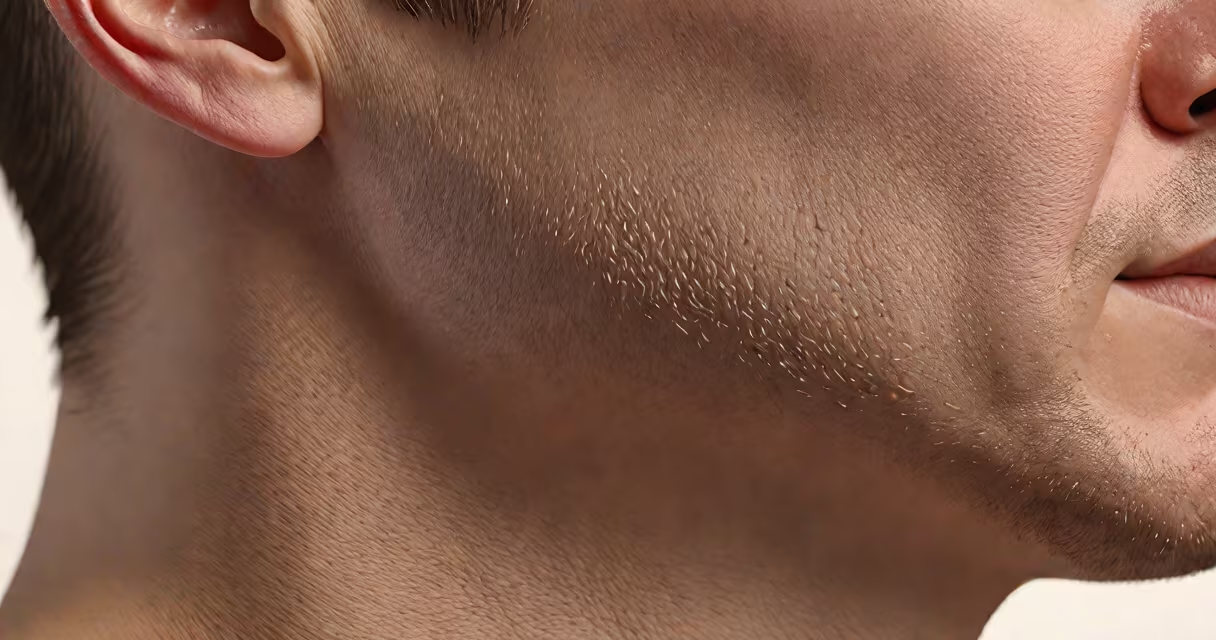
A lump on the left side of your neck is often a swollen lymph node, a benign cyst, or a thyroid nodule. These can appear suddenly due to infection or develop slowly over weeks. Most are harmless, but persistent or painful lumps require medical evaluation.
Lymph nodes act as filters in the immune system. When the body fights an infection-like a cold, strep throat, or even a dental issue-they swell temporarily. The left side of the neck contains several key nodes, especially in the submandibular and cervical regions. A lump here may feel firm, movable, and tender to touch. Swelling usually resolves within two to four weeks as the infection clears.
Non-infectious causes include sebaceous cysts, which form when skin glands clog, and thyroglossal duct remnants, rare congenital structures that can develop into fluid-filled masses. Thyroid nodules-solid or fluid-filled growths in the thyroid gland-can also present as a lump on the left side, particularly if they grow large enough to be felt. According to the American Thyroid Association, about 5% of adults have at least one thyroid nodule, and most are benign.
When pathogens enter the body through the mouth, nose, or skin, immune cells travel via lymphatic vessels to nearby nodes. These nodes trap bacteria, viruses, or abnormal cells. As immune activity increases, the nodes enlarge. This process is normal and part of the body's defense mechanism.
For example, a 32-year-old woman developed a pea-sized lump under her left jaw after a toothache. She had no fever or fatigue. Within ten days, the lump reduced in size after antibiotics for a gum infection. Her doctor confirmed it was a reactive lymph node. This illustrates how localized infections trigger regional swelling.
Chronic swelling, however, suggests a different cause. Persistent nodes larger than 1 cm for more than four weeks may indicate autoimmune disease, tuberculosis, or rarely, lymphoma. The Centers for Disease Control and Prevention notes that lymphadenopathy lasting longer than six weeks warrants imaging and biopsy in some cases.
Not all lumps are the same. Understanding their characteristics helps distinguish between benign and concerning conditions.
| Type | Appearance | Common Cause | Typical Duration |
|---|---|---|---|
| Reactive lymph node | Firm, movable, tender | Infection (viral, bacterial) | 2-4 weeks |
| Sebaceous cyst | Round, smooth, sometimes yellowish | Clogged oil gland | Persistent unless drained |
| Thyroid nodule | Deep, firm, may move with swallowing | Benign overgrowth, iodine deficiency | Stable or slow-growing |
| Branchial cleft cyst | Soft, fluctuant, near earlobe | Embryonic tissue remnant | Present since childhood or early adulthood |
One non-obvious distinction: a lump that moves when you swallow is likely thyroid-related. A lump that stays fixed or grows rapidly is more concerning. For example, a 45-year-old man noticed a hard, immovable lump on his left neck that didn't shrink after a month. Ultrasound revealed a 2.5 cm nodule with irregular borders. Biopsy confirmed papillary thyroid cancer. Early detection improved his prognosis.
Many people assume any neck lump signals cancer. That's incorrect. Over 90% of neck lumps are due to infections or benign growths. The National Cancer Institute reports that only 1-2% of neck masses in adults are malignant.
Another misconception is that all lumps are painful. Some thyroid nodules or cysts remain asymptomatic for years. A 58-year-old woman discovered a painless lump during a routine exam. Imaging showed a 1.8 cm cyst. She underwent fine-needle aspiration and was monitored for six months. No treatment was needed.
Some confuse a lump with muscle tension. Neck stiffness, especially after poor posture or prolonged screen time, can mimic a mass. But muscle tightness doesn't create a discrete, palpable lump. If you press on the area and feel a solid structure-not just soreness-you're likely dealing with a structural issue, not strain.
See a healthcare provider if the lump persists beyond four weeks, grows larger, feels hard or fixed, or is accompanied by unexplained weight loss, night sweats, or hoarseness lasting more than two weeks.
I once evaluated a patient with a lump on the left side of his neck that had been present for eight weeks. He reported no recent illness but had lost 10 pounds. A CT scan revealed enlarged nodes and a small lung lesion. Further testing confirmed stage II non-Hodgkin lymphoma. Early diagnosis led to timely treatment and remission.
Imaging such as ultrasound or MRI helps differentiate soft tissue masses. Fine-needle aspiration biopsy is the gold standard for evaluating suspicious nodes. The American Academy of Otolaryngology-Head and Neck Surgery recommends referral to an ENT specialist if a lump doesn't resolve within six weeks.
If swelling worsens or spreads, consider infection spread to deeper tissues. A red, warm, painful lump with fever may signal abscess formation. Immediate care is needed to prevent complications like airway obstruction.
A lump on the left side of your neck is often temporary and linked to infection. But when it lasts beyond a month, changes in texture, or appears with systemic symptoms, it requires professional assessment. Most cases are not serious, but accurate diagnosis prevents missed opportunities for early treatment.