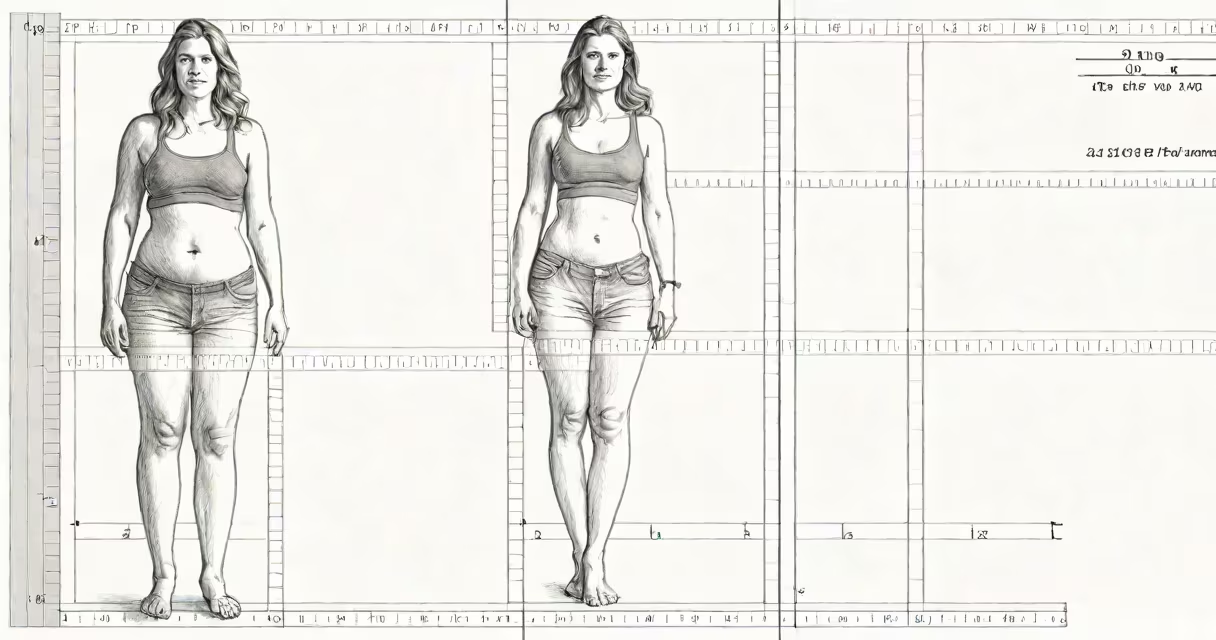
A healthy BMI for a 4'11" female is between 18.5 and 24.9, according to CDC growth standards. This range applies to individuals aged 2 to 20, with adjustments based on sex and age. A BMI within this zone indicates a weight that supports metabolic health and lower risk of chronic conditions.
BMI, or Body Mass Index, measures weight relative to height. For a 4'11" female, a BMI below 18.5 is underweight, 18.5 to 24.9 is normal, 25 to 29.9 is overweight, and 30 or higher is obese. These thresholds are standardized for children and adolescents using percentiles rather than absolute numbers.
The Centers for Disease Control and Prevention (CDC) uses gender- and age-specific percentiles to interpret BMI. For a 12-year-old girl who is 4'11" tall, a BMI at the 50th percentile corresponds to about 19.6. A BMI at the 85th percentile is considered overweight, while the 95th percentile marks obesity. These percentiles account for growth patterns during puberty.
BMI is calculated the same way for all ages: weight in kilograms divided by height in meters squared. For a 4'11" female (1.5 m), a weight of 50 kg yields a BMI of 22.2. This falls within the healthy range. A 45 kg weight gives a BMI of 19.8, still healthy. A 55 kg weight results in 24.2, which remains in the normal range.
For children, raw BMI values are converted into percentiles using CDC growth charts. These charts plot BMI against age and sex. A 14-year-old girl who is 4'11" and weighs 52 kg has a BMI of 23.3. According to the CDC, this places her at the 75th percentile, which is within the healthy range.
Using percentiles ensures accuracy during growth spurts. A 10-year-old girl at 4'11" may have a different healthy range than a 16-year-old due to hormonal changes and muscle mass shifts. Percentiles adjust for developmental timing, making them more reliable than static cutoffs.
Children and teens are assessed using age- and sex-specific percentiles. Adults use fixed categories. The table below shows how BMI ranges differ by age group for a 4'11" female.
| Age Group | Healthy BMI Range | Overweight Threshold | Obese Threshold |
|---|---|---|---|
| 2-5 years | 5th-85th percentile | 85th-95th percentile | ≥95th percentile |
| 6-11 years | 5th-85th percentile | 85th-95th percentile | ≥95th percentile |
| 12-20 years | 5th-85th percentile | 85th-95th percentile | ≥95th percentile |
These ranges reflect biological development. A 13-year-old girl at 4'11" with a BMI at the 90th percentile is not necessarily unhealthy-she may be growing rapidly. A consistent rise above the 95th percentile over time signals concern.
Doctors use these percentiles to track growth trends. A sudden jump from the 50th to the 90th percentile in one year warrants evaluation. This prevents mislabeling healthy growth as obesity.
Many assume BMI is a direct measure of fatness. It is not. BMI does not distinguish between muscle and fat. A 4'11" female who plays competitive sports may have a high BMI due to muscle mass but still be metabolically healthy.
Consider a 15-year-old girl who is 4'11" and weighs 60 kg. Her BMI is 26.8, placing her in the overweight category. However, she lifts weights regularly and has low body fat. Her doctor checks blood markers-insulin, cholesterol, glucose-and finds them normal. She is not at increased risk for diabetes or heart disease despite her BMI.
This illustrates a key limitation: BMI is a screening tool, not a diagnostic. It flags potential issues but requires clinical context. The American Academy of Pediatrics notes that relying solely on BMI can lead to unnecessary interventions in otherwise healthy youth.
Another common error is assuming all children at the 50th percentile are "average." The 50th percentile means half the population is above and half below. It's not a target. A girl at the 75th percentile for BMI may be healthy if her family history shows tall stature and early puberty.
Parents should monitor height and weight trends over time. A single BMI reading is less meaningful than a pattern. If a 4'11" girl's BMI moves from the 50th to the 90th percentile over two years, even if still below 25, it suggests a need for dietary or activity review.
One parent shared that their daughter, age 12, was 4'11" and weighed 54 kg. Her BMI was 24.7, just under the adult threshold for overweight. The pediatrician reviewed her diet and physical activity. They found she ate processed snacks daily and walked only 10 minutes a day. After reducing sugary drinks and increasing walking to 30 minutes daily, her BMI stabilized at 23.8 over six months.
Health professionals emphasize lifestyle factors over BMI alone. The CDC recommends at least 60 minutes of moderate-to-vigorous activity daily for children and teens. Limiting screen time to under two hours per day also supports healthy weight regulation.
For reference, a healthy BMI for a 5'4" female is similar-between 18.5 and 24.9-but the weight associated with that range differs. A 5'4" woman at a healthy BMI weighs around 110 to 145 pounds, compared to 100 to 130 pounds for a 4'11" woman.
Consult a healthcare provider if a 4'11" female's BMI consistently exceeds the 95th percentile, especially if accompanied by symptoms like fatigue, irregular periods, or joint pain. These may indicate underlying conditions such as hypothyroidism or polycystic ovary syndrome (PCOS).
For a BMI of 18 or below, evaluate for eating disorders. A 4'11" girl weighing 45 kg has a BMI of 19.8, which is healthy. But a 40 kg weight gives a BMI of 17.8, falling below the 5th percentile. This may require nutritional counseling and psychological support.
A healthy BMI for a 4'11" female is not a fixed number. It's a range shaped by age, sex, genetics, and lifestyle. Regular check-ups and consistent tracking provide better insight than isolated measurements.