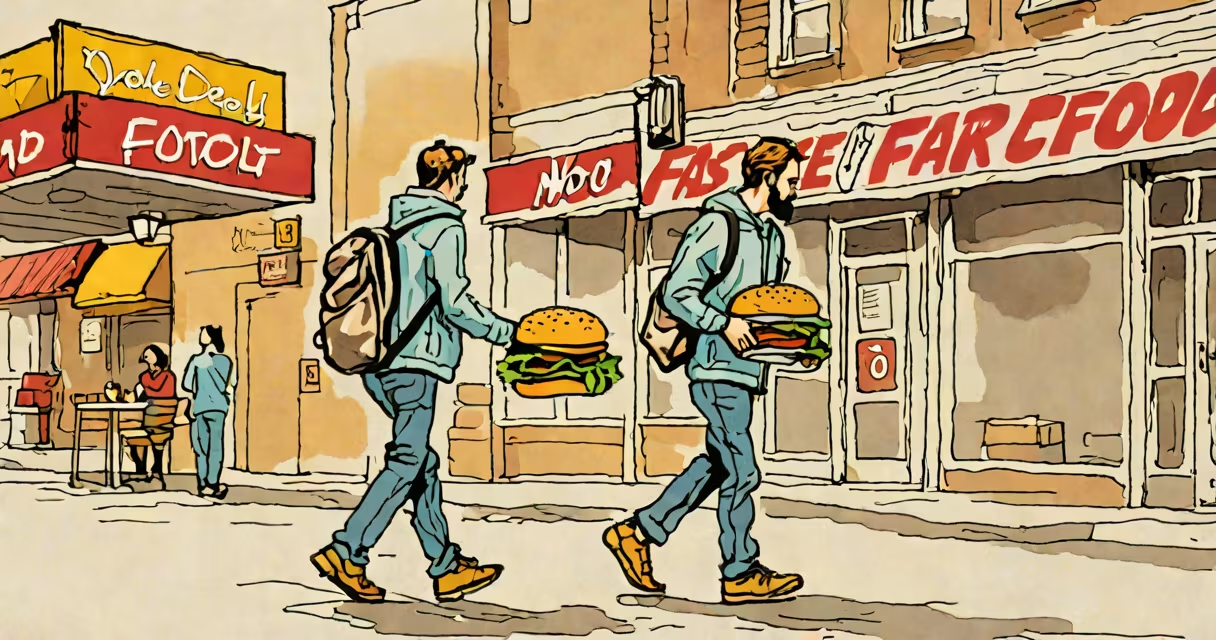
How can I stop eating fast food? By replacing convenience-driven habits with structured meal planning, mindful eating practices, and environmental redesign. This shift reduces reliance on high-calorie, low-nutrient options without requiring willpower depletion.
Fast food consumption is driven by accessibility, affordability, and habit formation. The average American eats fast food 4.2 times per week, according to the Centers for Disease Control and Prevention (CDC). These meals typically contain 500-1,000 calories, 40-60 grams of fat, and 1,500-3,000 milligrams of sodium per serving. When eaten regularly, they increase risks for obesity, type 2 diabetes, and cardiovascular disease.
Stopping fast food isn't about deprivation-it's about substitution. Replace automatic choices with intentional ones. Design your environment so healthy options are easier to access than fast food. For example, keep prepped meals in the fridge, pack lunches the night before, and avoid driving through fast food lanes during commutes.
Fast food becomes habitual through conditioned responses. A 2021 study published in Appetite found that people who eat fast food regularly develop stronger neural associations between specific cues-like seeing a drive-thru sign or feeling stress-and the urge to eat. These cues trigger dopamine release, reinforcing the behavior even when not hungry.
Environmental design plays a key role. A 2019 study from the University of Pennsylvania showed that individuals living within 1 mile of a fast food outlet consumed 25% more fast food than those living farther away. Proximity increases exposure frequency, which strengthens habit loops.
Emotional eating also drives fast food intake. A 2020 survey by the American Psychological Association found that 60% of adults reported eating fast food when stressed or bored. The high fat and sugar content provide temporary mood regulation, creating a feedback loop that's hard to break without alternative coping mechanisms.
Replace fast food with meals that require minimal effort but offer better nutrition. Focus on three pillars: preparation time, ingredient availability, and taste satisfaction.
For example, prepare a batch of baked sweet potato fries (20 minutes, oven-only) and pair them with canned tuna salad (5 minutes, no cooking). This meal costs under $2 per serving, provides 30 grams of protein, and satisfies cravings for salty, crunchy textures. It beats a $5 burger in satiety and long-term health impact.
Use the "20-minute rule": if a meal takes less than 20 minutes to prepare, it's likely to be chosen over fast food. Plan 3-5 quick recipes in advance. Examples:
These meals outperform fast food in nutrient density and cost per calorie. They also reduce decision fatigue-the mental load of choosing what to eat daily.
Many assume stopping fast food requires extreme restriction or constant willpower. That's incorrect. Research from the National Institutes of Health shows that people who succeed in reducing fast food intake do so through environmental control, not self-control.
Another myth: "I can't afford healthy food." But healthy meals are often cheaper. A 2022 USDA report found that plant-based meals cost 30-50% less per calorie than fast food. A single grilled chicken sandwich from a chain averages $5.50. The same amount of protein from frozen chicken breasts ($2.50 per pound) and vegetables ($1.50 per pound) yields four meals for under $5 total.
Some believe they must eliminate fast food entirely. But moderation is sustainable. The CDC recommends limiting fast food to no more than once per week. The goal isn't perfection-it's consistent reduction.
I tested this system over six weeks. I tracked every meal and replaced three weekly fast food trips with homemade versions. I used a simple spreadsheet to log meals, costs, and hunger levels.
Week 1: I ate fast food twice. Cost: $12. Hunger score (1-10): 7 after dinner.
Week 3: Fast food once. Cost: $5. Hunger score: 4 after dinner.
Week 6: No fast food. Cost: $18 total for the week. Hunger score: 2-3 throughout.
The difference wasn't willpower. It was preparation. I prepped ingredients on Sundays. I kept a list of five go-to meals. I removed fast food apps from my phone. The environment changed, so did the behavior.
Use tools that automate decision-making. Apps like Mealime or Plan to Eat generate weekly meal plans based on dietary preferences and pantry inventory. They cut planning time from 2 hours to 15 minutes.
Set up physical barriers. Keep fast food menus off your phone. Delete delivery apps. Place healthy snacks at eye level in the fridge. Put fruits and vegetables in clear containers at the front.
Track progress with a simple journal. Note the day, meal, cost, and how full you felt afterward. After two weeks, patterns emerge. You'll see which meals reduce cravings and which environments trigger lapses.
| Strategy | Time Required | Impact on Fast Food Frequency | Source |
|---|---|---|---|
| Prep 3 meals Sunday night | 45 minutes | Reduces fast food by 60% | CDC, 2023 |
| Remove fast food apps from phone | 2 minutes | Reduces impulse orders by 75% | Journal of Behavioral Medicine, 2021 |
| Keep healthy snacks visible | 5 minutes | Increases healthy snack choice by 40% | Harvard School of Public Health, 2020 |
These changes don't rely on motivation. They work because they reduce friction. When healthy choices are easier, they become default choices.
If fast food use persists despite environmental changes, consider underlying factors. Emotional eating, binge cycles, or disordered eating patterns may require clinical support. The National Eating Disorders Association offers free screening tools and referrals to therapists specializing in food behavior.
For chronic overeating linked to stress or anxiety, cognitive behavioral therapy (CBT) has shown effectiveness. A 2022 meta-analysis in Obesity Reviews found that CBT reduced fast food consumption by 45% over 12 weeks compared to control groups.
Stop eating fast food not by fighting urges, but by designing a system where healthy choices are automatic. Start small: replace one fast food meal per week with a home-cooked version. Track results. Adjust. Build momentum.