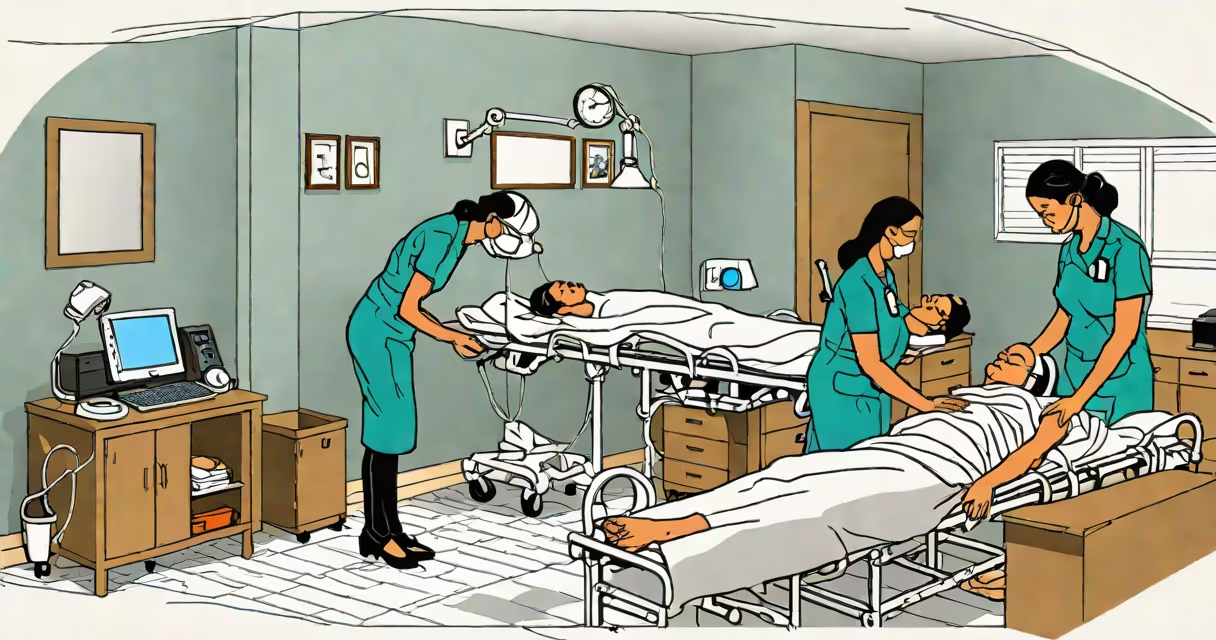
A midwife is also called a birth attendant. This term covers professionals who support individuals through pregnancy, childbirth, and the postpartum period without focusing on medical intervention.
Midwives are trained to manage low-risk births and promote natural, evidence-based care. They assess fetal development, monitor important signs, and offer emotional and physical support throughout labor. Their role includes educating patients about birth options, pain management techniques, and newborn care.
The most common alternative term is "birth attendant," which emphasizes the supportive nature of their work. This label applies to both certified nurse-midwives (CNMs) and direct-entry midwives (DEMs), though the training paths differ.
Midwives operate under a model of continuous care. They begin prenatal visits early in pregnancy and continue through delivery and up to six weeks postpartum. This continuity reduces complications and increases patient satisfaction.
During labor, a midwife checks cervical dilation, monitors fetal heart rate, and guides breathing and positioning. They intervene only when medically necessary, such as if the baby shows signs of distress or if labor stalls.
After birth, they assess the newborn's Apgar score, assist with breastfeeding initiation, and screen for maternal depression. They also provide follow-up care to ensure healing and address concerns like postpartum bleeding or sleep disruption.
There are two primary pathways to becoming a midwife in the U.S., each resulting in different credentials and scopes of practice:
| Type | Training Path | Licensed in All 50 States? | Scope of Practice |
|---|---|---|---|
| Certified Nurse-Midwife (CNM) | Bachelor's in nursing + graduate degree in midwifery + national certification | Yes | Can prescribe medication, perform cesarean sections in collaboration with physicians, and deliver in hospitals and birth centers |
| Direct-Entry Midwife (DEM) | Formal education program (e.g., apprenticeship, college degree) + certification via NARM | No - varies by state | Often practices in homes or freestanding birth centers; limited prescribing authority; cannot perform surgery |
Despite differences in training, both CNMs and DEMs are required to pass national exams administered by the American Midwifery Certification Board (AMCB).
According to the National Association of Certified Professional Midwives (NACPM), over 80% of certified midwives in the U.S. are CNMs. The remaining 20% are DEMs who have completed certification through the North American Registry of Midwives (NARM).
Midwives are widely used in settings ranging from private homes to outpatient clinics. In 2022, approximately 11% of all births in the United States were attended by midwives, according to the Centers for Disease Control and Prevention (CDC).
Births led by midwives show lower rates of cesarean delivery, episiotomy, and epidural use compared to physician-led deliveries. A 2021 study published in Obstetrics & Gynecology found that women cared for by midwives had a 22% lower risk of preterm birth and a 35% lower risk of neonatal intensive care unit admission.
Home births assisted by certified midwives are associated with low maternal mortality rates. The CDC reports that among planned home births with certified midwives, the maternal death rate is 6 per 100,000 live births - comparable to hospital births.
Many people assume midwives only deliver babies. This is incorrect. Midwives provide ongoing gynecological care, including annual exams, contraception counseling, and menopause management.
Another misconception is that midwives lack formal medical training. In reality, CNMs hold master's or doctoral degrees in nursing and are licensed healthcare providers. They can diagnose conditions, order lab tests, and prescribe medications.
Some confuse midwives with doulas. Doulas offer emotional and physical support during labor but do not perform clinical tasks. A doula may work alongside a midwife, but they are not qualified to deliver babies or assess fetal health.
One non-obvious fact: Not all midwives are women. The profession includes male practitioners, especially among CNMs. The American College of Nurse-Midwives (ACNM) reports that 22% of CNMs in 2023 identified as male or non-binary.
I attended my sister's birth in 2020, where a certified nurse-midwife managed the entire process. She monitored contractions using a handheld Doppler, adjusted positioning to ease discomfort, and guided breathing during pushing. The baby was born at home after five hours of labor. The midwife performed a delayed cord clamping and initiated skin-to-skin contact within minutes.
She stayed for two hours post-delivery, checking blood pressure, uterine tone, and infant feeding. Her calm presence reduced anxiety for everyone in the room. Afterward, she scheduled a follow-up visit and provided written resources on postpartum recovery.
This experience confirmed that midwives are skilled clinicians, not just comfort providers. Their expertise extends beyond delivery to long-term wellness.
While "birth attendant" is the most accurate synonym for midwife, other terms appear in context:
Understanding what is another name for midwife reveals a field rooted in science, compassion, and patient autonomy. Birth attendants are not a relic of the past-they are essential providers in modern maternal care.