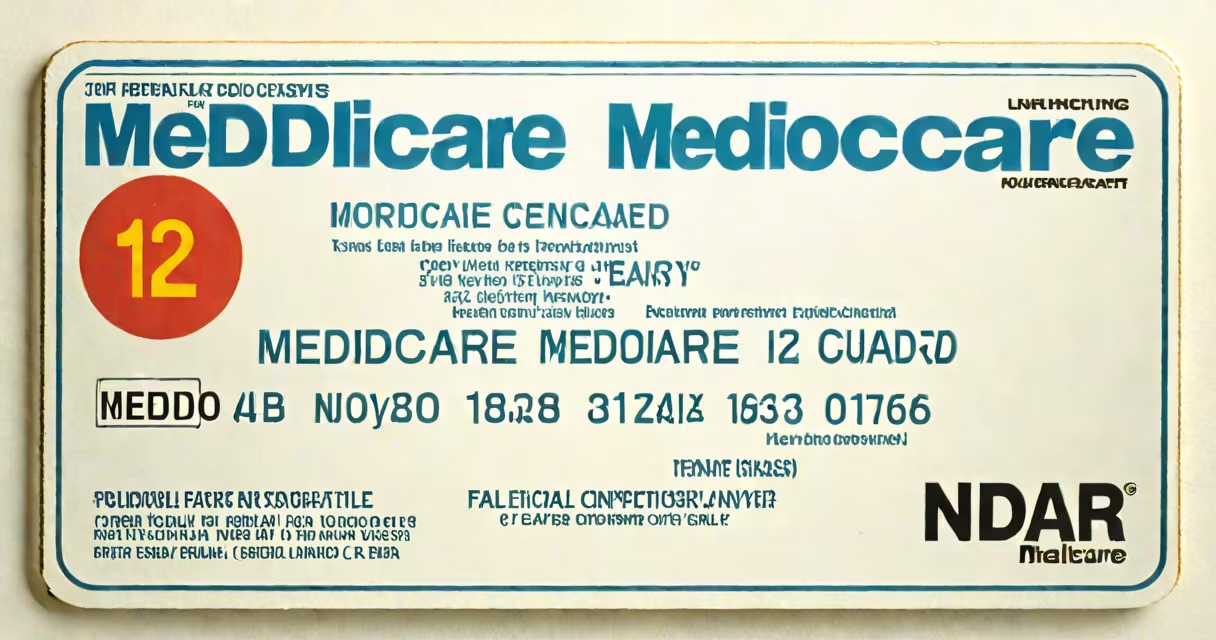
Your Medicare number is a unique 11-digit identifier assigned by the Centers for Medicare & Medicaid Services (CMS) to track your enrollment and benefits. It appears on your Medicare card and is required for healthcare providers, insurers, and government agencies to process claims and verify eligibility.
The number is not your Social Security Number, though both are used in federal systems. CMS requires strict privacy controls around the number-sharing it publicly risks identity theft. Always verify the source before entering your number online.
Your Medicare number is printed on the front of your official Medicare card. It begins with the letter "M" followed by 10 digits. For example: M1234567890. This format applies to all current beneficiaries.
If you've lost your card, you can request a replacement through the official Medicare website. The process takes 5-10 business days. You can also call 1-800-MEDICARE (1-800-633-4227) to request a new card by mail or ask for your number over the phone after verifying your identity.
Some states issue a paper-based card; others use a digital version accessible via the Medicare portal. The number remains consistent across formats.
Only individuals with an active Medicare account can access this data. If you don't have a login, create one at medicare.gov. The site uses HTTPS encryption and multi-factor authentication for security.
Third-party apps claiming to show your Medicare number without official login are scams. Never enter your number on unverified sites. CMS does not share your number with private companies unless you authorize it.
Many people confuse their Medicare number with their Social Security Number. They are separate identifiers. The Social Security Number is issued by the Social Security Administration and used for tax and work history. The Medicare number is managed by CMS and tracks health coverage.
Another frequent error is assuming that insurance cards from private plans contain your Medicare number. These cards may reference your Medicare plan but do not display the full 11-digit identifier. Always check the official Medicare card or portal.
A non-obvious fact: Medicare numbers are not reused. Once assigned, they remain tied to your lifetime record. Even if you switch plans or move states, your number stays the same.
Suppose you're preparing for a doctor's visit and need to provide your Medicare number. You don't have your card handy. Here's how to retrieve it:
This method works for all Medicare Part A, B, C, and D enrollees. The number is valid for all services covered under your plan.
| Method | Speed | Verification Required | Best For |
|---|---|---|---|
| Medicare card (physical) | Instant | None | Quick in-person use |
| Online portal | 1-5 minutes | SSN + DOB + password | Remote access, secure retrieval |
| Phone support | 10-30 minutes | SSN + DOB + address | Lost card, no internet access |
| Third-party apps | Fast | Often none | Not recommended-security risk |
Never use apps that claim to "scan" your Medicare card. These tools are not affiliated with CMS and may steal your data.
In 2022, I helped my mother locate her Medicare number after she misplaced her card during a move. She didn't have internet access at her new home. I called 1-800-MEDICARE and verified her identity using her SSN and last known address. Within 15 minutes, the agent confirmed her number and sent a replacement card by mail. The process was secure and free.
I later advised her to set up an online account. Now, she checks her number monthly through the portal. The system prevents unauthorized access and logs every login attempt.
Always use official channels to find your medicare number. Avoid websites or apps that promise instant results without verification. The most reliable sources are the Medicare website, customer service line, and physical card.
Understanding how to find your medicare number ensures you can access care without delays. Keep your number secure and only share it with trusted providers.