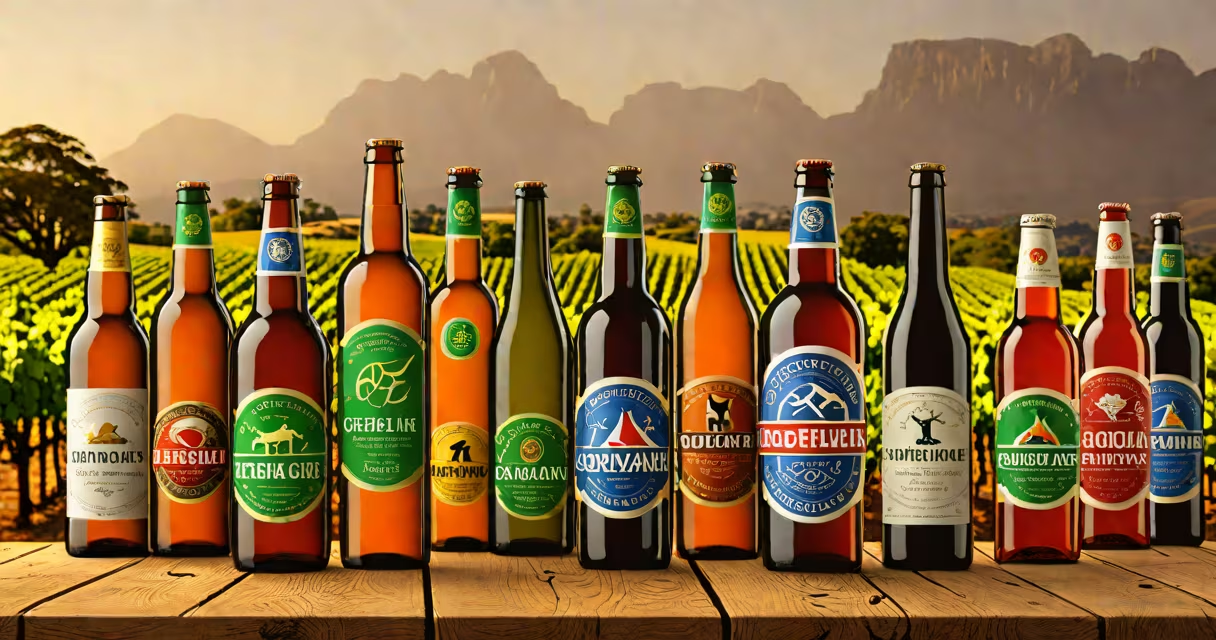
South african breweries are commercial facilities producing beer using local ingredients, brewing traditions, and modern processes. They range from large-scale producers like SABMiller and Distell to independent craft brewers creating small-batch, regionally inspired beers.
The industry traces roots to 17th-century Dutch settlers who introduced brewing techniques to the Cape Colony. Today, it includes mass-produced lagers, traditional indigenous beers like umqombothi, and rapidly growing craft operations. South african breweries operate under strict regulations enforced by the National Revenue Board and the South African Bureau of Standards.
Major players such as South African Breweries (SAB) dominate domestic sales, distributing brands like Castle Lager and Carling Black Label. These are produced at industrial scale-SAB's largest plant in Pretoria handles over 10 million liters annually. Independent microbreweries, often located in urban centers like Cape Town, Durban, and Johannesburg, focus on flavor experimentation and local sourcing.
Brewing begins with malted barley, water, hops, and yeast. The process involves mashing (mixing crushed malt with hot water), boiling with hops for bitterness and aroma, cooling, fermenting with yeast, then conditioning and filtering. Final steps include pasteurization or cold storage to preserve shelf life.
South african breweries use both traditional and modern methods. Large producers rely on automated systems and standardized recipes. For example, Castle Lager uses a proprietary yeast strain developed in the 1930s and is fermented at 12°C for 14 days. Craft brewers may use alternative grains like sorghum or millet, especially in beers targeting gluten-free markets.
Quality control is mandatory. The South African Bureau of Standards (SABS) sets limits for alcohol content, clarity, and microbial safety. All commercial beer must pass lab testing before distribution. In 2022, SABS reported that 98.7% of inspected batches met national standards.
South african breweries fall into three categories based on scale, ownership, and output:
| Type | Annual Output | Examples | Key Traits |
|---|---|---|---|
| Industrial | Over 1 million hectoliters | SAB, Distell, Molson Coors South Africa | Mass production, national distribution, standardized flavors |
| Craft | 10,000-100,000 hectoliters | Wonderbrau, The Beer Company, Mountain Goat | Small batches, seasonal releases, local ingredient focus |
| Traditional/Indigenous | Under 10,000 hectoliters | Various community-run cooperatives in KwaZulu-Natal | Uses sorghum or maize, fermentation in clay pots, cultural significance |
Many craft breweries operate out of repurposed warehouses or shared spaces. The Beer Company in Cape Town, for example, runs a 20-hectoliter system in a converted garage and serves 12 rotating taps weekly. Their flagship beer, "Pap & Pils," blends maize-based wort with German-style hops-a nod to local cuisine and European tradition.
A lesser-known fact: South africa has over 200 registered craft breweries, but only 60 have full retail licenses. The rest sell exclusively through taprooms or farmers' markets. This regulatory gap limits market access for smaller operators.
"South african breweries" is often equated with "Castle Lager." While SAB produces 70% of the country's beer volume, it represents only one segment. Castle Lager is a pale lager brewed since 1933, but it does not reflect the diversity of styles now available.
Another misconception: all craft beer is "natural" or "organic." Not true. Many craft breweries use adjuncts like sugar or artificial flavorings to boost alcohol content or reduce cost. The term "craft" is unregulated in south africa-unlike in the U.S., where the Brewers Association defines it by volume and independence.
Umqombothi, a fermented sorghum beer traditionally consumed during Zulu ceremonies, is sometimes mistaken for a craft beer. It is not brewed commercially under standard hygiene controls and is typically prepared in homes or community settings. The South African Health Products Regulatory Authority (SAHPRA) warns against consuming unregulated versions due to high risk of bacterial contamination.
In 2018, Cape Town had 12 licensed craft breweries. By 2023, that number grew to 47. This growth reflects changing consumer preferences and supportive local policies. The City of Cape Town launched a "Brewery Licensing Fast Track" program in 2020, reducing approval times from 18 months to 6 weeks.
One standout is Wonderbrau, founded in 2015 by two former engineers. They brew a sour ale called "Karoo Dust" using wild yeast isolated from desert soil near Namaqualand. The beer takes 120 days to ferment and sells for R120 per bottle. In its first year, it won gold at the South African International Beer Awards.
Despite success, challenges remain. Water scarcity affects 60% of breweries in Western Cape. Wonderbrau reduced water usage by 40% through closed-loop cooling systems and recycled wastewater for cleaning. This efficiency saved R2.3 million in operational costs over three years.
Brewing contributes 0.8% to South africa's GDP and supports over 120,000 jobs. Industrial breweries account for 70% of revenue, but craft breweries improve. Between 2019 and 2023, craft beer exports rose 21%-to $18 million-led by brands like The Beer Company and Malt & Hops.
Beer also plays a social role. In rural areas, traditional brewing is tied to rites of passage and communal gatherings. The KwaZulu-Natal Department of Culture reports that 68% of households in uMlazi municipality prepare umqombothi during weddings and funerals.
For context, the global beer market was valued at $750 billion in 2023 (Statista). South africa's share is less than 0.5%, but its unique blend of heritage and innovation makes it a niche exporter. Countries like Japan and Germany import limited editions of South african craft beers for specialty bars.
Understanding south african breweries reveals more than beverage production-it shows how culture, regulation, and climate shape a national industry. From industrial giants to village brewers, the sector reflects South africa's complex identity.