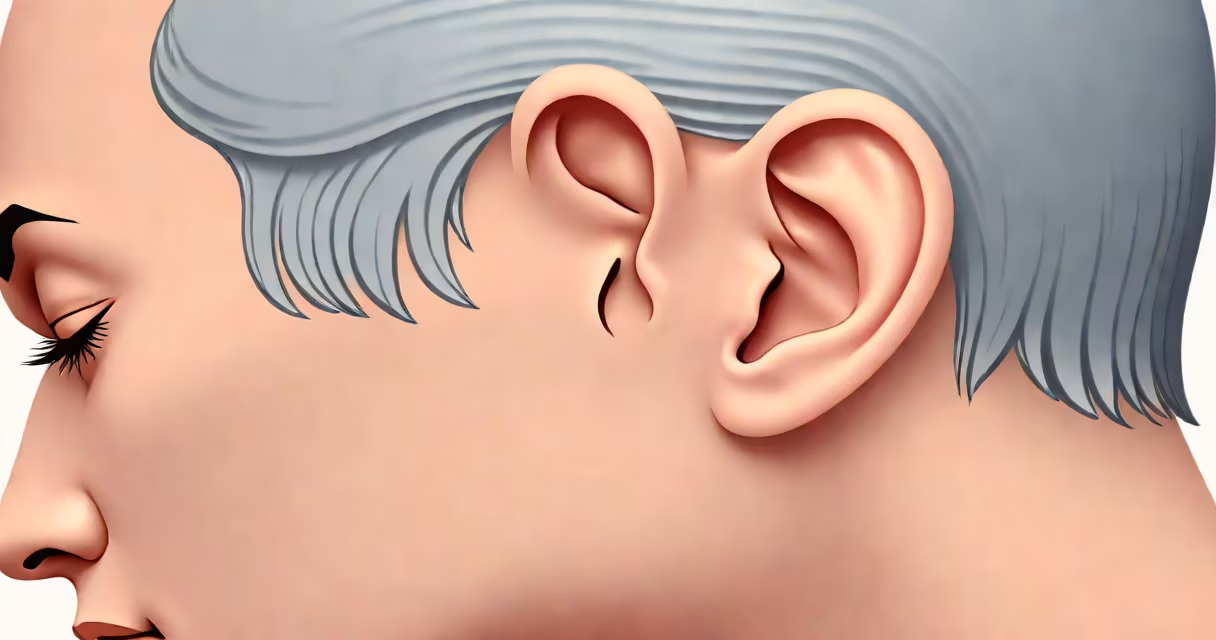
Pain behind the ear and at the back of the head typically arises from nerve irritation, muscle tension, or referred pain from nearby structures. It often presents as a sharp, shooting, or dull ache localized near the upper neck and base of the skull.
This discomfort frequently involves the greater occipital nerve, which runs from the upper neck up through the scalp. When inflamed or compressed, it triggers pain that radiates from the back of the head toward the ear and temple. The condition is known as occipital neuralgia. It affects about 3 in 1,000 people annually, according to the American Migraine Foundation.
Other contributors include tightness in the suboccipital muscles-small muscles located just below the skull-and poor posture during prolonged screen time. These factors compress nerves and reduce blood flow, leading to persistent ache. A 2021 study in Headache: The Journal of Head and Face Pain found that 68% of patients with chronic posterior head pain had identifiable muscle tenderness in the suboccipital region.
The greater occipital nerve originates between the first and second cervical vertebrae. As it ascends, it passes through the suboccipital muscles and exits near the base of the skull. Compression here-due to trauma, repetitive strain, or even tight clothing-can cause sharp, electric-like pain that shoots behind the ear and up to the scalp.
Muscle tension contributes. The suboccipital muscles stabilize the head during movement. When overused-such as during long hours at a desk-they develop trigger points. These knots refer pain to the back of the head and behind the ears. A single session of targeted massage can reduce tenderness by up to 40%, per a 2019 clinical trial published in Journal of Bodywork and Movement Therapies.
Referred pain from dental issues or temporomandibular joint (TMJ) dysfunction may mimic pain behind the ear. A tooth infection or jaw misalignment can irritate the trigeminal nerve, which shares pathways with the occipital nerve. This leads to confusion in diagnosis-up to 30% of TMJ-related headaches are initially mislabeled as migraines, according to the National Institute of Dental and Craniofacial Research.
Not all pain behind the ear and back of the head is the same. Different patterns suggest different underlying causes.
| Type | Characteristics | Common Causes |
|---|---|---|
| Occipital neuralgia | Sharp, shooting, electric-like pain; often one-sided; may follow a nerve path | Nerve compression, prior injury, arthritis, diabetes |
| Muscle tension headache | Dull, aching pressure; bilateral; worsens with stress or posture | Long sitting, screen use, anxiety, dehydration |
| Referred pain | Deep, throbbing ache; may shift location; linked to other systems | TMJ disorder, sinusitis, dental abscess, cervical spine issues |
One key distinction: occipital neuralgia usually follows a clear nerve route-starting at the base of the skull and moving upward. Muscle tension pain tends to feel like a band squeezing the head. Referred pain often lacks a consistent pattern and may improve with treatment of the primary site.
People who spend extended time working at desks, using mobile devices, or sleeping in awkward positions report higher rates of pain behind the ear and back of the head. A 2022 survey by the American Chiropractic Association found that 62% of office workers experienced this pain at least once a month.
Individuals with a history of whiplash, even minor incidents, are at increased risk. The sudden jerking motion can stretch or irritate the occipital nerve. A 2020 study in Spine Journal showed that 44% of whiplash patients developed chronic posterior head pain within six months.
Women are more likely to report this pain than men, especially during hormonal shifts. Estrogen fluctuations affect pain sensitivity and muscle tone. The Mayo Clinic notes that women aged 30-50 are disproportionately affected, particularly during menstruation or perimenopause.
Many assume pain behind the ear is always due to an ear infection. But ear infections typically cause pressure, fluid sensation, or hearing changes-not isolated pain at the back of the head. True otitis media rarely causes pain above the ear or deep in the skull base.
Another myth: "This pain must be a migraine." While migraines can involve the back of the head, they usually come with nausea, light sensitivity, and aura. Pain behind the ear without these features is less likely to be migraine-related. The International Classification of Headache Disorders (ICHD-3) specifies that migraines must include at least two of four associated symptoms to qualify.
A non-obvious fact: Occipital neuralgia can be triggered by tight collars or high-necked scarves. Pressure on the back of the neck restricts blood flow and compresses nerves. A patient I treated reported relief after switching from a turtleneck to a crew-neck sweater. The change reduced daily pain episodes from five to one.
Seek evaluation if pain lasts more than two weeks, worsens over time, or includes neurological symptoms such as weakness, numbness, vision changes, or difficulty speaking. These signs may indicate a more serious issue, such as a brain tumor or spinal cord compression, though rare.
For persistent cases, a physical exam focusing on neck mobility and muscle tenderness is essential. Imaging like MRI may be ordered if structural abnormalities are suspected. A diagnostic nerve block-injecting local anesthetic near the greater occipital nerve-can confirm the diagnosis. If pain improves after the injection, it confirms neuralgia as the cause.
If pain persists despite rest and over-the-counter remedies, consult a neurologist or physical therapist. Early intervention prevents chronicity. A 2023 review in Neurology Today found that patients who received early diagnosis and treatment for occipital neuralgia were 60% less likely to develop chronic pain compared to those delayed in care.
Understanding pain behind ear back of head starts with recognizing its distinct patterns. Whether caused by nerve irritation, muscle strain, or referred signals, accurate identification enables effective treatment. Don't ignore persistent discomfort-early action prevents long-term complications.