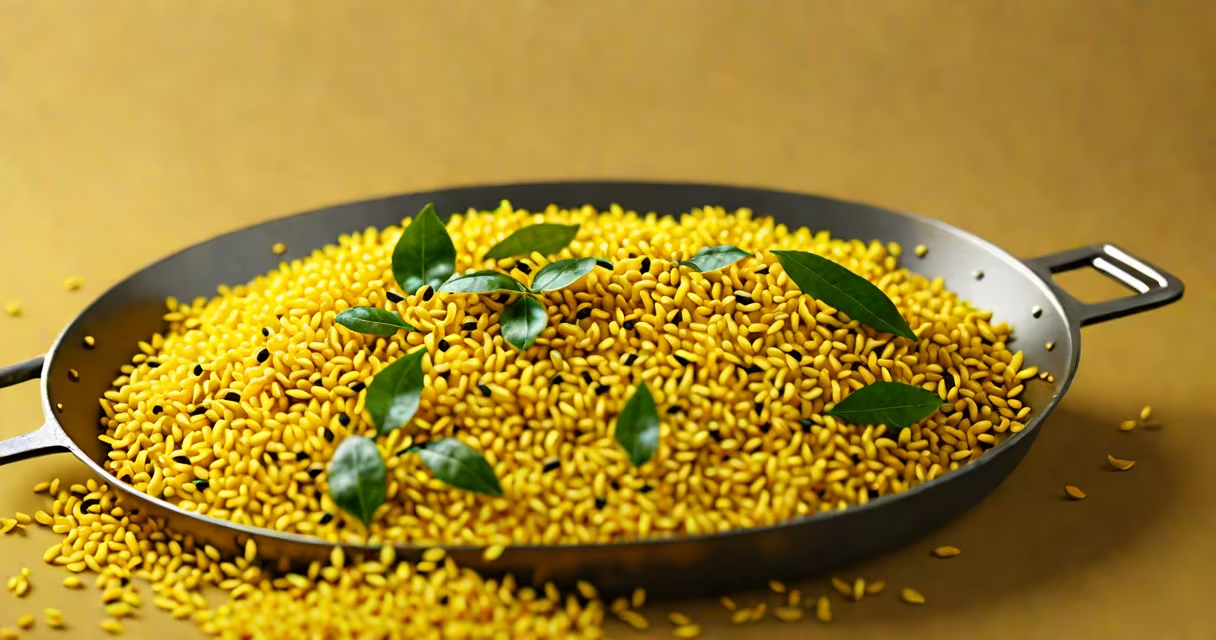
Poha in English is a flattened rice snack widely consumed across India, especially in Maharashtra, Gujarat, and parts of North India. It's made from parboiled rice that's steamed, dried, and then flattened into thin flakes. Poha is often prepared as a quick breakfast or light meal, seasoned with spices, vegetables, and peanuts.
It's not a single dish but a base ingredient used in multiple regional preparations. The name "poha" comes from the Marathi word "pōhā," meaning "flattened." It's commonly eaten hot, served with lemon juice and cilantro, and pairs well with chutneys or yogurt. Poha is low in fat, high in complex carbohydrates, and easily digestible-making it ideal for people recovering from illness or those seeking a light meal.
Despite its widespread popularity, poha is often mislabeled in Western menus as "rice flakes" or "flaked rice," which obscures its cultural significance and distinct preparation. Unlike instant oatmeal or corn flakes, poha requires minimal cooking and retains a soft, slightly chewy texture when properly prepared. It's not a cereal in the Western sense-it's a staple food with deep roots in Indian culinary tradition.
Poha cooks quickly because the rice has already been partially cooked and dried. When heated in oil with tempering spices-mustard seeds, cumin, curry leaves, and turmeric-the flakes absorb flavor and puff slightly. Adding onions, potatoes, peas, or peanuts enhances texture and protein content. A squeeze of lemon juice at the end adds acidity and brightness.
The key to good poha lies in timing. Overcooking leads to mushiness; undercooking leaves it hard and grainy. Most recipes call for soaking the flakes in water for 5-10 minutes before cooking, though some prefer dry tempering. The soaking step hydrates the flakes and reduces cooking time, but it's optional depending on the desired consistency.
A common mistake is using regular rice or broken rice instead of true poha. Regular rice doesn't flatten properly and lacks the unique texture. True poha is available in stores as "flattened rice" or "ready-to-cook poha." Brands like Saffron Road and Patanjali offer packaged versions with no additives.
While the core ingredient remains the same, regional styles differ in preparation and ingredients:
| Region | Key Ingredients | Distinctive Feature |
|---|---|---|
| Maharashtra | Onions, potatoes, peanuts, green chilies | Served warm with lemon and coriander; often part of breakfast thalis |
| Gujarat | Carrots, peas, jaggery (for sweet version) | Some versions include jaggery and cardamom for a sweet-savory balance |
| West Bengal | Mustard oil, asafoetida, dried fish (in non-vegetarian variant) | Uses mustard oil for tempering, giving a pungent aroma |
| North India (Delhi, Punjab) | Paneer, spinach, garam masala | Heavier spice profile; sometimes served with yogurt |
One lesser-known variation is *dahi poha*, a chilled version popular in Mumbai. It uses curd instead of oil, with mint, cumin, and roasted cumin powder. This version is often eaten during summer months due to its cooling effect.
Non-vegetarian versions exist but are rare in mainstream Indian households. In coastal areas like Goa, poha may be cooked with dried fish or prawns, reflecting local seafood traditions. However, most global and home-based recipes remain vegetarian.
Many assume poha is a dessert or a sweet dish. That's incorrect. While sweet poha exists in Gujarat and Rajasthan-made with jaggery, cardamom, and nuts-it's a specialty, not the norm. The default poha is savory and intended as a main course or light meal.
Another myth is that poha is unhealthy. On the contrary, it's low in calories-about 110 kcal per 100 grams-and rich in B vitamins. According to the USDA FoodData Central, poha contains 2.5g of fiber per 100g, making it suitable for weight management and digestive health.
Some confuse poha with *upma* or *idli*. Upma uses semolina, idli uses fermented rice batter. Poha is neither. It's made from flattened rice, not ground grain or fermented dough. The texture and cooking method differ.
To make basic poha:
This yields about 4 servings. Total prep time: 15 minutes. The dish is commonly eaten for breakfast in Mumbai homes, often paired with a side of mint chutney.
I once made this version during a visit to a friend's apartment in Pune. She used locally sourced poha from a street vendor near the Shaniwar Wada market. The difference in taste was clear-homemade poha had a fresher aroma and better texture than store-bought. It reminded me that authenticity often lies in sourcing, not just technique.
Poha is more than food-it's a symbol of simplicity and adaptability. It's a go-to meal during religious fasts, such as Navratri, when many Indians avoid wheat and dairy. Poha fits both dietary restrictions and taste preferences.
According to the National Institute of Nutrition (NIN), India's public health research body, poha is recommended as a balanced meal option for children and elderly populations due to its easy digestibility and nutrient profile. It's also used in hospital diets across South Asia.
For non-Indian audiences, understanding poha in English means recognizing it as a culturally specific food-not a generic "rice dish." Its identity is tied to regional practices, seasonal availability, and family recipes. Mislabeling it as "flaked rice" erases that context.
When ordering poha in restaurants abroad, ask for "flattened rice with spices" or "Indian poha." Avoid menus that list it as "rice flakes" or "cereal." The correct term preserves its culinary heritage and ensures accurate expectations.
Understanding poha in English involves more than translation-it's about context, preparation, and cultural nuance. reading a menu abroad, knowing what poha truly is helps you engage with Indian food authentically.