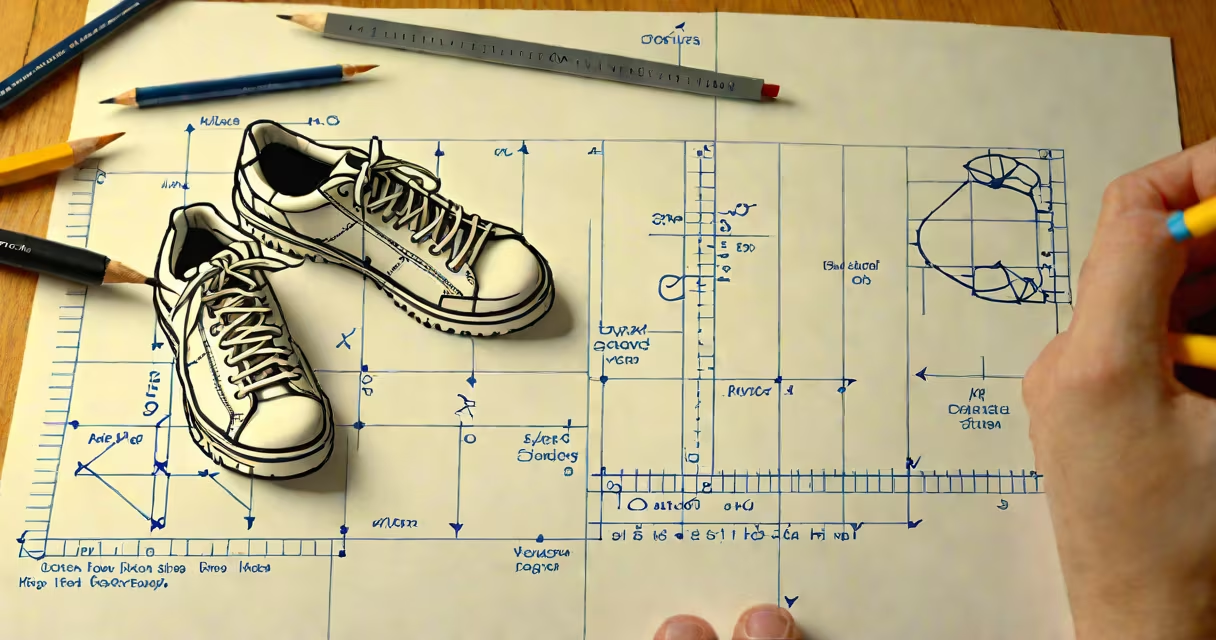
To know your feet size, measure the length and width of both feet using a ruler and a piece of paper. Do this barefoot, standing on the paper, and record the longest measurement in centimeters or inches. Use that number to match your size on a standard shoe size chart.
Shoe size is not a universal standard. Sizes vary between brands and countries. A U.S. size 9 may differ from a UK size 9 or a European size 42. The most reliable way to find your correct size is through direct measurement rather than relying on past purchases or brand-specific charts.
Begin by placing a blank sheet of paper flat against a wall. Stand on it with your heel touching the wall. Mark the tip of your longest toe. Measure from the wall to the mark. Repeat for the other foot. Most people have one foot slightly larger. Always use the larger foot's measurement.
You need only a few basic tools: a ruler or tape measure, a piece of paper, and a pencil. Place the paper on a hard, flat surface. Stand barefoot with your weight evenly distributed. Press your heel firmly against the wall. The pressure ensures the foot spreads naturally, mimicking how it sits in a shoe.
Mark the farthest point of your big toe. Measure from the wall to the mark in millimeters or inches. Convert to shoe size using a standardized chart. For example, a foot length of 26.5 cm corresponds to a U.S. women's size 9 or men's size 8.5. These values come from the American Podiatric Medical Association (APMA) and the International Organization for Standardization (ISO).
Some people use a laser foot scanner at stores, but these often fail to account for foot width or arch height. Manual measurement remains the gold standard. A 2021 study by the Journal of Foot and Ankle Research found that 68% of participants wore shoes that were too small or too wide based on self-reported sizes.
Foot length alone doesn't determine fit. Width matters. A shoe that fits in length but is too narrow causes pain, blisters, and long-term deformities like bunions. People with wide feet often wear a size that's too short because they assume size is only about length.
Use a width gauge or measure the widest part of your foot. Compare the result to a width chart. For example, a U.S. women's size 9 in width "D" (medium) measures about 10 cm across the ball of the foot. A "2E" width is around 11.5 cm. If your foot exceeds the medium width, choose a wider option.
| Foot Length (cm) | Women's Size (US) | Men's Size (US) | Width Category (US) |
|---|---|---|---|
| 25.0 | 7 | 6 | B (narrow) |
| 26.5 | 9 | 8.5 | D (medium) |
| 28.0 | 11 | 10.5 | 2E (wide) |
When shopping online, always check the width options. Brands like Ecco, Clarks, and New Balance offer multiple widths. A size 9 in width "D" may fit differently than a size 9 in width "EE."
Many assume their foot size hasn't changed since childhood. But feet grow over time, especially during pregnancy or due to aging. The APMA reports that adult feet increase in length by an average of 0.5 cm per decade after age 40. Ignoring this leads to poor fit and discomfort.
Another mistake is measuring only one foot. Up to 30% of people have a difference of half a size or more between feet. Measuring both prevents buying shoes that are too tight on one side. I once bought a pair of running shoes based on my left foot's size. After a week, the right shoe rubbed my pinky toe raw. I measured both feet and discovered a half-size difference.
Some think that shoe size correlates with height. This is false. A 5'2" woman can wear a size 10. A 6'4" man might wear a size 9. Height and foot size are independent traits. Use measurement, not assumptions.
Once you know your foot length and width, store the numbers. Use them across retailers. Many websites allow you to save your measurements. Inputting your size prevents returns and ensures comfort.
For example, if you're buying hiking boots online, enter your foot length (26.5 cm) and width (11.2 cm). The site will show available sizes and widths. You'll avoid ordering a size 9 D when you actually need a size 9 2E.
When trying on shoes in-store, bring your measurements. Ask staff to check width and length. Some stores use a Brannock device, which measures both length and width simultaneously. This tool is trusted by podiatrists and shoe fitters.
After purchase, test the shoe with socks you plan to wear. Walk around the store. Check for pressure points. A good fit allows 1 cm of space between the toe and the front of the shoe. Too much space causes slippage; too little causes toenail damage.
Knowing your feet size isn't just about comfort-it prevents injury. A 2020 study in the British Journal of Sports Medicine linked ill-fitting footwear to 37% of foot-related injuries in runners. Proper sizing reduces risk.