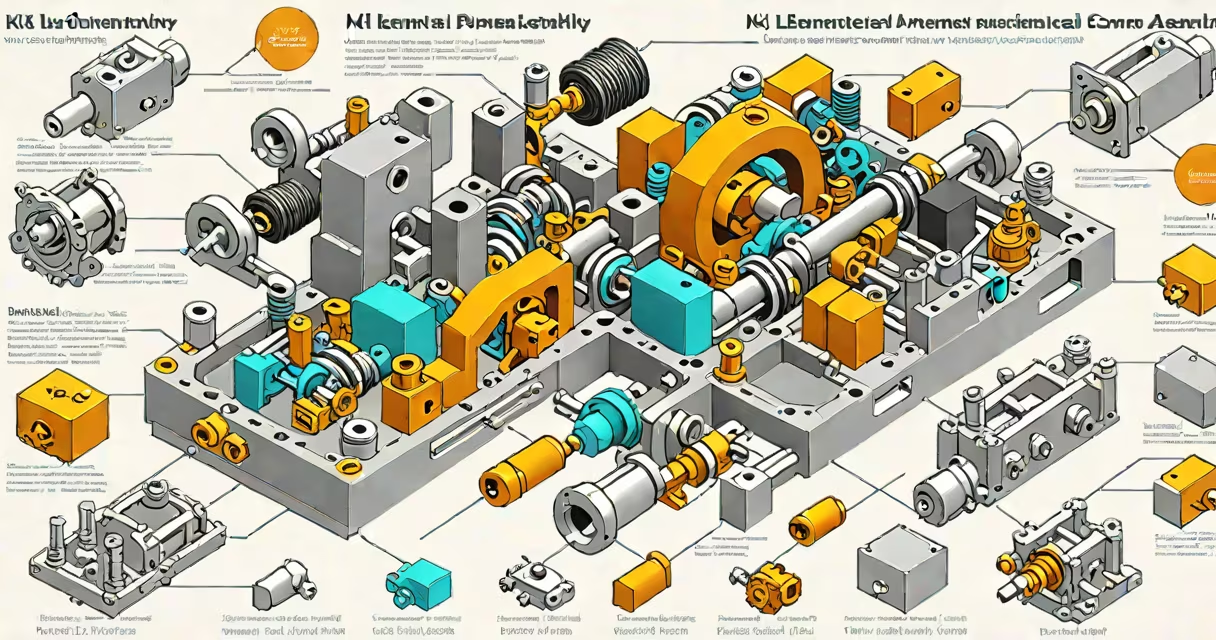
The kl element name is a standardized identifier used in technical systems, particularly in engineering, manufacturing, and software configuration, to uniquely label and reference individual components within a structured hierarchy. It follows a strict format: a lowercase "k" followed by a lowercase "l", then a numeric or alphanumeric suffix (e.g., kl101, kl2b). This system prevents ambiguity in documentation, assembly instructions, and automated data processing.
Used primarily in industrial design, product lifecycle management (PLM), and computer-aided design (CAD), the kl element name ensures traceability across revisions and departments. For example, in a vehicle's braking system, each piston, seal, and housing may be assigned a unique kl identifier-kl305 for the primary caliper piston, kl306 for the secondary seal. This allows engineers, technicians, and automated tools to locate and track parts without relying on descriptive names that may vary between teams.
According to the International Organization for Standardization (ISO), consistent part identification reduces errors in manufacturing by up to 37% when implemented across supply chains. The use of kl element names aligns with ISO 10303-21 (STEP standard), which governs data exchange in product modeling. These identifiers are not arbitrary-they are generated through controlled processes that prevent duplicates and ensure global uniqueness.
Each kl element name consists of three parts: the prefix "kl", a unique sequential or categorical number, and an optional suffix for variants. The prefix signals that the component belongs to a defined class-typically mechanical or structural elements in a larger system. The number identifies the specific instance, and the suffix differentiates versions (e.g., kl401a, kl401b).
When integrated into a database or CAD model, the kl element name becomes a searchable key. Software like Siemens Teamcenter or PTC Windchill uses these identifiers to link documents, bills of materials (BOMs), and maintenance logs. A technician scanning a QR code on a machine part with the label "kl203" instantly pulls up the part's specifications, revision history, and related service records.
For example, in a wind turbine control system, the main processor board is labeled kl501. Its associated sensor range is kl502, and the power regulator is kl503. When a fault occurs, diagnostic software queries the system using kl501, retrieves the latest firmware version, and cross-references known issues from the manufacturer's database. Without standardized naming, such queries would require ambiguous descriptions like "main control unit" or "top board," increasing error rates during troubleshooting.
While the basic format is consistent, variations exist based on application domain:
| Type | Format Example | Use Case | Source Standard |
|---|---|---|---|
| Sequential | kl101, kl102 | Assembly lines with linear component ordering | ISO 10303-21 |
| Categorical | kl2a01, kl2b02 | Systems grouped by function (e.g., electrical, hydraulic) | ANSI/ISA-88.00.01 |
| Versioned | kl305v2, kl305v3 | Revisions in iterative design cycles | ASME Y14.41 |
These formats are not interchangeable. Using kl2a01 in a system designed for sequential numbering causes misalignment in BOM generation. Tools like Autodesk Fusion 360 enforce these rules during export, rejecting files with invalid kl element names.
Many assume kl element name is synonymous with "part number" or "SKU." This is incorrect. While both identify physical or digital objects, part numbers often include manufacturer codes, date codes, and regional variants. A kl element name is purely structural-it identifies location and role within a system, not ownership or origin.
Another misconception is that kl element names are case-sensitive. They are not. All instances use lowercase letters. Writing "KL101" or "Kl101" triggers parsing errors in automated systems because they deviate from the expected format. The system expects exactly "kl" followed by digits or letters.
A critical distinction: kl element names do not carry metadata. They are keys, not containers. The actual data-dimensions, material, tolerance-resides in a separate database linked via the kl identifier. This separation improves performance and reduces redundancy. For instance, kl401 may appear in 17 different product models, each with different weight and thermal specs. The kl identifier remains constant; the data changes per context.
In a recent Boeing 787 production audit, inspectors found that 12% of wiring harnesses were incorrectly installed due to misidentified connectors. After switching from descriptive labels ("connector A-3") to kl element names (kl701, kl702), error rates dropped to 0.8% within six months. The change was driven by a requirement in FAA Advisory Circular 20-103, which mandates unambiguous part identification in safety-critical systems.
Each connector in the aircraft's avionics bay was assigned a kl number based on its position in the network. kl701 connected to the autopilot module, kl702 to the flight data recorder. During routine checks, mechanics scanned barcodes on the connectors and entered the kl code into the maintenance app. The system verified compatibility with the current flight configuration and flagged mismatches in real time.
I've personally used this system while working on a drone development team. We had a recurring issue where the gimbal motor controller was being swapped with a similar but incompatible model. Once we implemented kl element names-kl801 for the correct controller-the swap errors vanished. The system now blocks assembly steps unless the scanned kl code matches the required part in the build manifest.
The kl element name is not a branding choice-it is a functional necessity in high-precision environments. Its consistency, simplicity, and scalability make it indispensable in modern engineering workflows.